

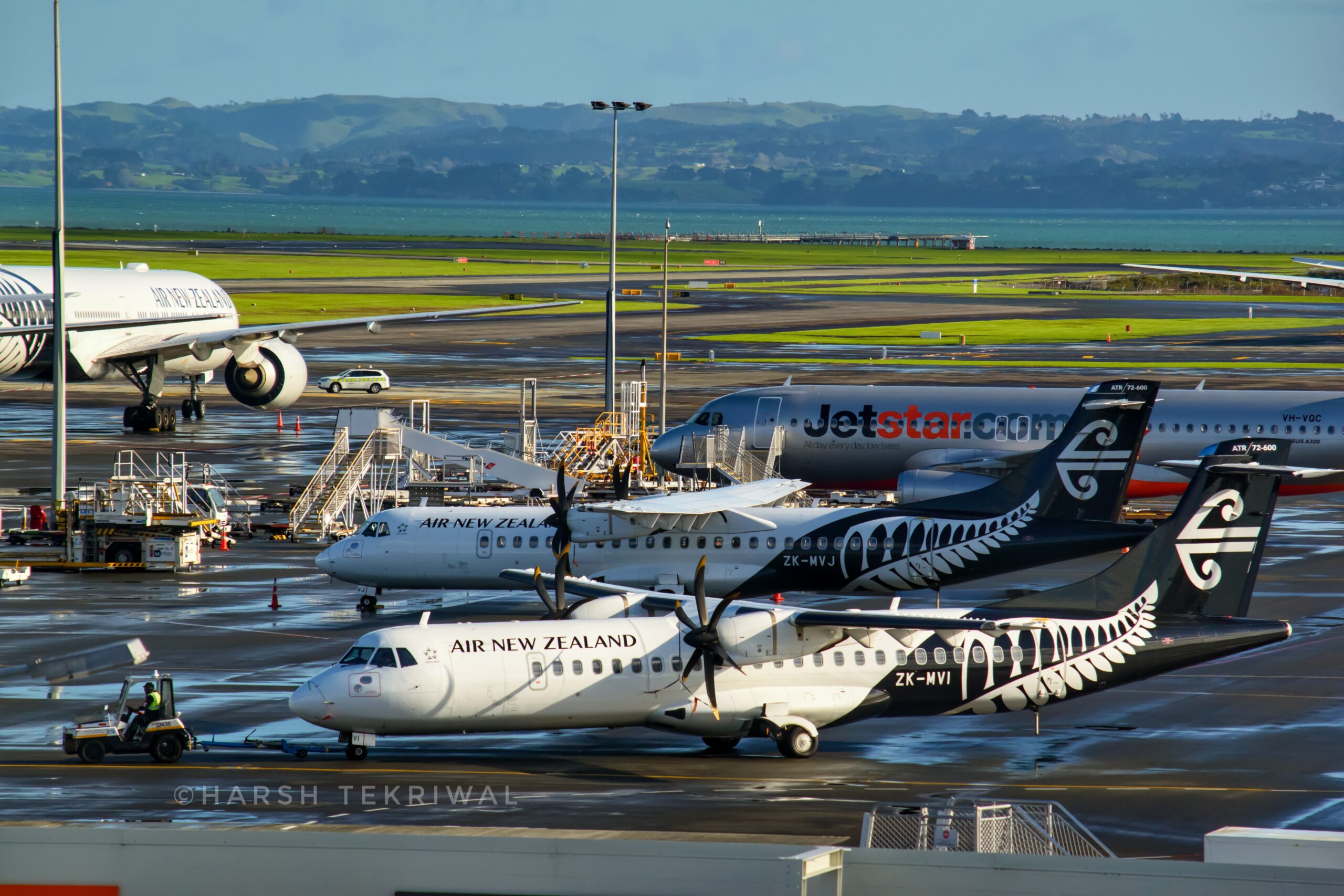
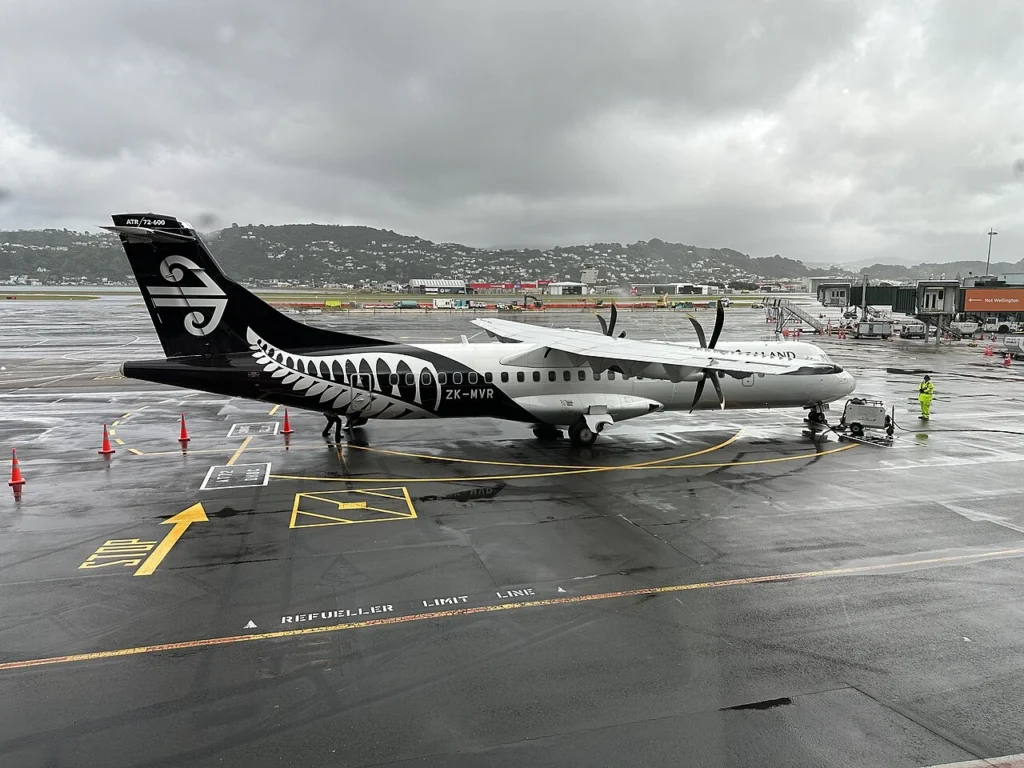
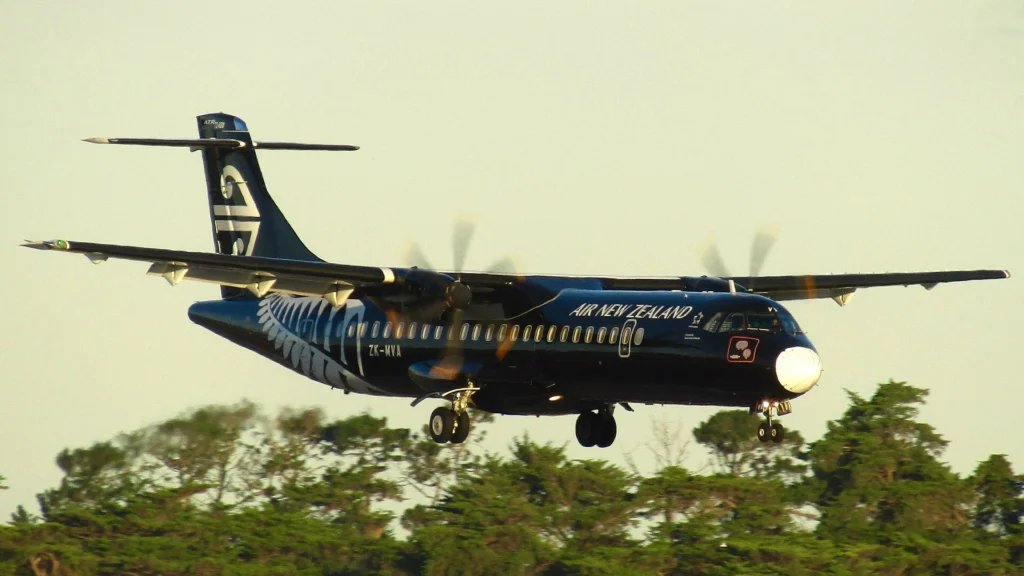
WELLINGTON— An Air New Zealand (NZ) ATR72-600 suffered an engine fire while approaching Wellington Airport (WLG) on September 1, 2024, forcing the crew to land and evacuate 70 passengers and four crew members.
The Transport Accident Investigation Commission (TAIC) has now found that fatigue cracking in a low-pressure turbine blade caused the failure, while the aircraft’s evacuation took 2 minutes and 51 seconds.
The aircraft was operating from Christchurch Airport (CHC) to Wellington when its left Pratt & Whitney Canada PW127M engine developed a low oil pressure warning during the approach.
The engine warning progressed to a fire warning, prompting the crew to declare a Mayday before landing safely and stopping on the runway.
Engine Blade Failure Investigation Findings
TAIC found that a low-pressure turbine blade fractured because of fatigue cracking. The resulting vibration damaged internal air seals, allowing oil to enter the engine, where it burned and produced heavy smoke and flames from the engine exhaust.
The engine had undergone an overhaul by Pratt & Whitney Canada less than four flying hours before the fire.
Investigators concluded that the fatigue cracking was likely already present during the overhaul but was not detected by the manufacturer’s quality assurance process.
After the aircraft landed, the crew discharged fire suppressant into the affected engine. Although the fire was considered extinguished, the fire warning remained illuminated, so the captain ordered an emergency evacuation.
TAIC found no evidence that an Air New Zealand design, maintenance or operating issue caused the turbine blade failure.
Investigators also examined the remaining 46 low-pressure turbine blades from the same disc and found another blade with a crack, highlighting the importance of detecting fatigue damage before components return to service.
Passengers Took Carry-On Bags During Evacuation
The evacuation created a separate safety concern because more than half of the passengers took carry-on baggage despite being instructed to leave it behind.
Passengers carrying bags hesitated at the forward exits, while others took additional time to move through the exits and reach the ground.
The full evacuation lasted 171 seconds, compared with the 90-second certification benchmark used for aircraft evacuation testing.
TAIC said some passengers also moved near the previously burning engine and propeller after leaving the aircraft, creating another potential hazard.
The incident involved minor injuries, mainly strains suffered by passengers jumping from the forward emergency exits. However, everyone on board successfully evacuated and reached the assembly area.
Air NZ Safety Changes Following Investigation
The investigation has prompted changes to Air New Zealand’s evacuation procedures and passenger safety information.
The airline has strengthened training for the ATR rear service door, updated safety briefing material and aligned evacuation commands across its aircraft fleets.
The findings also come as the International Air Transport Association (IATA) promotes its “Save a Life, Not a Bag” campaign, which urges passengers to follow crew instructions, leave baggage behind and move quickly during an evacuation.
IATA research found that while 80% of surveyed passengers said they knew what to do during an evacuation, only 61% correctly identified leaving all personal belongings behind as the appropriate action.
TAIC has recommended action from Pratt & Whitney Canada over its overhaul quality assurance process and further safety improvements concerning passenger evacuation and post-evacuation management, The New Zealand Herald reported.
The investigation shows how both aircraft maintenance and passenger response can influence the outcome of a rare in-flight emergency.
Stay tuned with us. Further, follow us on social media for the latest updates.
Join us on Telegram Group for the Latest Aviation Updates. Subsequently, follow us on Google News

