

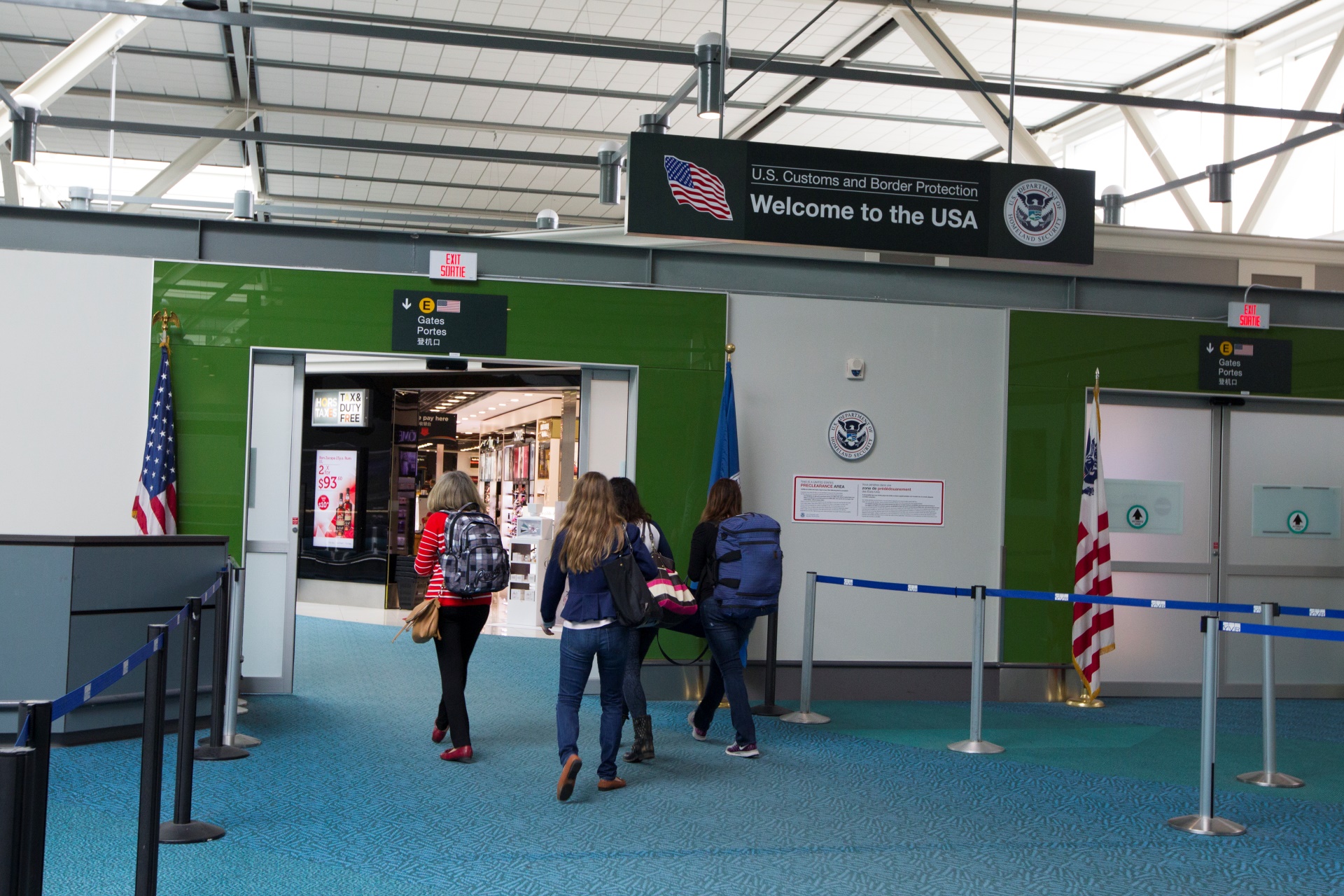
NAVI MUMBAI- Adani Airport Holdings Limited (AAHL) has proposed a US immigration and customs pre-clearance facility at Navi Mumbai International Airport (NMIA), which would allow passengers to complete US entry formalities before departure. The proposal has been submitted to India’s Ministry of Civil Aviation (MoCA).
The facility could simplify travel on direct US-bound services and help connecting passengers avoid immigration and customs queues after arriving in the United States.

Navi Mumbai Airport Plans US Pre-Clearance Facility
AAHL has sought approval from the Centre to establish a US pre-clearance facility at Navi Mumbai International Airport. Industry sources told businessline that the proposal is currently with the Ministry of Civil Aviation.
Under the proposed arrangement, passengers travelling on direct flights to the United States would complete US immigration and customs inspections at NMIA before boarding their aircraft. The process is administered by US Customs and Border Protection (CBP) at participating overseas airports.
The model changes the sequence of the arrival process in the US. Instead of completing immigration and customs procedures after landing, eligible passengers would have already completed those formalities before departure.
This could be particularly useful for passengers connecting to domestic flights after arriving in the US. Once passengers complete the required pre-clearance process, they can generally proceed through the US arrival process without repeating the standard immigration and customs inspection.

Proposed Investment and Bilateral Arrangements
The proposed Navi Mumbai facility is estimated by industry sources to cost more than ₹100 crore. However, the final investment requirement, infrastructure specifications, and implementation timeline have not been disclosed.
The facility would also require agreements and operational arrangements between Indian authorities and the relevant US agencies. US CBP would be responsible for conducting the immigration and customs inspections under the pre-clearance framework.
The arrangement therefore involves more than constructing dedicated passenger-processing infrastructure. It would require coordination between the airport operator, Indian authorities, airlines and US government agencies before the facility could begin operations.
US Pre-Clearance Could Strengthen International Connectivity
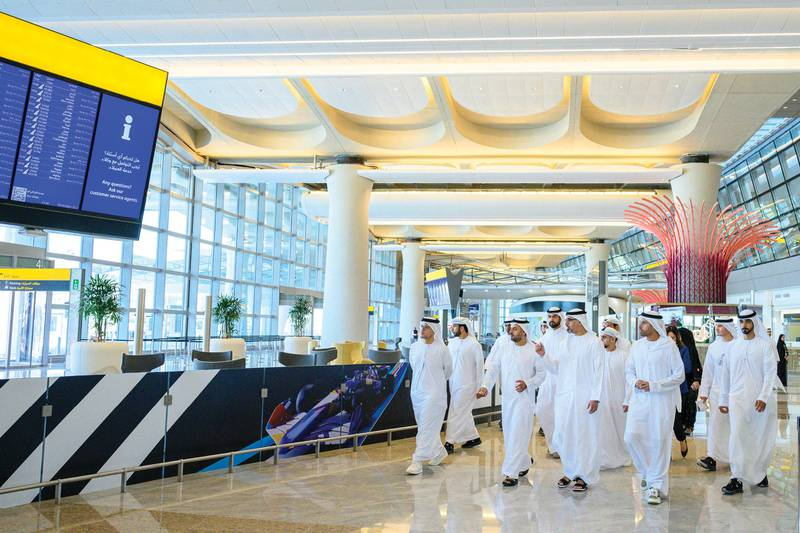
US pre-clearance facilities already operate at selected international airports, including Zayed International Airport in Abu Dhabi and Dublin Airport in Ireland.
The presence of such a facility at NMIA could potentially support the airport’s plans to develop a larger international network. It could serve passengers originating in India as well as international travellers using Navi Mumbai as a connecting point for US-bound journeys.
The commercial opportunity would depend on airlines establishing direct services between NMIA and destinations in the United States. Connecting schedules would also determine whether passengers from other Indian cities and overseas markets could efficiently transfer through Navi Mumbai.
Pre-clearance would give airlines another potential service feature when evaluating US routes from the airport, while passengers could benefit from completing US entry formalities before departure.

Airport Offers Incentives for New International Routes
The pre-clearance proposal comes as NMIA works to attract additional international passenger services.
The Airports Economic Regulatory Authority of India (AERA) has approved changes to the airport operator’s eligibility criteria for tariff incentives aimed at airlines launching new international passenger routes from NMIA.
Under the approved framework, eligible new international passenger routes can receive substantial landing-charge concessions during their initial operating years.
For eligible routes of up to 5,000 kilometres, airlines receive a 100 per cent concession on landing charges in the first year, followed by a 50 per cent concession in the second year and 25 per cent in the third year.
For eligible routes exceeding 5,000 kilometres, the concession structure is also 100 per cent in the first year, 50 per cent in the second year and 25 per cent in the third year.
These incentives are designed to reduce initial airport-related costs for airlines introducing new international services.
NMIA Prepares for Growing Mumbai Air Traffic
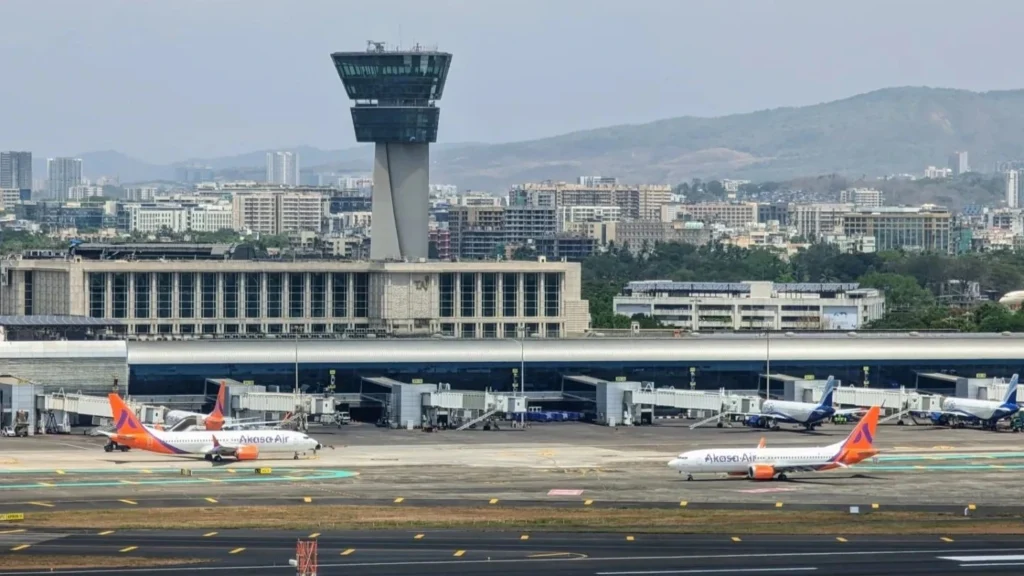
Navi Mumbai International Airport is being developed as the second major international airport serving the Mumbai Metropolitan Region. The airport is intended to provide additional aviation capacity as demand grows and to reduce pressure on Mumbai’s existing airport infrastructure.
NMIA was developed and is managed by Navi Mumbai International Airport Limited (NMIAL) under a public-private partnership structure.
The airport has an initial annual passenger-handling capacity of 20 million. Expansion plans are expected to increase total capacity to 90 million passengers annually after completion of all development phases.
Its initial cargo-handling capacity is planned at 0.5 million tonnes annually.
NMIA is also expected to accommodate airlines and operations affected by the proposed redevelopment of Terminal 1 at Mumbai airport. This could increase the importance of the new airport within the Mumbai Metropolitan Region’s overall aviation network.

Direct US Flights Remain Critical to the Proposal
The effectiveness of a US pre-clearance facility at NMIA would ultimately depend on the development of direct US services.
Without sufficient nonstop connectivity, the facility would have limited use for passengers travelling to the United States. A strong network of domestic and international feeder services could also determine whether NMIA attracts connecting passengers who could benefit from completing US formalities before departure.
If approved and implemented, the facility would add a specialised international processing capability to Navi Mumbai’s growing airport infrastructure. It would also align with the airport’s broader objective of attracting long-haul international connectivity and increasing its role in the Mumbai region’s aviation network.
Stay tuned with us. Further, follow us on social media for the latest updates.
Join us on Telegram Group for the Latest Aviation Updates. Subsequently, follow us on Google News
