

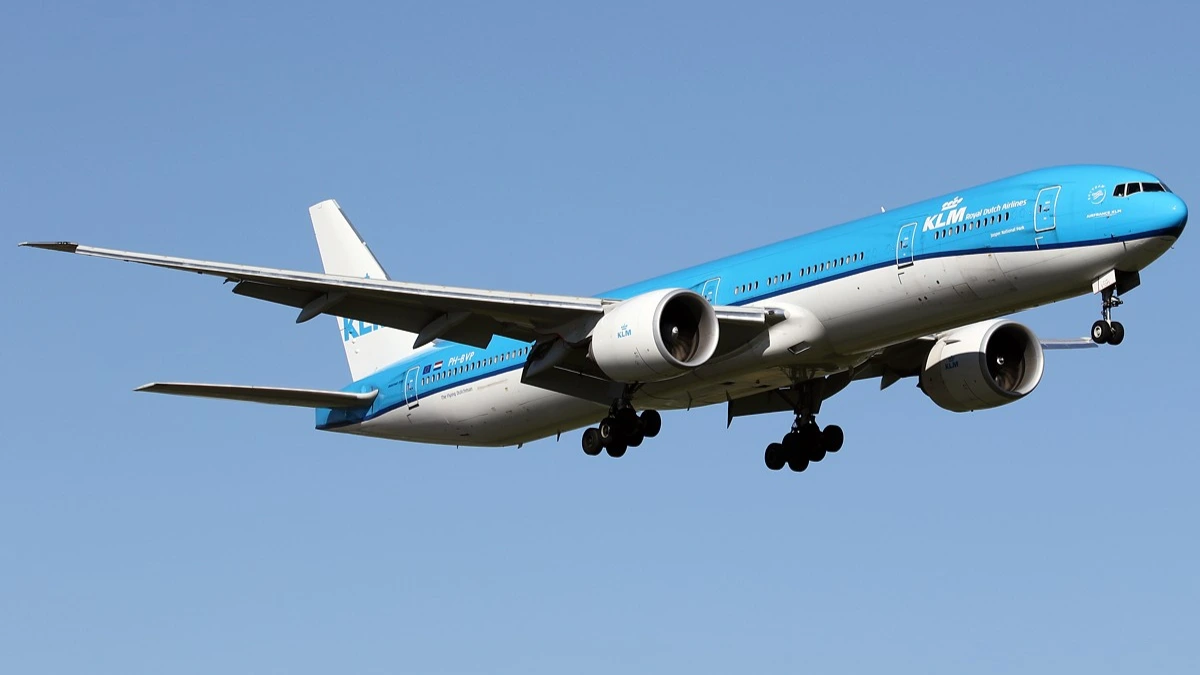
AMSTELVEEN- KLM Royal Dutch Airlines (KL) flight KL735 from Amsterdam Schiphol Airport (AMS) to Curaçao International Airport (CUR) returned to Amsterdam after a passenger’s power bank caught fire onboard. The incident forced the Boeing 777-300ER to abandon its scheduled journey to the Caribbean.
KLM Royal Dutch Airlines later arranged accommodation for 322 passengers affected by the disruption. The airline deployed a Boeing 787-10 from Amsterdam Schiphol Airport (AMS) the following day to continue the service to Curaçao (CUR).
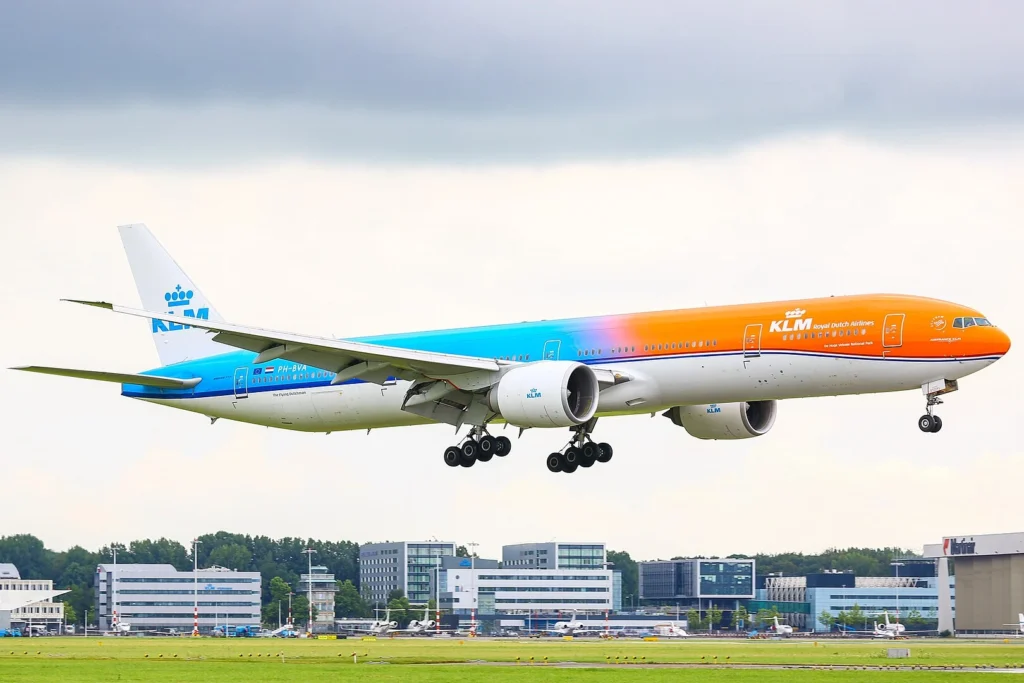
KLM Flight Diverts Back to Amsterdam
KLM flight KL735 operates as a daily service between Amsterdam Schiphol Airport and Curaçao International Airport. The scheduled flight has a block time of approximately nine hours and 45 minutes, with departure from Amsterdam planned for 1:25 PM and arrival in Curaçao scheduled for 5:10 PM local time.
According to Flightradar24 data cited in the source material, the Boeing 777-300ER departed Amsterdam at approximately 3:21 PM, almost two hours behind schedule.
The flight did not continue toward Curaçao after a fire involving a passenger’s power bank developed inside the aircraft. The crew subsequently returned the aircraft to Amsterdam, where the passengers could disembark, and the aircraft could undergo the necessary checks.
The incident attracted additional attention because the passenger involved was Camiel Eurlings, a former President and CEO of KLM. Eurlings served as the airline’s chief executive from July 2013 until October 2014, after succeeding Peter Hartman.
According to RTL, Eurlings was using the power bank when it caught fire. Images shared on social media reportedly showed damage around a business-class window, while Eurlings was reported to have suffered minor injuries.
The incident highlights the potential consequences of lithium-ion battery failures inside an aircraft cabin. A battery experiencing thermal runaway can generate intense heat and smoke, requiring the crew to respond quickly and may lead to operational disruptions.
Former KLM CEO Involved in Power Bank Incident
The presence of Eurlings made the incident particularly notable because of his former position at KLM. As a former senior executive of the airline, he would have been familiar with aviation procedures and the importance of following onboard safety instructions.
RTL reported that Eurlings was shocked and embarrassed by what happened. Some passengers interviewed by the Dutch broadcaster also expressed frustration because the incident caused a significant delay and required the airline to arrange overnight accommodation.
One passenger reportedly questioned how such an incident could occur when Eurlings had previously been closely connected to KLM and its operating rules.
KLM said it would not issue a fine to Eurlings over the incident. An airline spokesperson explained that passengers receive an announcement at the beginning of the flight stating that power bank use is not permitted onboard.
The airline’s response focused on the existing safety instructions rather than imposing an additional financial penalty.
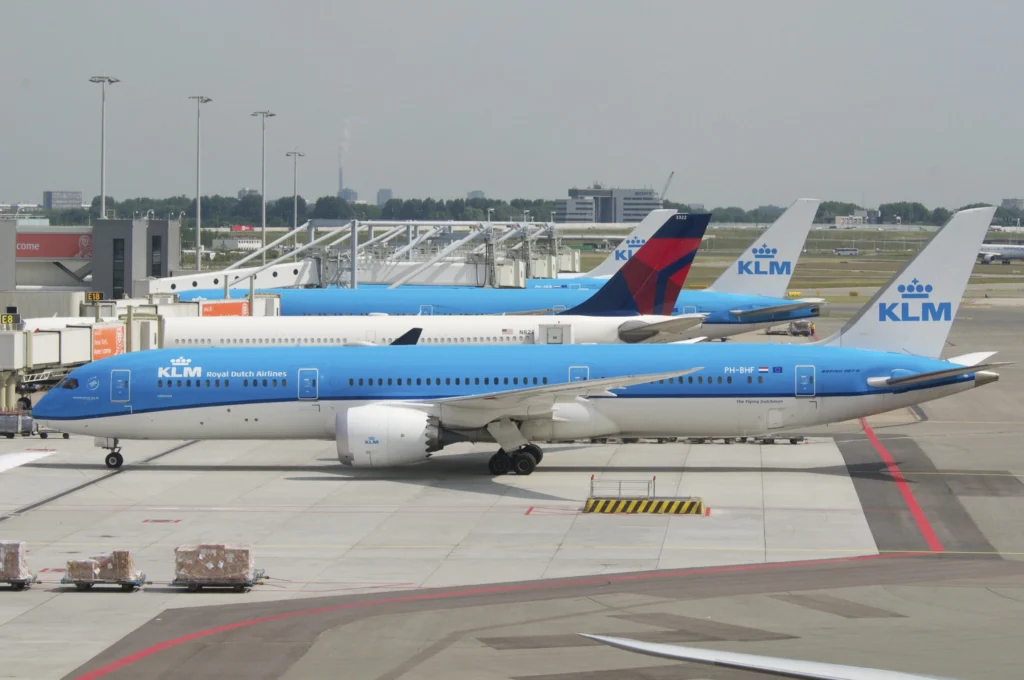
322 Passengers Required Hotel Accommodation
The return to Amsterdam created a major disruption for the 322 passengers booked on KL735. Since the original aircraft could not immediately continue the journey, KLM arranged hotel accommodation for the affected travelers.
The incident also meant that the airline had to provide a replacement aircraft and adjust the operation of the Amsterdam to Curaçao service.
The Boeing 777-300ER involved in the incident was identified as PH-BVP, an aircraft that is approximately 10 years old. According to the source material, the aircraft remained in Amsterdam after returning from the diverted flight and had not resumed operations at the time of reporting.
The aircraft’s continued grounding allowed the airline to focus on passenger recovery while the aircraft remained unavailable for its scheduled service.
KLM Sends Boeing 787-10 to Curaçao
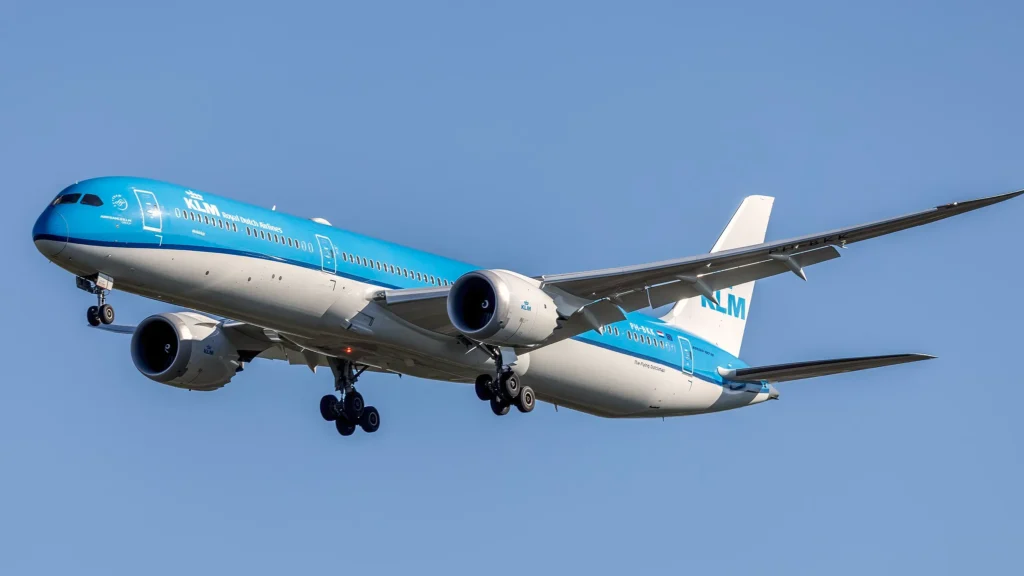
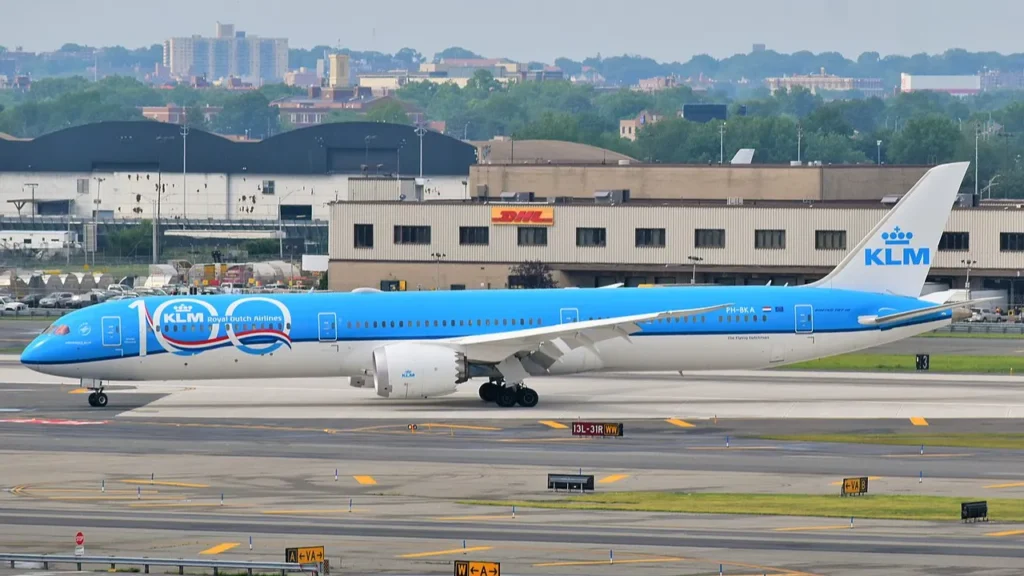
KLM responded to the disruption by deploying a Boeing 787-10 Dreamliner for the following day’s service. The replacement aircraft carried registration PH-BKG and was approximately six years old.
According to Flightradar24 data cited in the source, PH-BKG departed Amsterdam at 10:35 AM for Curaçao. The replacement operation was intended to transport passengers affected by the previous day’s diversion.
The aircraft was also scheduled to operate the return service to Amsterdam later the same day. This allowed KLM to restore the disrupted rotation without waiting for the original Boeing 777-300ER to return to service.
The use of a Boeing 787-10 instead of the usual Boeing 777-300ER also reflected the airline’s need to use an available long-haul aircraft to recover the affected service.
KLM Power Bank Rules
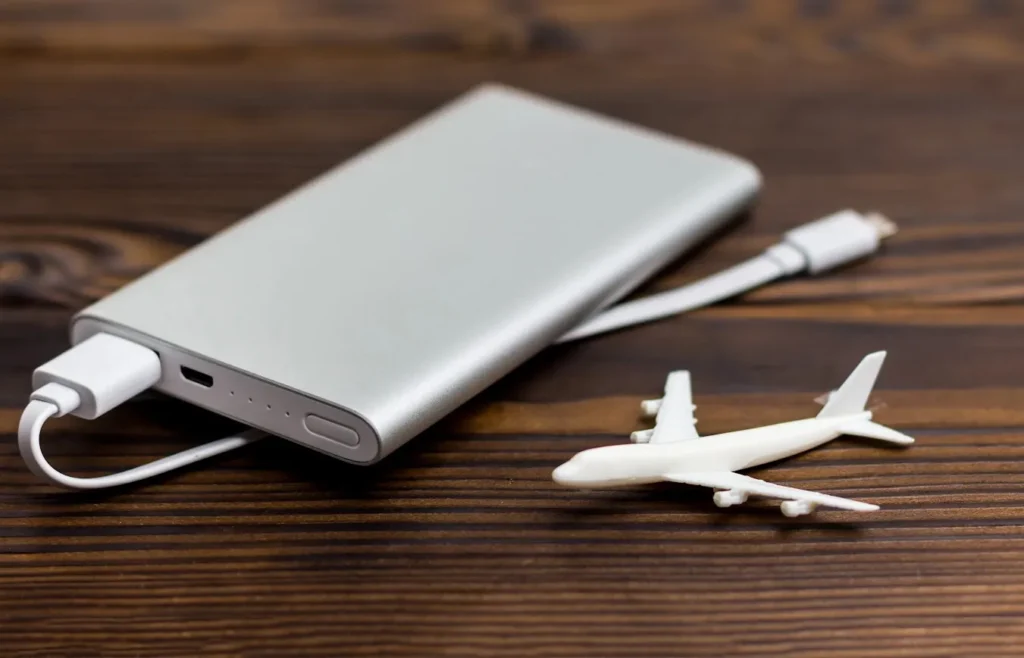
KLM permits passengers to carry power banks in hand luggage, subject to its applicable requirements. The airline states that passengers can generally bring up to two power banks, although restrictions can apply when the capacity is not clearly indicated.
The airline also specifically prohibits passengers from placing power banks in the overhead baggage compartment. Power banks must remain in locations where they can be monitored and accessed if a battery problem develops.
More importantly, KLM states that passengers are not permitted to use or charge power banks onboard its aircraft.
The incident on KL735 therefore occurred against a background of specific airline restrictions concerning the handling and use of these devices.
Why Power Bank Fires Create an Aviation Risk
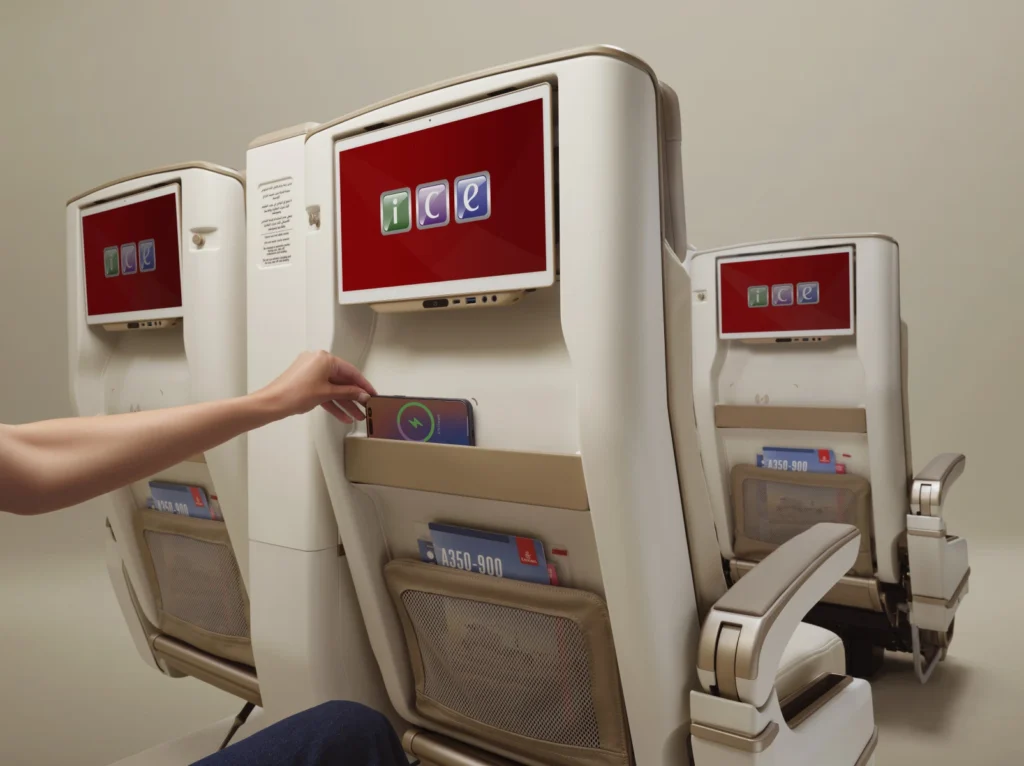
Power banks generally use lithium-ion battery cells. Under certain conditions, damaged, defective or overheated lithium-ion batteries can experience thermal runaway.
Thermal runaway can cause a rapid increase in temperature and may produce smoke, flames or other hazardous effects. An aircraft cabin provides limited space for dealing with a battery fire, making early detection and rapid crew response important.
Airlines and aviation regulators have increasingly focused on power bank handling because of the risks associated with lithium-ion batteries. Restrictions on storage, charging and use are designed to reduce the chance of a battery fire developing or becoming difficult to control.
Keeping power banks accessible also allows cabin crew to identify and respond to a battery problem more quickly than if the device were stored inside an overhead compartment.
KLM Service Continues After Diversion
The KL735 incident resulted in a substantial interruption to the Amsterdam to Curaçao operation, but KLM arranged an alternative aircraft for the affected passengers.
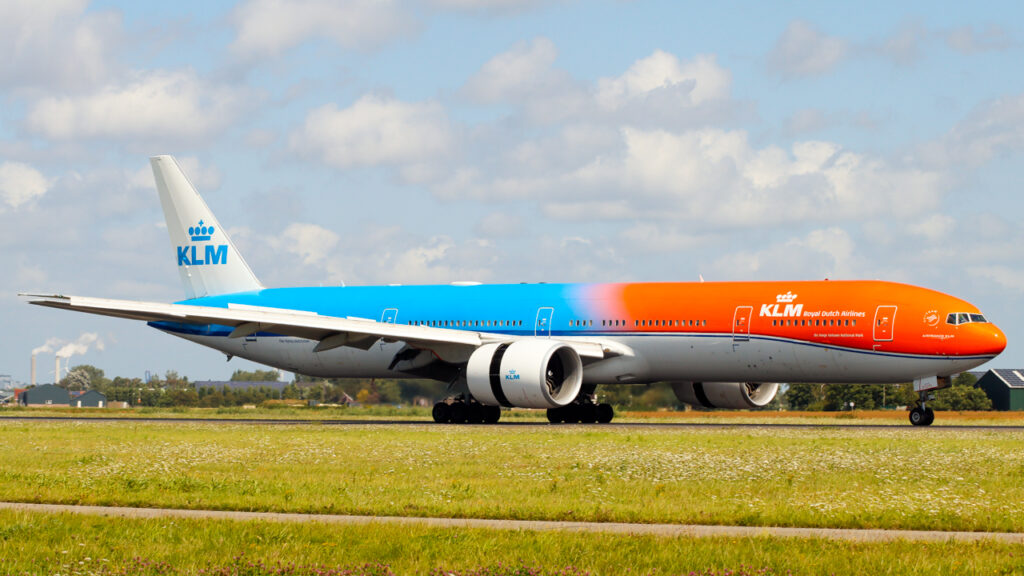
The original Boeing 777-300ER remained in Amsterdam after the diversion, while the Boeing 787-10 operated the replacement service to Curaçao.
The event also renewed attention on KLM’s restrictions covering power banks. The airline allows passengers to carry approved power banks in hand luggage but prohibits their use and charging during the flight.
For the passengers aboard KL735, the combination of the onboard battery fire, return to Amsterdam, hotel accommodation and replacement aircraft turned a scheduled transatlantic journey into a significant operational disruption.
Stay tuned with us. Further, follow us on social media for the latest updates.
Join us on Telegram Group for the Latest Aviation Updates. Subsequently, follow us on Google News
