

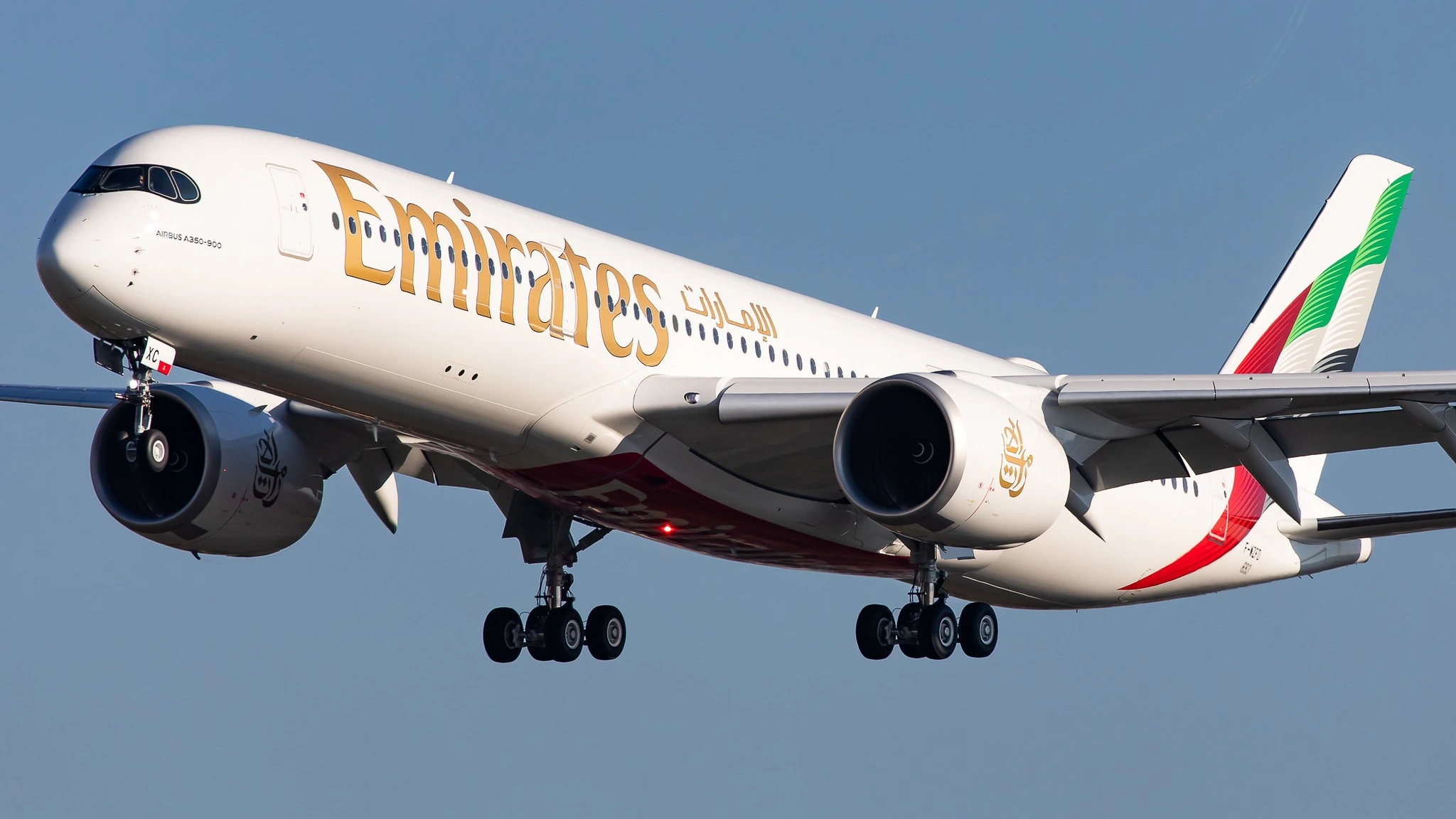
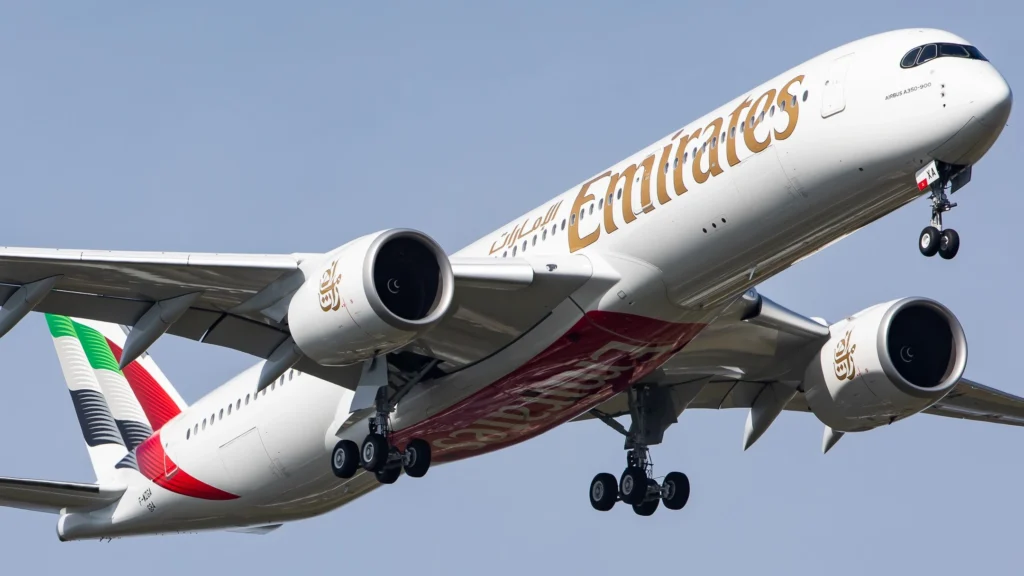
DUBAI— Emirates (EK) will add a second daily Airbus A350 service between Dubai (DXB) and Colombo (CMB) from 8 August, replacing the Boeing 777 currently operating flight EK648/649. The change doubles the number of daily flights offering the airline’s Premium Economy cabin on the route.
The airline (EK) currently runs four daily flights between Dubai International Airport (DXB) and Bandaranaike International Airport (CMB) in Colombo using a mix of A350 and Boeing 777 aircraft. The upgraded deployment strengthens Emirates’ capacity in the Sri Lankan market as the carrier marks 40 years of operations to the country.
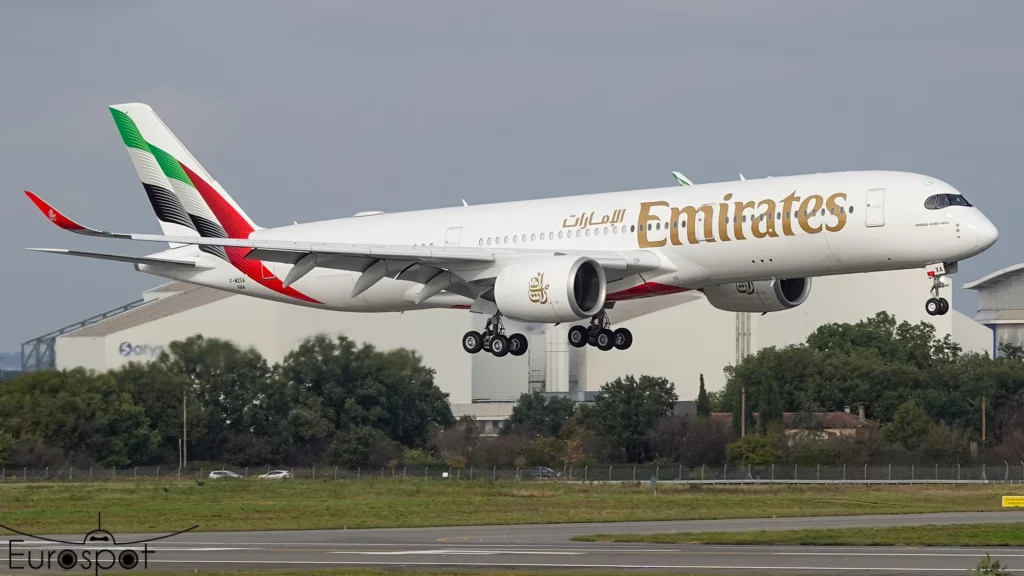
Emirates Doubles A350 Service to Colombo
The A350 on flight EK648/649 replaces the existing Boeing 777 and adds a second daily service with Premium Economy seating between Dubai and Colombo. This doubles the daily Premium Economy availability on the route and gives travellers more flexibility across departure times.
Flight EK648 departs Dubai International Airport (DXB) at 16:10hrs daily and arrives at Bandaranaike International Airport (CMB) at 22:10hrs. The return flight EK649 leaves CMB at 02:55hrs and lands at DXB at 05:50hrs. All times are local.
The service works alongside EK654/655, which is also operated with an A350, giving customers a choice of flight timings and more chances to fly in Premium Economy.
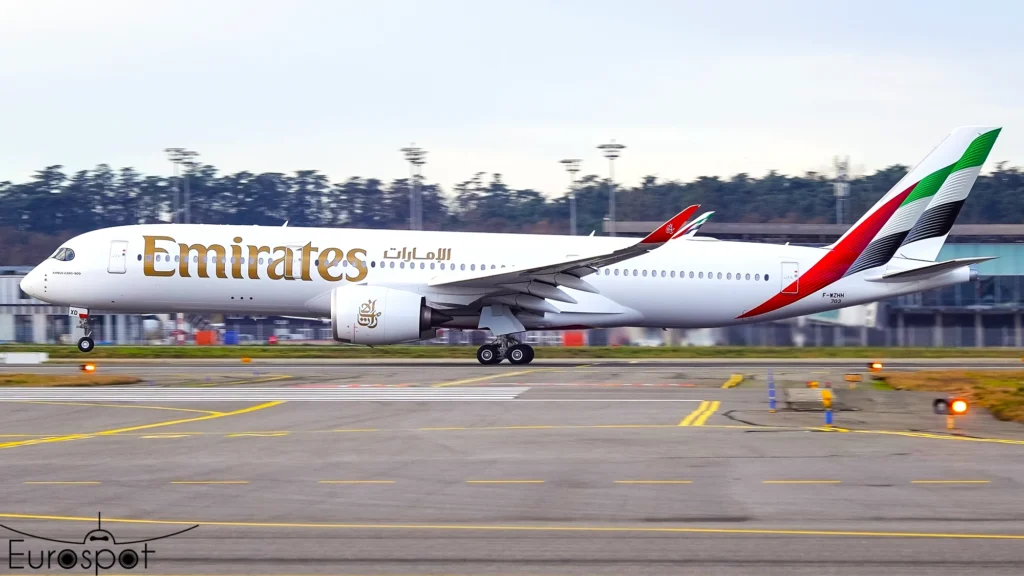
Emirates Colombo Schedule and Aircraft Mix
Emirates offers three non-stop daily flights on the Colombo to Dubai route, supported by one daily service via Male’ (MLE).
Alongside EK648/649 and EK654/655, both flown with A350 aircraft featuring Premium Economy, the airline operates the Boeing 777 on flights scheduled as EK650/651 and EK652/653.
The second A350 builds on the aircraft’s debut on the Colombo route in March 2025, when Emirates first introduced its Premium Economy experience in Sri Lanka. The expanded deployment reflects the airline’s continued investment in the market.
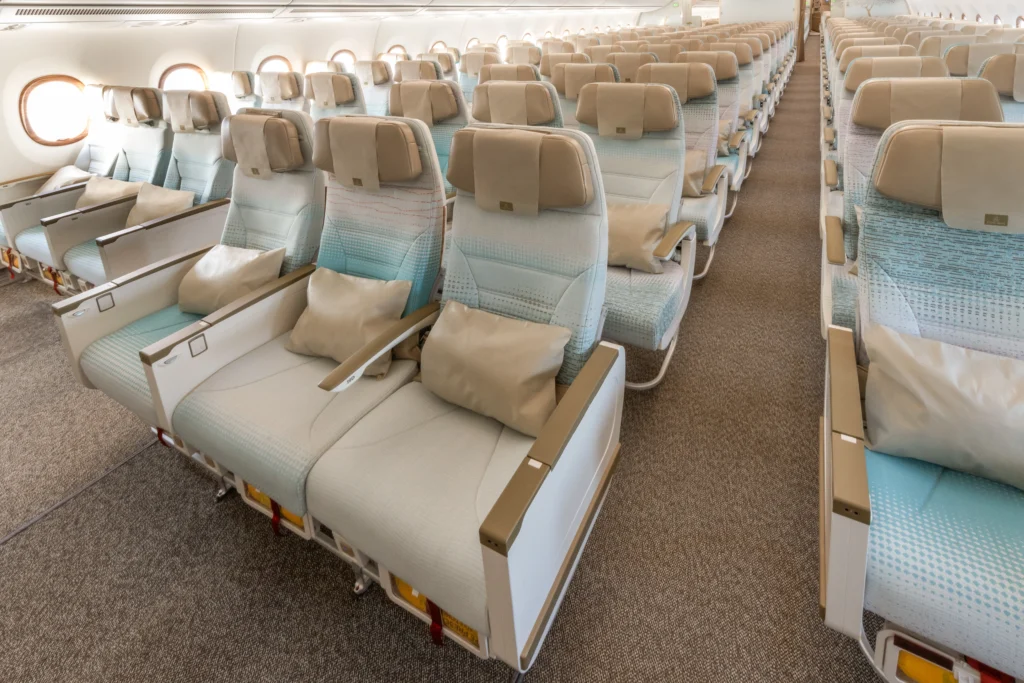
Inside the Emirates A350 Cabin
The Airbus A350 is the newest aircraft type in Emirates’ all-widebody fleet. It features bright cabins with more space across all classes, along with updated technology and entertainment options in multiple languages, including Tamil and Sinhala.
The aircraft carries the airline’s latest cabin features, such as 4K and 4K HDR touchscreens, faster Wi-Fi and wider aisles across all classes. Extra-high ceilings and one of the quietest twin-aisle cabins in commercial aviation add to passenger comfort while improving efficiency.
Premium Economy Comfort and Service
Emirates’ Premium Economy cabin sits at the centre of the A350 experience and has become one of the airline’s most requested products. The cabin uses a 2-3-2 layout with cream leather seats and woodgrain finishes that draw on the look of Business Class.
Each seat offers 19.5 inches of width, a 40-inch pitch, an 8-inch recline and a six-way adjustable headrest for longer flights. A 13.3-inch personal screen supports the in-flight entertainment experience.
The onboard service includes a welcome drink, seasonal menus and a wide beverage selection, along with an amenity kit, a sustainably made blanket and a large pillow. On the ground, passengers receive priority boarding, a dedicated check-in area at Dubai International Airport and a baggage allowance of up to 35kg.
Emirates Expands Its Sri Lanka Network
Emirates connects Colombo to almost 140 destinations across its global network. The airline continues to support tourism and trade between Sri Lanka and the wider world while offering its “Fly Better” service.
The addition of a second daily A350 reinforces that role in the airline’s 40th year of flying to Colombo.
Sri Lanka Travel Guide
Sri Lanka rewards travelers with lush landscapes, rich cuisine, ancient ruins, abundant wildlife, and famously warm hospitality. The island nation in the Indian Ocean is compact yet dense with experiences, making it one of South Asia’s most affordable and accessible destinations.
Travel across the country runs smoothly for those who plan ahead. Buses and trains can feel crowded and chaotic, but widely spoken English eases navigation. A few practical tips help visitors avoid scams, control spending, and catch the country’s scenic train routes.
Essential Tips Before Traveling to Sri Lanka
Visitors need a visa to enter Sri Lanka. Applications open online three days before arrival, or travelers can apply on arrival. Applying in advance costs slightly less and skips the border queues.
Tap water is not safe to drink. Since the climate stays hot, staying hydrated matters, so a reusable bottle with a built-in purifier saves money and reduces single-use plastic waste.
Local food is the smart choice. Outside Colombo and Kandy, Western options are scarce, overpriced, and often low quality. Sri Lankan and Indian dishes taste better and cost far less. Simple meals such as dosas, kottu, rice, and chicken run 600 to 1,200 LKR, while table-service restaurants charge closer to 2,000 to 3,500 LKR.
Nightlife stays limited across most of the country. Beyond coastal tourist towns and Colombo, opportunities to drink or party are rare, so travelers should expect quiet evenings.
Tuk-tuks offer cheap private transport. Drivers accept full-day hires for around 10,000 LKR and generally quote fair prices. Colombo is the exception, where overcharging is common. Hard bargaining is rarely necessary elsewhere.
Getting Around: Airport Transfers and Train Travel
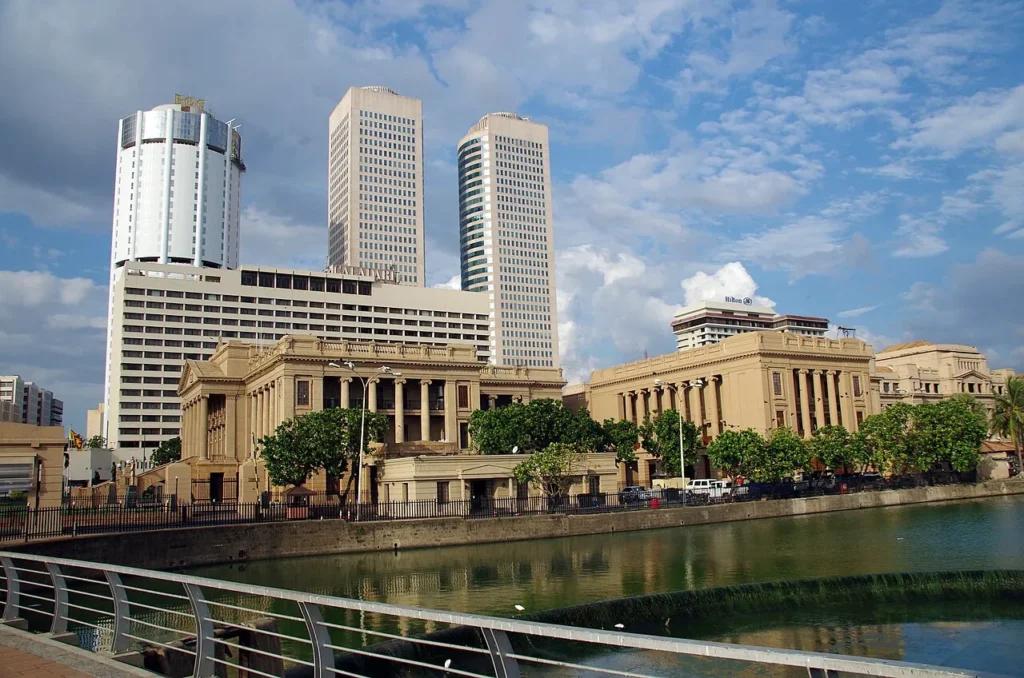
Most travelers arrive and depart through Colombo. The blue Colombo Express Bus is the cheapest airport transfer at about 500 LKR, running every 30 minutes between 5:30am and 8:30pm and taking roughly an hour. It stops at Central Bus Stand, Pettah Fort, and Colombo Fort Station. A taxi costs 6,000 to 9,000 LKR instead.
Trains remain the best way to explore. Routes pass through scenic countryside and connect travelers with local life. Journeys run slower than flights, so patience helps.
Popular routes sell out fast. The scenic train linking Kandy with Nuwara Eliya or Ella requires advance booking for a reserved seat, available up to 30 days ahead through the Sri Lankan railway website. Physical tickets must be collected from the ticket office before departure. Unreserved second- and third-class tickets stay available on the day of travel, though seating is cramped.
Top Sights and Timing Your Visit
Sigiriya, an ancient rock fortress and UNESCO World Heritage Site, ranks among the country’s most famous landmarks. It opens at 6:30am, and arriving early avoids the heavy crowds that build after 10am. The single-file climb takes about an hour.
Weather depends on two separate monsoons. The southern and western beaches are best from December to March, while April to September suits the north and east.
Sacred sites require modest dress. Clothing should cover shoulders and knees, and shoes and socks come off before entering temples, even outdoor ones, so flip-flops keep socks clean.
Galle works well as a day trip rather than an overnight stop. The Dutch fort town offers limited activities, a pattern shared by many gateway towns near national parks.
What Sri Lanka Costs
Sri Lanka stays budget-friendly even with occasional splurges. A daily budget of 10,000 to 18,000 LKR covers most travelers comfortably. Sticking to local cuisine, traveling by second- or third-class train and bus, and choosing modest accommodation keeps costs low.
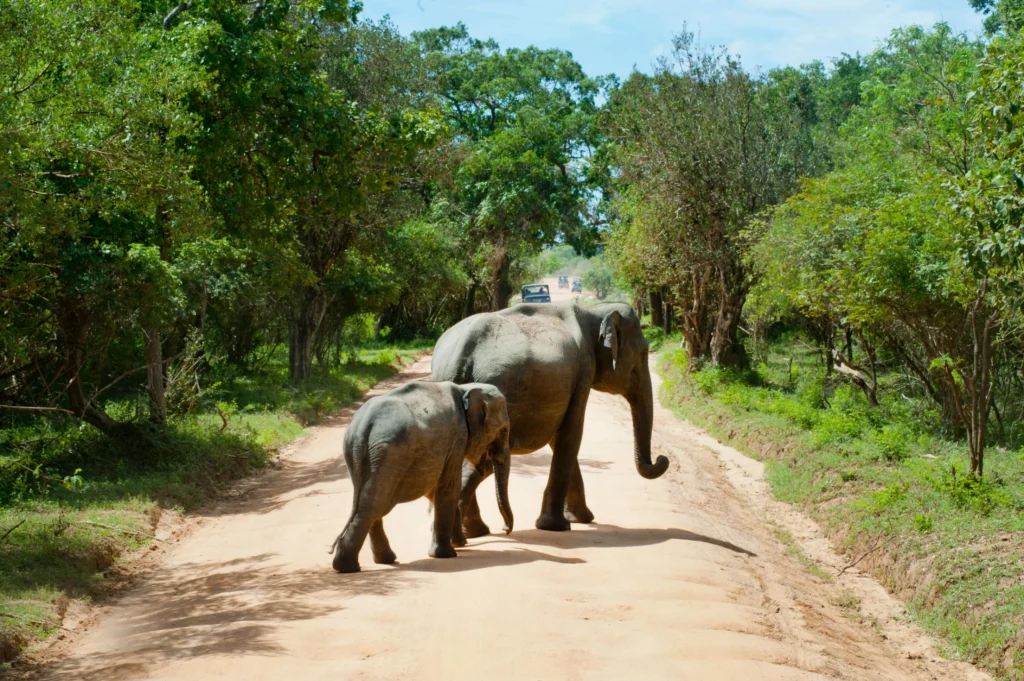
Sample attraction prices include the National Museum in Colombo at 1,500 LKR, the Temple of the Tooth in Kandy at 2,000 LKR, Sigiriya Rock at 7,500 LKR, and a half-day Yala National Park tour at 16,900 LKR.
Food costs stay minimal. Water runs 115 LKR a bottle, curry dishes cost 600 to 1,200 LKR, a domestic beer is 700 LKR, and a Western dinner starts around 2,000 LKR. Transport is equally cheap, with short tuk-tuk rides at 120 to 200 LKR and the Jaffna to Anuradhapura train at 2,500 LKR.
Suggested Itineraries by Region
Most travelers concentrate on the southern half, known for hiking and beach towns. The north carries a legacy of conflict and draws far fewer visitors, which appeals to those seeking quieter routes. Anuradhapura and Sigiriya hold ancient ruins, Kandy offers hiking and a major Buddhist temple, Nuwara Eliya centers on trekking, and Tissa serves as the gateway to Yala National Park.
Two weeks suits a single region. A southern route runs Colombo, Hikkaduwa, Galle, Mirissa, Tangalle, Tissa, Ella, Nuwara Eliya, Kandy, and back to Colombo. A northern route covers Colombo, Nuwara Eliya, Ella, Kandy, Sigiriya, Anuradhapura, Trincomalee, Jaffna, and Colombo. Four weeks allows the full loop plus coastal stops at Arugam Bay and Negombo.
Where to Stay
Accommodation stays affordable nationwide. Basic hostel dorm beds cost 2,500 to 4,000 LKR, while guesthouses with private en-suite rooms start around 7,500 LKR, often including breakfast. Recommended options include C 1 Colombo Fort in Colombo, Palitha Home Stay in Sigiriya, Jaye’s Home Stay in Kandy, and Backpacker Galle Hostel in Galle.
Sri Lanka packs jungles, waterfalls, wildlife, and welcoming people into a small footprint. Taking time to explore each region delivers the fullest experience.
Stay tuned with us. Further, follow us on social media for the latest updates.
Join us on Telegram Group for the Latest Aviation Updates. Subsequently, follow us on Google News
