


LONDON- British aviation regulators have issued a safety warning after official data showed a sharp rise in incidents involving power banks and other lithium battery-powered devices overheating onboard aircraft.
The UK Civil Aviation Authority (CAA) reported that such cases have nearly doubled within a single year, raising concerns across the global aviation sector.
The warning applies to all airlines operating in and out of the United Kingdom (UK), including British Airways (BA) and flights using major hubs such as London Heathrow Airport (LHR).
Regulators have highlighted that passenger awareness remains low, even as airlines introduce stricter onboard safety rules.

Battery Incident Rise in the UK
The CAA confirmed that lithium battery-related incidents, including overheating, smoke, and fire events, have increased significantly between 2024 and 2025.
The reported rise stands at approximately 98 percent, making it one of the fastest-growing safety risks in commercial aviation.
Regulators also stated that power banks, mobile phones, laptops, and vaping devices are commonly involved in these incidents. On average, a long-haul aircraft such as the Airbus A380 may carry up to 2,000 lithium-powered devices onboard during a single flight.
Despite long-standing regulations, the CAA found that around 36 percent of passengers remain unaware that lithium batteries must not be packed in checked luggage.
This lack of awareness increases the risk of improper storage, particularly during peak travel seasons.

Flight Safety Risks of Batteries
Aviation experts have linked the increase in incidents to the growing use of portable electronic devices. Lithium batteries can undergo a dangerous process known as thermal runaway, where overheating triggers a rapid and uncontrollable chain reaction inside the battery cells.
Once thermal runaway begins, it can produce intense heat and fire that is difficult to extinguish. While cabin crew can respond using onboard firefighting equipment, the risk becomes significantly higher if the event occurs in the aircraft’s cargo hold, where suppression options are limited.
The CAA estimates that hundreds of incorrectly stored devices may be present in the baggage hold on any given flight. This situation increases the likelihood of an in-flight fire event that could require emergency procedures or diversion.
Measures to Avoid Lithium Battery Incidents
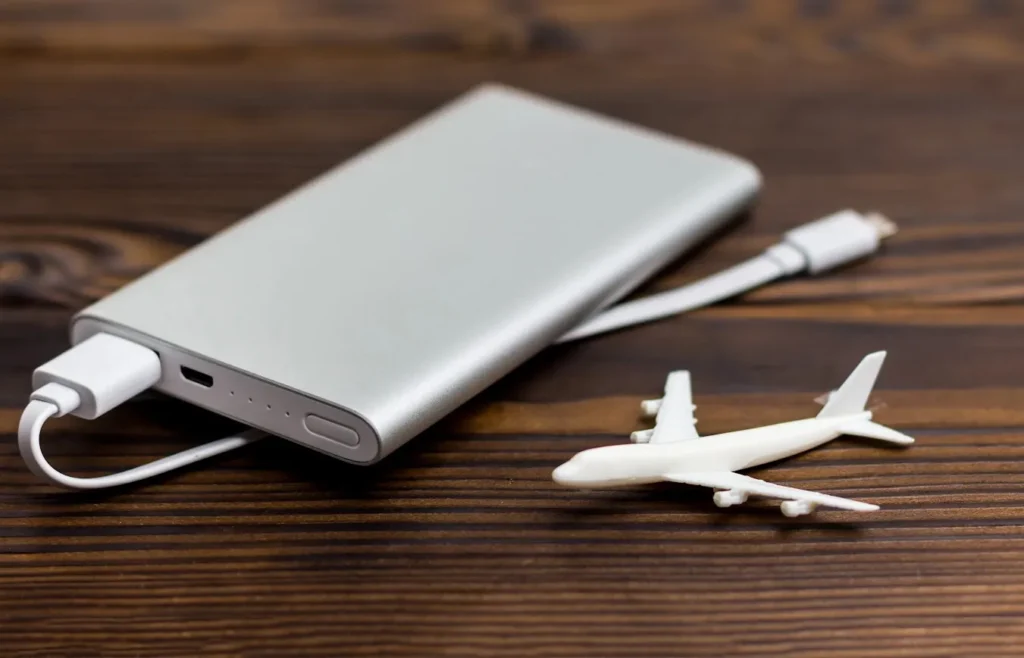
Airlines across Europe have introduced stricter guidelines to reduce the risk of lithium battery incidents onboard. These include restrictions on charging power banks during flight and requirements for passengers to store such devices in carry-on baggage only.
The CAA has also reinforced existing rules, advising passengers to keep power banks out of overhead bins so cabin crew can monitor them throughout the flight. In addition, many carriers now limit passengers to carrying no more than two power banks per person.
Tim Alderslade, Chief Executive of Airlines UK, emphasized that prevention begins with passenger awareness at the packing stage.
He stated that electronic devices such as tablets, vapes, and power banks should always remain in hand luggage rather than checked baggage, PYOK flagged.
Stay tuned with us. Further, follow us on social media for the latest updates.
Join us on Telegram Group for the Latest Aviation Updates. Subsequently, follow us on Google News
