

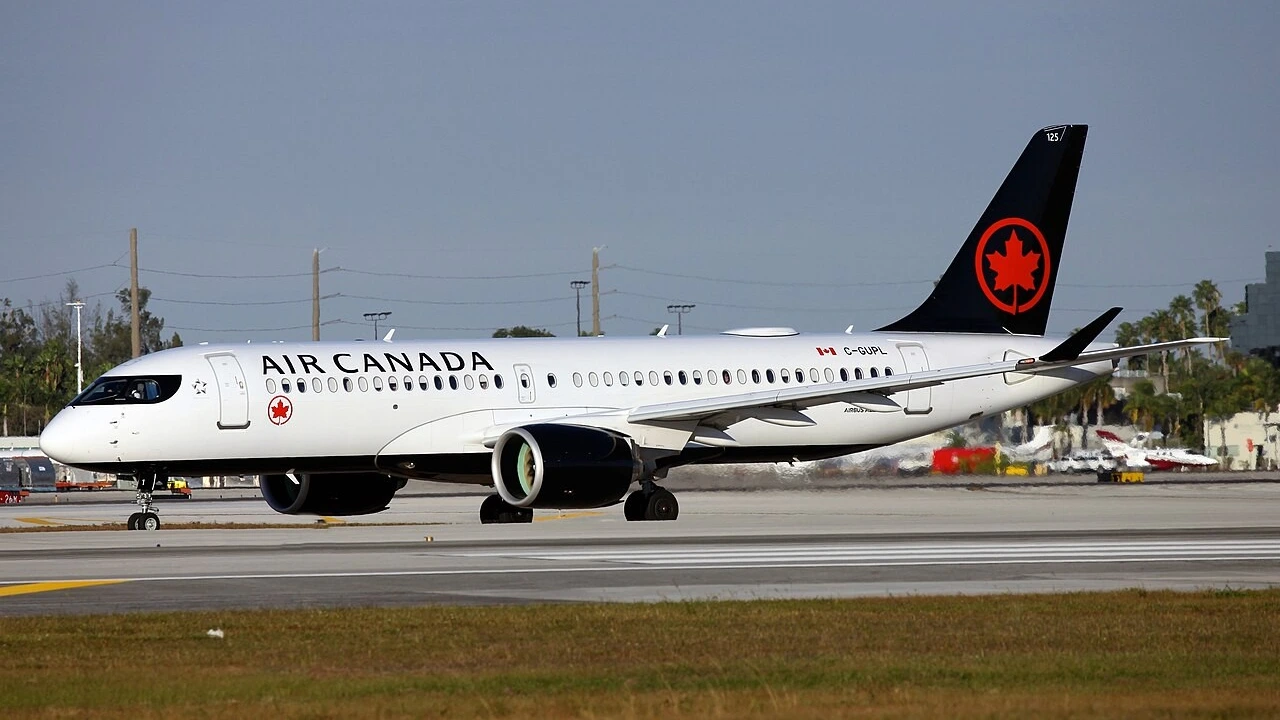
MONTREAL- Airbus is seeing renewed industry support for a stretched Airbus A220 variant as major customers highlight its market potential. Air Canada (AC) and aircraft lessor Azorra have publicly backed the concept during recent industry discussions.
Air Canada operates 42 Airbus A220 aircraft and expects 23 more deliveries, with most based around Montreal Trudeau International Airport (YUL) and Toronto Pearson International Airport (YYZ). The airline views a larger A220 variant as a strong fit for its domestic and North American network, Aviation Week reported.
Growing Momentum for the Airbus A220 Stretch
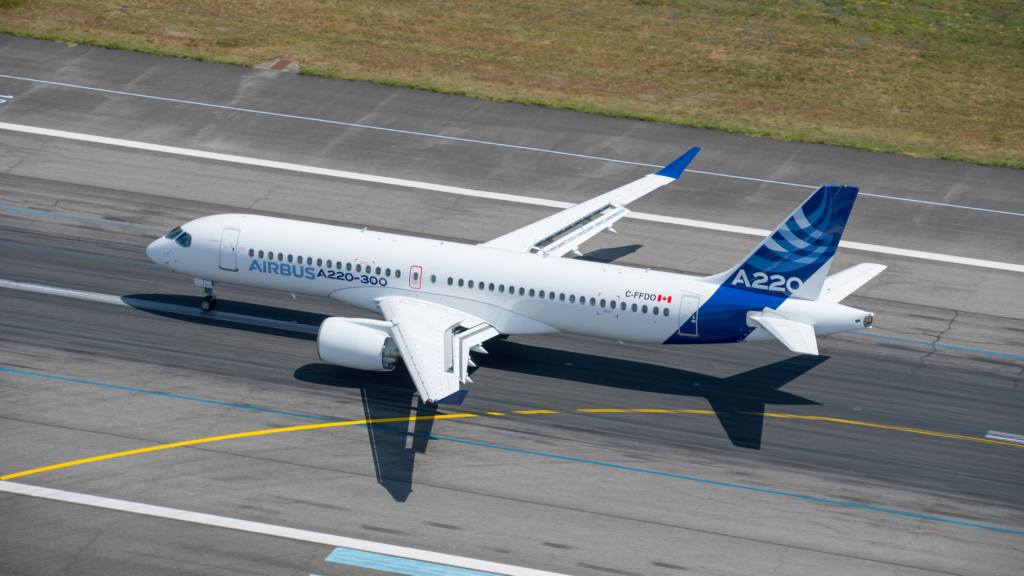
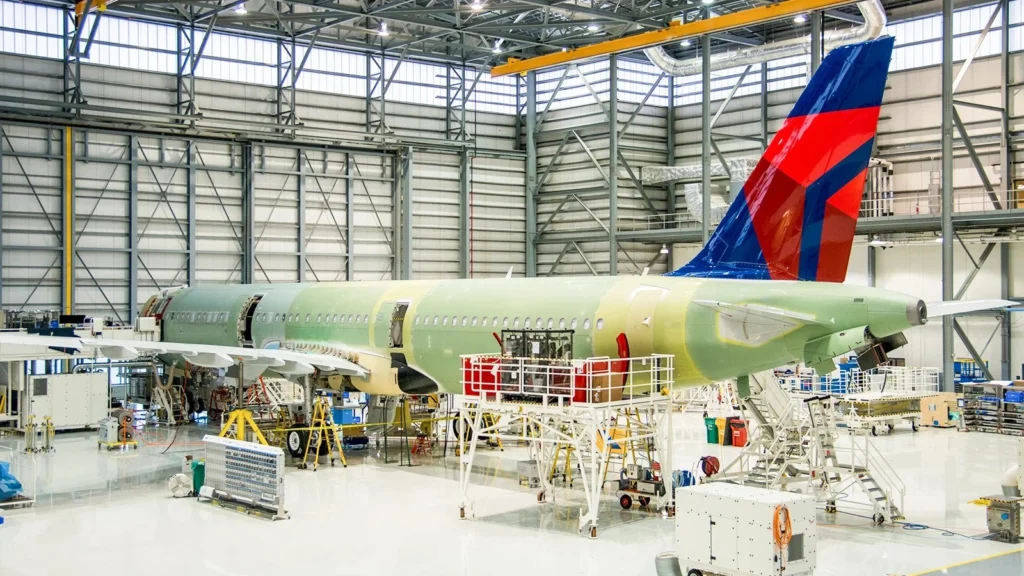
The proposed Airbus A220-500 is gaining attention among airline executives and leasing companies. Industry leaders believe the aircraft could deliver stronger seat economics while maintaining the operational advantages of the A220 platform.
Air Canada Chief Financial Officer John Di Bert said the aircraft would be an attractive option for the airline. He noted that a stretched version could provide additional capacity while maintaining the A220’s efficiency. According to him, Airbus is likely to launch the aircraft as interest continues to grow.
Azorra President Ron Baur also expressed strong support for the concept during the ISTAT Americas conference in San Diego. He said the aircraft appears to be gaining momentum and described Airbus’s willingness to invest further in the program as a positive signal for the market.
Both companies are major A220 customers. Azorra, headquartered in Florida, has focused heavily on building a fleet of modern small narrowbody aircraft that includes the Airbus A220 and Embraer E2 family.
Airbus Evaluates Launch Timing
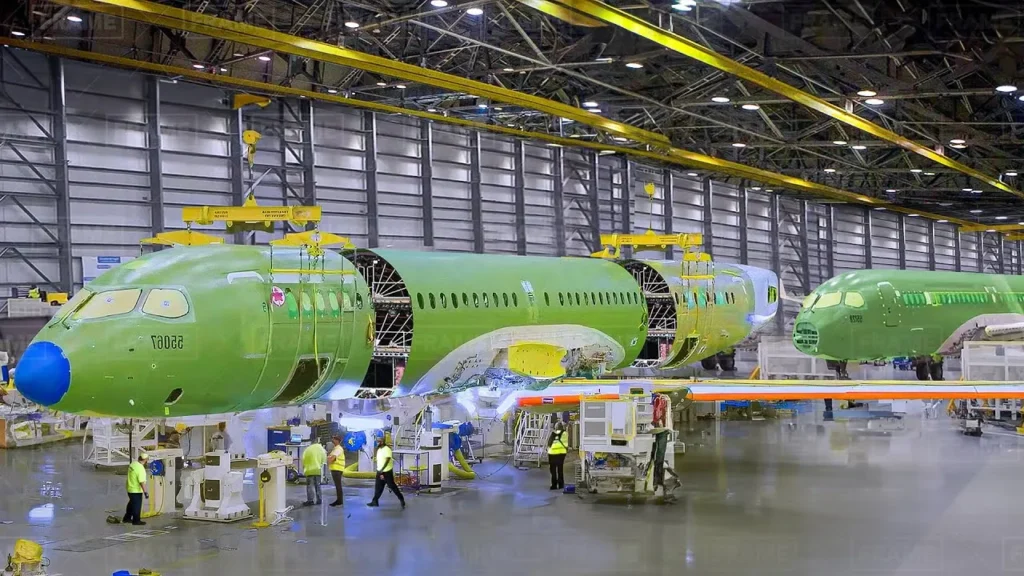
Airbus continues to study the right timing for launching the A220-500. The idea is not new. Bombardier originally planned a stretched version when the aircraft was still marketed as the CSeries.
Airbus Americas Chairman and CEO Robin Hayes confirmed that the manufacturer is spending significant time evaluating the aircraft. Along with the A220 stretch, Airbus is also studying a potential stretch of the Airbus A350.
Several major airlines have already expressed interest in the larger A220 variant. Air France (AF), Delta Air Lines (DL), and Lufthansa (LH) are among the carriers that have encouraged Airbus to develop the aircraft.
Industry estimates suggest the A220-500 could seat around 180 passengers in a single-class configuration. That would place it between the current A220-300 and larger narrowbody aircraft such as the Airbus A320neo and Boeing 737 MAX 8.
Range and Performance Considerations
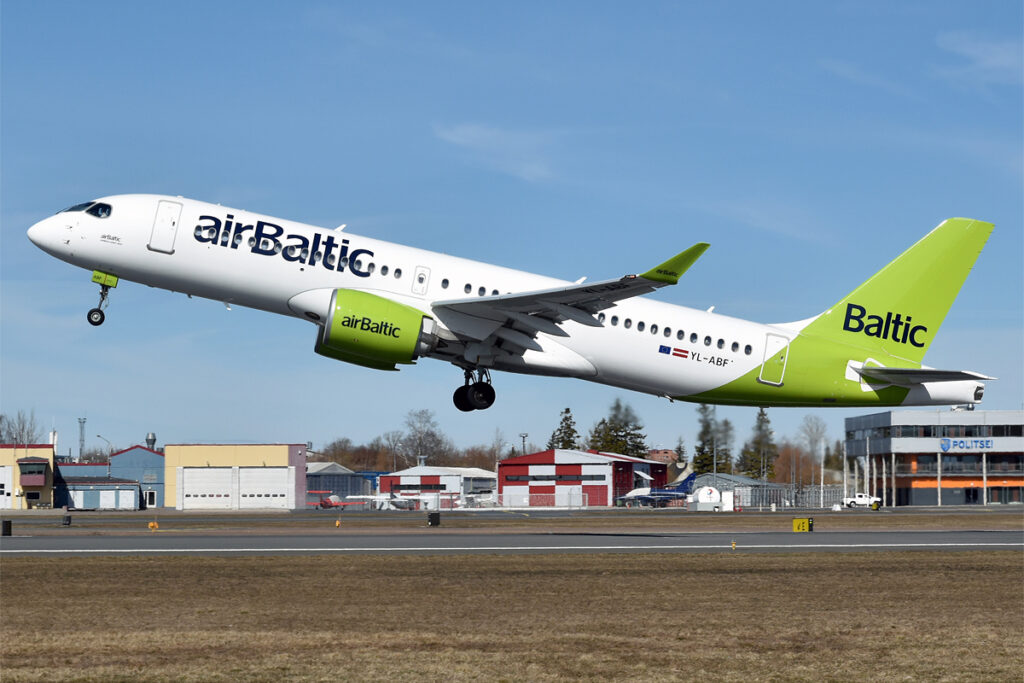
One key question in the program is range. A simple stretch usually increases passenger capacity but reduces maximum range because the aircraft structure and fuel capacity remain largely unchanged.
The current A220-300 offers a range of approximately 3,400 nautical miles (3,900 miles). Airbus must decide whether the A220-500 should match that range or accept a reduction in exchange for simpler engineering and lower development costs.
Airlines have different expectations. U.S. carriers often prefer aircraft capable of transcontinental routes, while many European operators do not require that capability.
Air Canada suggested that a slightly increased range, combined with more seats, would be useful for its network. The airline operates across Canada’s vast geographic expanse, making range a key consideration.

Strong Economics Expected From the Larger Variant
Industry analysts and leasing companies believe the A220-500 could deliver strong economic performance. Aircraft stretches typically improve cost efficiency because operating costs increase more slowly than seating capacity.
Azorra President Ron Baur said he strongly supports aircraft stretches because they usually provide better operating economics. He acknowledged that the A220-500 would likely sacrifice some range but said it could still become a highly effective aircraft if the range remains adequate.
He emphasized that the aircraft would not replace the Airbus A320neo or Boeing 737 MAX 8. Instead, it would complement those models by filling the gap between smaller regional aircraft and larger narrowbodies.
Strategic Impact for Airbus
The introduction of the A220-500 could reshape parts of Airbus’ narrowbody product strategy. Some analysts believe the aircraft could reduce demand for smaller A320neo orders.
However, that shift could also allow Airbus to allocate more production capacity to the highly demanded Airbus A321neo, which currently dominates many airline order books.
For leasing companies like Azorra, the stretched A220 would expand the potential customer base. Larger airlines that require higher-capacity narrowbody aircraft may find the A220-500 attractive if it delivers the expected operating efficiency.
Aviation consultant John Mowry from Alton Aviation Consultancy said there would likely be demand among airlines. However, he noted that Airbus must carefully weigh the risk of shifting demand away from the A320neo family.
Stay tuned with us. Further, follow us on social media for the latest updates.
Join us on Telegram Group for the Latest Aviation Updates. Subsequently, follow us on Google News
