


American Airlines is one of the world’s largest and most recognized carriers, operating a vast network that spans over 350 destinations across 60 countries.
Headquartered in Fort Worth, Texas, it forms part of the oneworld alliance and carries hundreds of thousands of passengers through its hubs such as Dallas–Fort Worth, Charlotte, and Miami.
With over 130,000 employees and a fleet exceeding 950 aircraft, American remains a cornerstone of global aviation.
However, the airline has also faced intense operational and financial challenges over the past decade, including high debt levels and fierce competition from Delta and United.
Such a complex enterprise demands stable and experienced leadership, and its chief executive’s compensation reflects that level of responsibility.
Here is a closer look at who American Airlines CEO Robert Isom is, what his salary structure looks like, and how it compares with his peers in the US aviation sector.
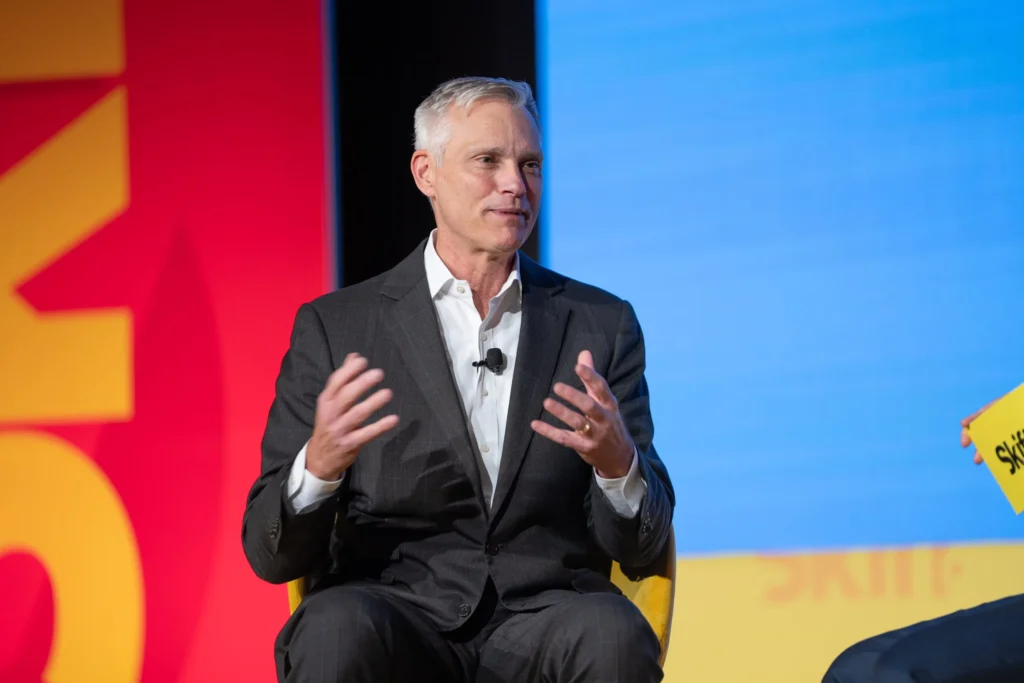
Who is American Airlines CEO Robert Isom?
Robert Isom is a seasoned aviation executive who has been leading American Airlines since March 2022, following Doug Parker’s retirement.
Born in 1964, Isom holds a Bachelor’s degree in Mechanical Engineering from the University of Notre Dame and an MBA from the University of Michigan’s Ross School of Business.
Before joining American Airlines, Isom’s career journey included key leadership roles at Northwest Airlines and America West Airlines.
At Northwest, he worked in operations and performance management, helping to streamline the carrier’s efficiency in the early 2000s. His tenure at America West would prove pivotal, as he worked closely with Doug Parker during a period of aggressive expansion and restructuring.
When US Airways merged with American Airlines in 2013, Isom took on the role of Chief Operating Officer (COO). Over nearly a decade in that position, he became known for his methodical leadership style and deep operational understanding.
He oversaw one of the largest fleet integration efforts in aviation history, helping unify two major airlines into a single cohesive system.
Since becoming CEO, Isom has continued to focus on operational reliability, network optimisation, and rebuilding customer trust after a turbulent pandemic recovery.
Under his leadership, American has worked towards stabilising schedules, improving punctuality, and reducing cancellations, particularly during peak travel seasons.
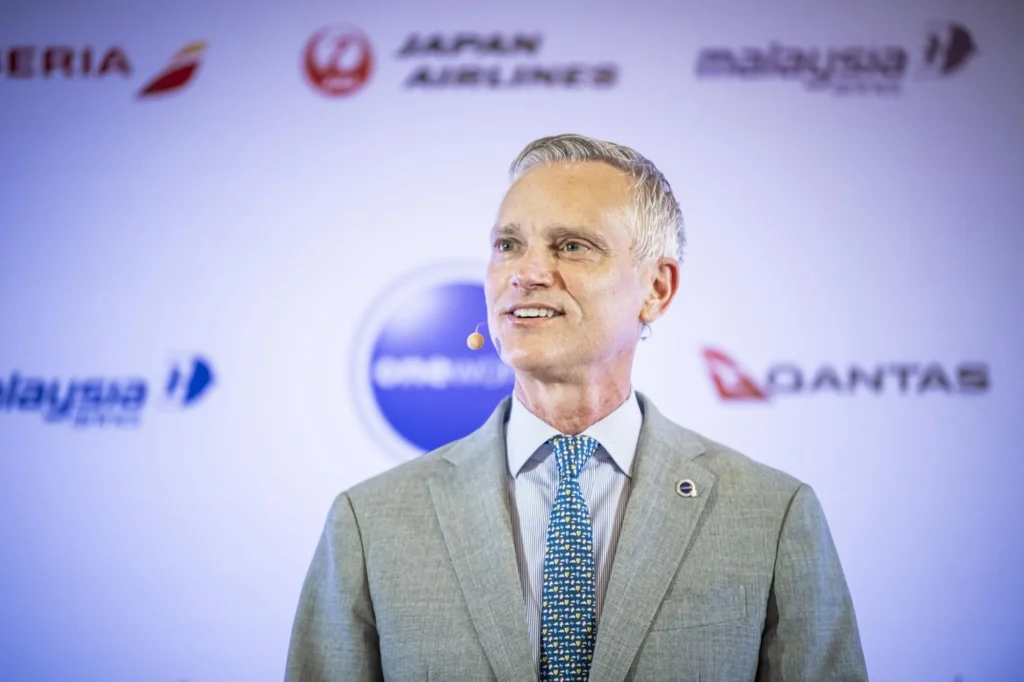
American CEO Robert Isom’s Salary and Compensation
Robert Isom’s pay package at American Airlines is designed to balance fixed pay, performance incentives, and long-term stock-based compensation.
His remuneration reflects both the scale of the organization and the variable nature of airline profitability.
For 2024–2025, Isom’s total reported compensation was approximately $13.2 million, consistent with the upper range for major US airline executives.
His base salary stood at around $1.4 million, which remained steady year to year. The annual performance-based bonus component added roughly $3.6 million, depending on the airline’s profitability and operational targets.
The largest portion of his compensation, however, came through long-term equity awards, estimated at $8 million, designed to align his interests with those of shareholders.
In addition to these, there are smaller elements such as pension contributions, insurance, and non-cash benefits, totaling around $200,000.
This structure, heavy on equity and performance rewards, reflects the airline’s commitment to tying executive pay to long-term corporate outcomes.
ALSO READ:
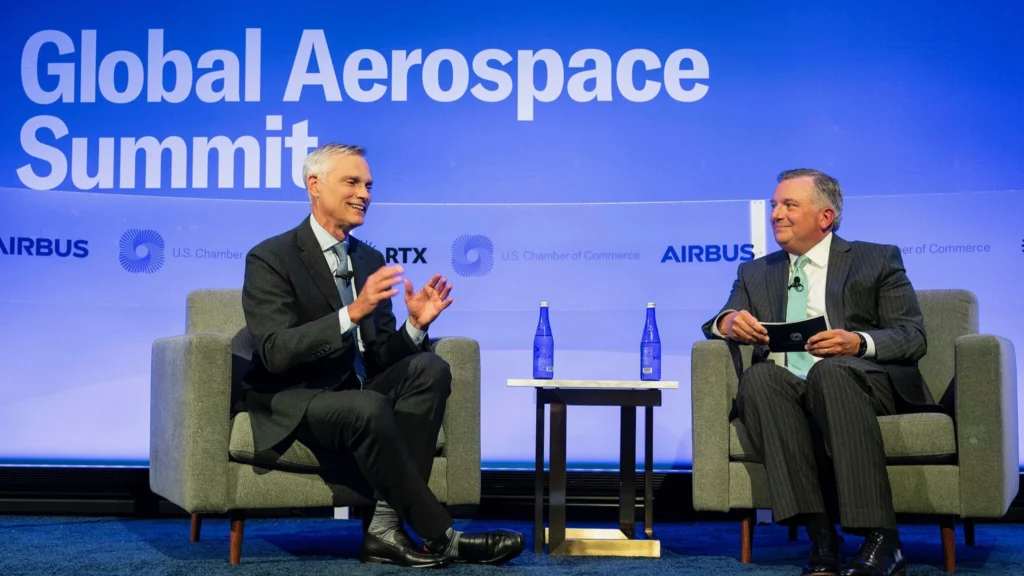
American Airlines CEO Pay Structure Explained
American Airlines’ executive pay philosophy is based on aligning leadership incentives with operational success, cost efficiency, and shareholder returns.
Some of the key features of Isom’s pay structure include:
- Base Salary: Fixed cash payment for leadership duties and responsibility.
- Annual Incentive Bonus: Based on key performance indicators such as adjusted operating margin, revenue growth, safety, and reliability metrics.
- Long-Term Equity Awards: Restricted stock units and performance shares granted annually, vesting over three years.
- Performance Alignment: Actual payouts vary significantly depending on company performance and market valuation.
- Deferred Benefits: Modest contributions to retirement and insurance schemes, typical of large US corporations.

Peer Comparison
When compared with his peers, Robert Isom’s compensation sits slightly below the highest earners in the US aviation industry but remains comfortably above the median.
At Delta Air Lines, CEO Ed Bastian received roughly $13.1 million in total compensation, closely aligned with Isom’s package. Bastian’s pay also included substantial stock-based incentives linked to Delta’s strong performance.
At United Airlines, CEO Scott Kirby earned an estimated $14.7 million, reflecting United’s aggressive growth strategy and improved profitability.
Kirby’s background in network planning and his emphasis on premium international routes have led to strong shareholder returns, justifying a higher incentive range.
Meanwhile, Southwest Airlines’ long-serving CEO Bob Jordan earned approximately $6.7 million, significantly lower than his legacy-carrier peers.
Southwest maintains a leaner cost structure and tends to offer more moderate executive packages in line with its overall operating philosophy.

American Airlines’ Plans for 2025
In 2025, American Airlines continues to pursue a multi-pronged strategy centred on efficiency, sustainability, and network optimisation.
One major initiative is the ongoing fleet renewal programme, which includes taking delivery of new Boeing 787s and Airbus A321XLR aircraft, allowing the airline to serve long-range and high-demand domestic routes more efficiently.
Older Boeing 767s and some Airbus A319s are gradually being retired to cut maintenance costs and emissions.
Operationally, American aims to improve on-time performance and customer satisfaction, areas where it has lagged competitors in recent years.
The carrier is also investing heavily in digital transformation, upgrading mobile platforms, streamlining airport processes, and enhancing loyalty integration through its AAdvantage program.
Financially, the airline’s focus remains on debt reduction and margin improvement, with plans to strengthen its balance sheet by at least $3 billion by the end of 2025.
In addition, American is expanding its international footprint, especially across the Atlantic and Latin America, where demand has rebounded strongly post-pandemic. New strategic partnerships are also expected to enhance connectivity and yield.
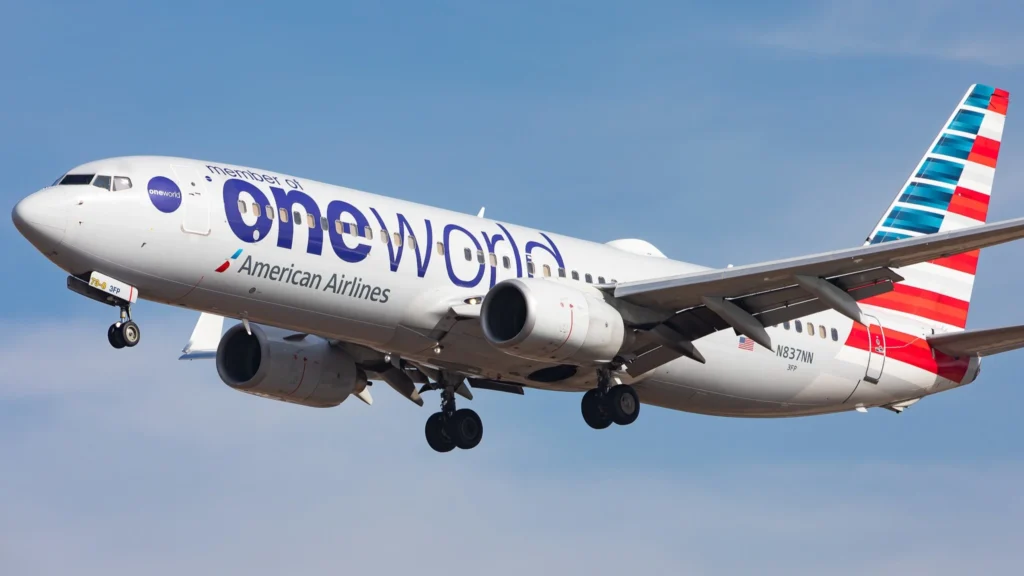
Bottom Line
Robert Isom’s pay at American Airlines reflects both the magnitude and the complexity of leading one of the world’s largest airline networks.
With a total compensation package of around $13.2 million, heavily weighted towards performance and equity incentives, his remuneration aligns with the company’s operational and financial outcomes.
American CEO FAQs
Robert Isom’s fixed annual base salary is around $1.4 million, consistent with most large US airline CEOs. The majority of his total pay, however, comes from performance-based bonuses and long-term stock awards.
For the 2024–2025 financial year, his total compensation is estimated at around $13.2 million, including salary, annual incentives, and equity-based rewards.
Isom’s overall pay is broadly in line with Delta’s Ed Bastian ($13.1 million) and slightly below United’s Scott Kirby ($14.7 million). It is, however, almost double that of Southwest’s Bob Jordan, whose package totals about $6.7 million.
Stay tuned with us. Further, follow us on social media for the latest updates.
Join us on Telegram Group for the Latest Aviation Updates. Subsequently, follow us on Google News
