


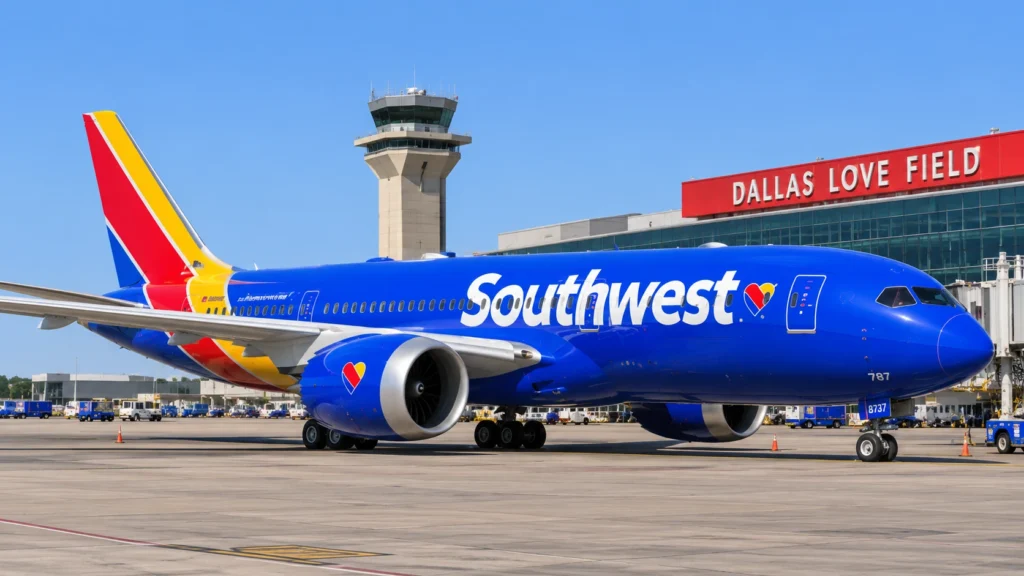
DALLAS- Southwest Airlines (WN) has shared a reunion between flight attendant Bernadette and Captain Mike, who first became friends in 1994.
The longtime colleagues recreated their original photograph after working one final flight together as Mike approaches the mandatory retirement age for US airline pilots.
Two Southwest Colleagues Recreate Their 1994 Photo
Bernadette and Mike first became friends in 1994, when they were photographed together after a flight. Thirty two years later, the longtime colleagues have recreated the same photograph, taking the original pose once again.
Southwest Airlines shared the photographs on LinkedIn with the caption, “32 years of friendship, and one last flight together!”
The airline explained that Mike’s approaching retirement gave the pair an opportunity to work one final flight together and create another memory before his departure from the flight deck.
The reunion was also reported by PYOK. The story highlights how difficult it can be for airline employees to maintain regular working relationships with the same colleagues over several decades.
Large airlines operate extensive networks with complex crew scheduling systems. Pilots and flight attendants work different routes, schedules and rotations, making repeated assignments with the same colleagues relatively uncommon.
At some airlines, crew members can go years without working together again. Finding the same colleague on several flights is often unusual because employee assignments change according to operational requirements.
Staffing also changes as employees resign, retire or leave an airline for other reasons. This makes long-term professional relationships more difficult to maintain.
Bernadette and Mike’s friendship has continued through these changes, making their 32-year connection particularly notable.

US Airline Pilots Must Retire at 65
Captain Mike’s approaching retirement reflects a federal aviation regulation rather than a retirement policy specific to Southwest Airlines.
Under Section 44729 of Title 49 of the United States Code, pilots operating covered multi-crew flights under Federal Aviation Regulations Part 121 can serve until they reach 65 years of age.
The legislation was introduced through the Fair Treatment for Experienced Pilots Act, which became law on December 13, 2007. Before the change, the mandatory retirement age for U.S. commercial airline pilots was 60.
The legislation increased the limit to 65, allowing experienced pilots to continue working for another five years.
The age restriction applies to covered airline pilot operations and remains in effect under current U.S. law. It does not establish an equivalent mandatory retirement age for flight attendants.
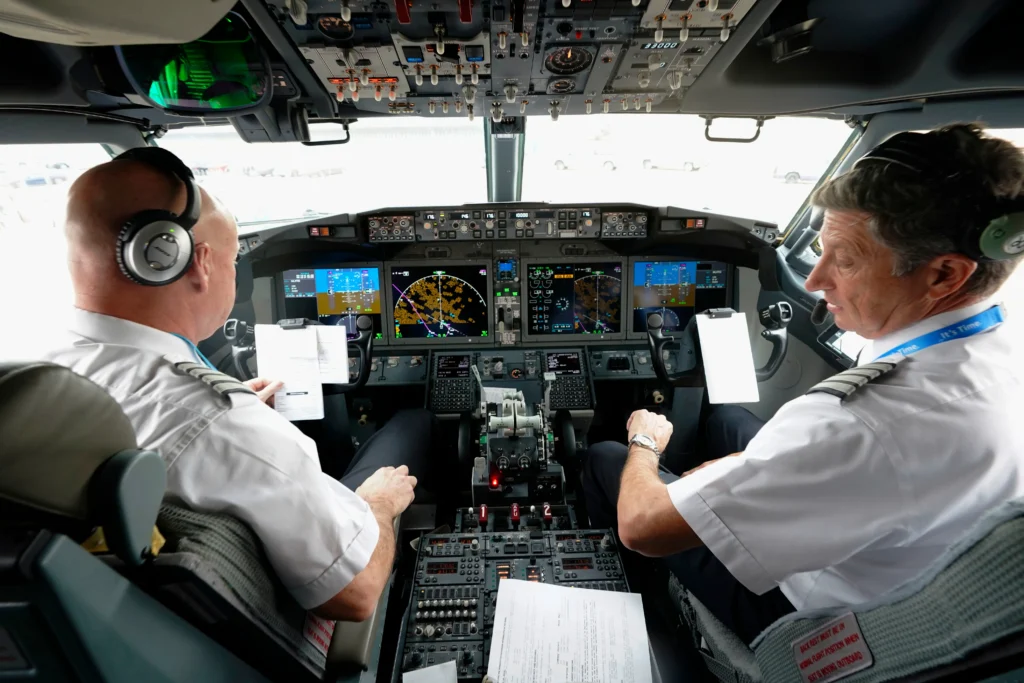
Lawmakers Push to Raise the Pilot Retirement Age to 67
The mandatory retirement age has remained a subject of debate among U.S. lawmakers, airlines and aviation industry organizations.
On July 15, 2025, Senate Majority Leader John Thune, Republican Senator Marsha Blackburn and Democratic Senator Mark Kelly sent a letter to Secretary of State Marco Rubio and the U.S. Mission to the International Civil Aviation Organization (ICAO).
The senators urged the United States to support international efforts to raise the commercial pilot retirement age. They argued that retaining experienced pilots could help address workforce concerns and keep highly qualified professionals in airline operations.
Senator Ted Cruz, chairman of the Senate Commerce Committee at the time, also supported changing the existing rules. In September 2025, he urged President Donald Trump to support raising the retirement age to 67 or potentially eliminating the upper age limit altogether through international aviation policy changes.
A further legislative effort emerged in 2026. On April 30, Senator Lindsey Graham introduced S. 4452, known as the Let Experienced Pilots Fly Act, with Senator Mark Kelly as an original co-sponsor.
The proposed legislation seeks to increase the retirement age for pilots engaged in covered commercial aviation operations. It was referred to the Senate Committee on Commerce, Science, and Transportation after its introduction.
The bill has not become law. The existing age limit of 65 therefore continues to apply to U.S. Part 121 airline pilots.
Regional Airlines Support Change, but Pilot Unions Oppose It
The proposal to raise the retirement age has divided the aviation industry.
The Regional Airline Association (RAA) supports increasing the limit to 67. The organization argues that retaining experienced pilots could help regional airlines manage staffing pressures, preserve experienced captains and maintain services to smaller communities.
Regional carriers have previously faced pilot availability challenges, particularly when major airlines recruited experienced pilots from their regional partners. These staffing pressures contributed to reductions in flight services at some smaller airports.
However, the situation has improved since the post-pandemic hiring period. A Government Accountability Office report published on April 30, 2026, found that regional pilot supply had rebounded somewhat.
Pilot certifications increased by about 10% between 2017 and 2024, while pilot student enrollment grew by 67%.
The report also identified a potential longer-term challenge. More than half of pilots holding Airline Transport Pilot certificates as of December 2024 could reach the mandatory retirement age within the following 20 years. This could affect the future supply of commercial pilots across the airline industry.
The Air Line Pilots Association (ALPA), however, strongly opposes raising the retirement age.
The union argues that increasing the U.S. limit without changing international standards would create operational difficulties for airlines. Pilots aged 66 and 67 would face restrictions on international operations, potentially requiring airlines to move them to domestic services.
ALPA has also raised concerns about additional training requirements, seniority arrangements, collective bargaining agreements and the wider impact on airline scheduling.
The disagreement reflects two different industry priorities. Regional airlines want to retain experienced pilots for longer, while pilot unions argue that increasing the age limit could create operational complications without necessarily improving overall pilot availability.
ICAO Rules Restrict International Flights Beyond 65
International aviation standards create an additional challenge for any country considering a higher pilot retirement age.
The International Civil Aviation Organization establishes global standards for pilot licensing and commercial flight operations.
Under ICAO’s current Annex 1 standards, pilots engaged in international commercial air transport operations cannot exercise their privileges after reaching 60 years of age in single-pilot operations or 65 years in operations involving more than one pilot.
The International Air Transport Association (IATA), which represents airlines worldwide, proposed increasing the international age limit for multi-pilot operations from 65 to 67.
The proposal included an important safety condition: at least one other pilot in the flight deck would have to remain younger than 65.
ICAO considered the proposal during its 42nd Assembly, held in Montreal, Canada, from September 23 to October 3, 2025.
However, the Assembly did not approve the proposed increase. ICAO concluded that available medical science and evidence remained inconclusive regarding a higher upper age limit.
Member states agreed that further research and data collection were necessary before considering changes to the existing international standards.
Consequently, increasing the US retirement age alone would not allow pilots aged 66 or 67 to operate international commercial flights under the current ICAO rules.
Canada Has No General Upper Age Limit
Canada follows a different approach to domestic pilot licensing. Transport Canada’s published licensing standards do not establish a general upper age limit for Airline Transport Pilot Licence holders.
However, Canadian pilots operating international commercial flights remain subject to applicable ICAO age restrictions. This means the international limit of 65 for multi-pilot operations continues to apply.
Stay tuned with us. Further, follow us on social media for the latest updates.
Join us on Telegram Group for the Latest Aviation Updates. Subsequently, follow us on Google News
