

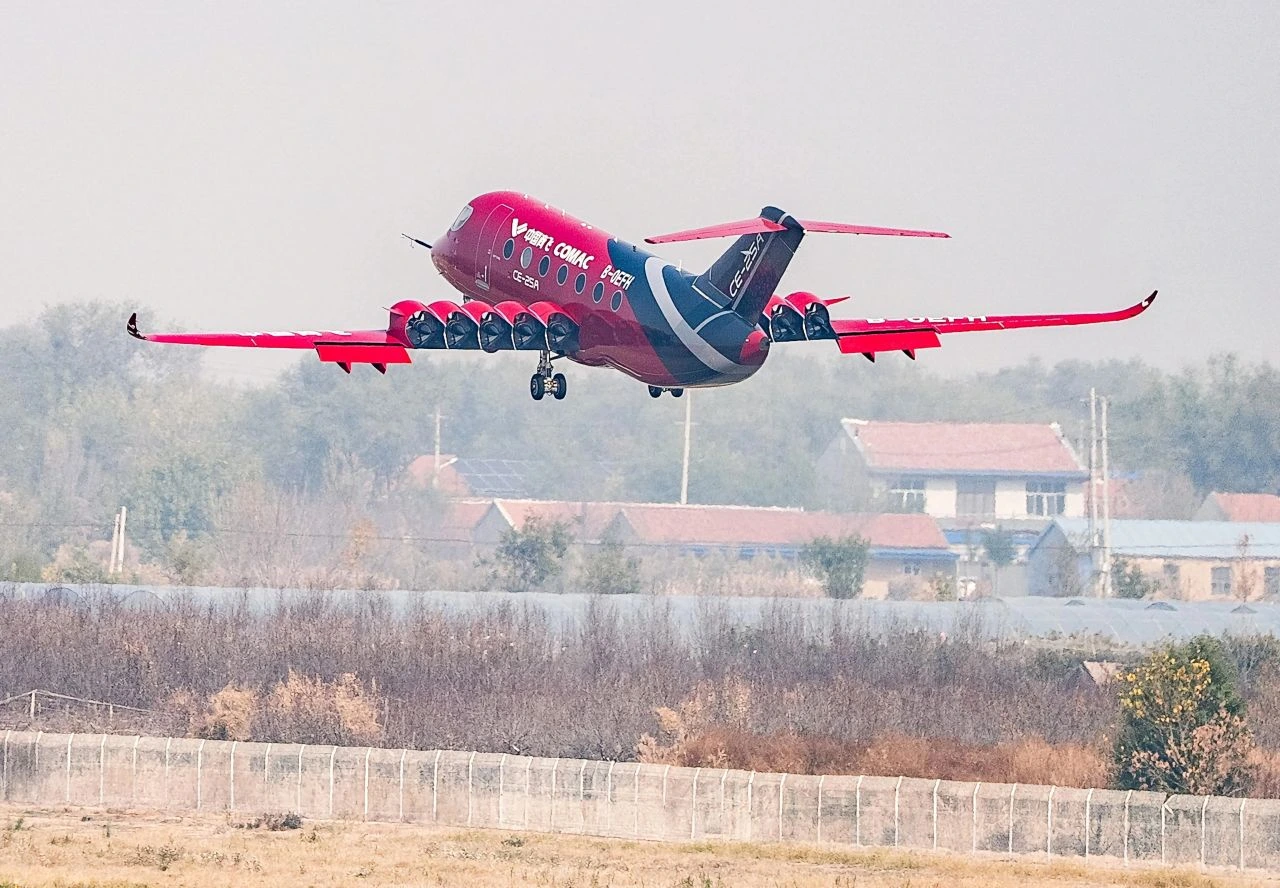
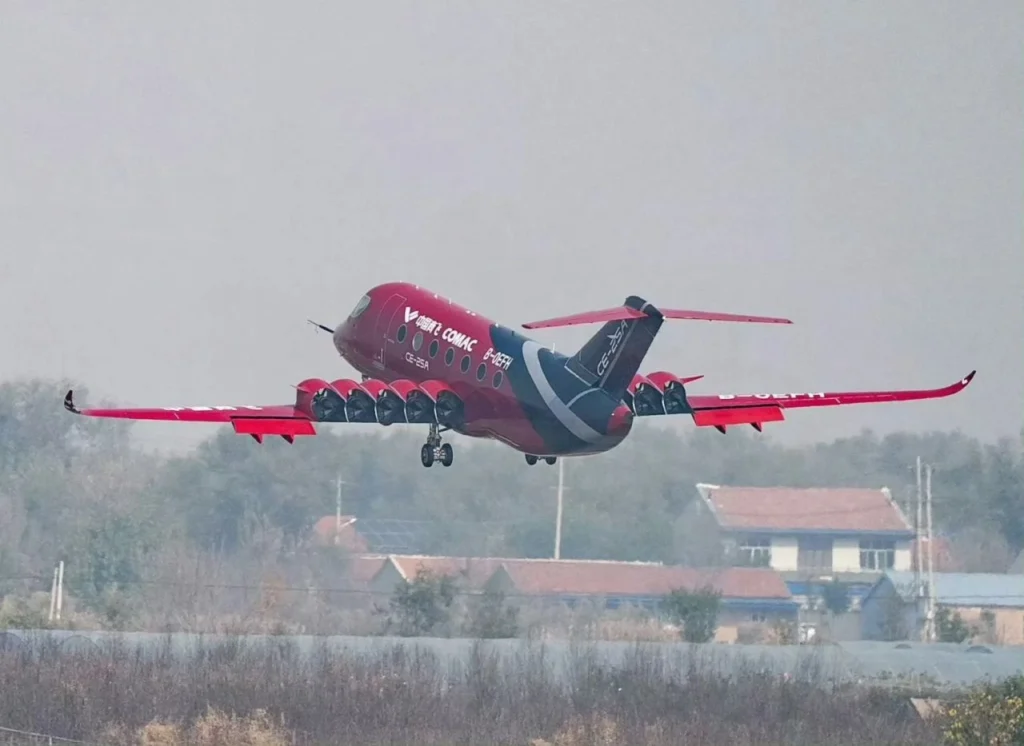
BEIJING- China has taken another step towards developing electric commercial aviation after its independently developed CE-25A aircraft completed its first crewed flight in Shandong Province, East China. The 10-ton-class aircraft, developed with the involvement of the Commercial Aircraft Corporation of China (COMAC), carried two pilots and a flight test engineer during the milestone flight on Saturday, November 14, 2026.
The aircraft operated normally throughout the flight, with its performance indicators meeting expectations, according to information released by China’s state news agency Xinhua. The achievement follows the CE-25A’s first autonomous unmanned flight on February 2, marking another important stage in its flight-testing programme.
CE-25A Aircraft Specifications
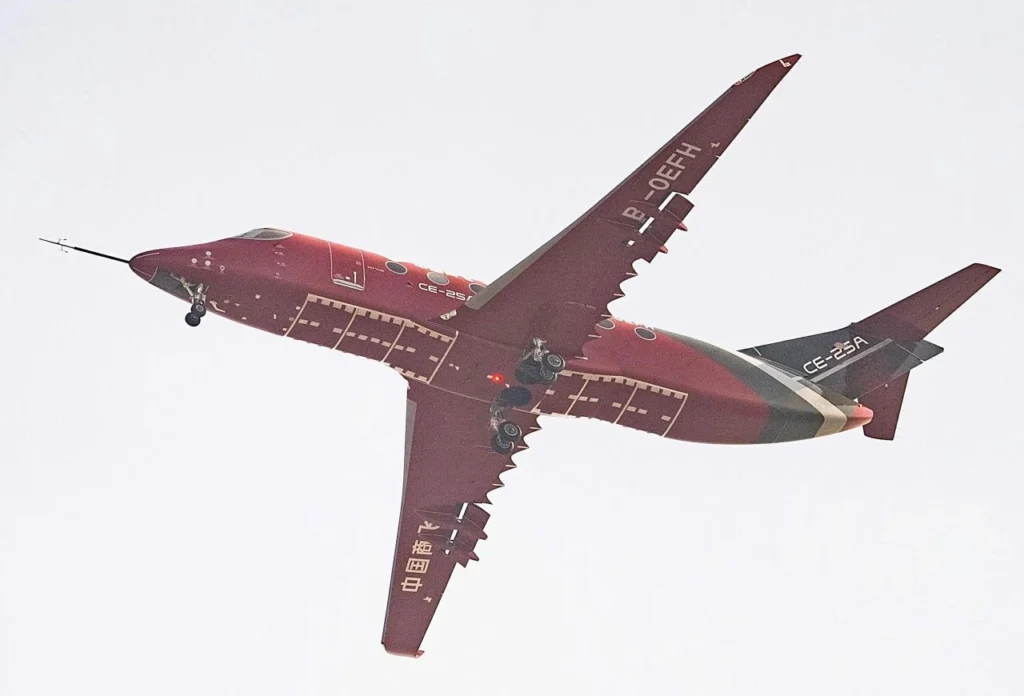
The CE-25A is COMAC’s first electric commercial aircraft and was designed primarily for short-distance commercial services between cities. It can accommodate up to 19 passengers, positioning it for regional operations rather than conventional long-haul airline services.
The aircraft has a maximum takeoff weight of 10 tonnes and a planned cruising speed of 300 kilometres per hour. Its published specifications also include a cruising altitude of 2,400 metres and a maximum range of 400 kilometres.
Unlike conventional aircraft that rely on fuel-powered turbofan or turboprop engines, the CE-25A uses a distributed electric ducted-fan propulsion system mounted across its wings. The configuration uses multiple electrically powered fans to generate thrust, making electric propulsion central to the aircraft’s design.
COMAC has also given the aircraft’s designation a specific meaning. The letter ‘C’ represents China and COMAC, while ‘E’ stands for electric. The number ’25’ refers to China’s CCAR-25 transport-category airworthiness regulations, and ‘A’ identifies it as the first product in the series.
Certification Process Advances
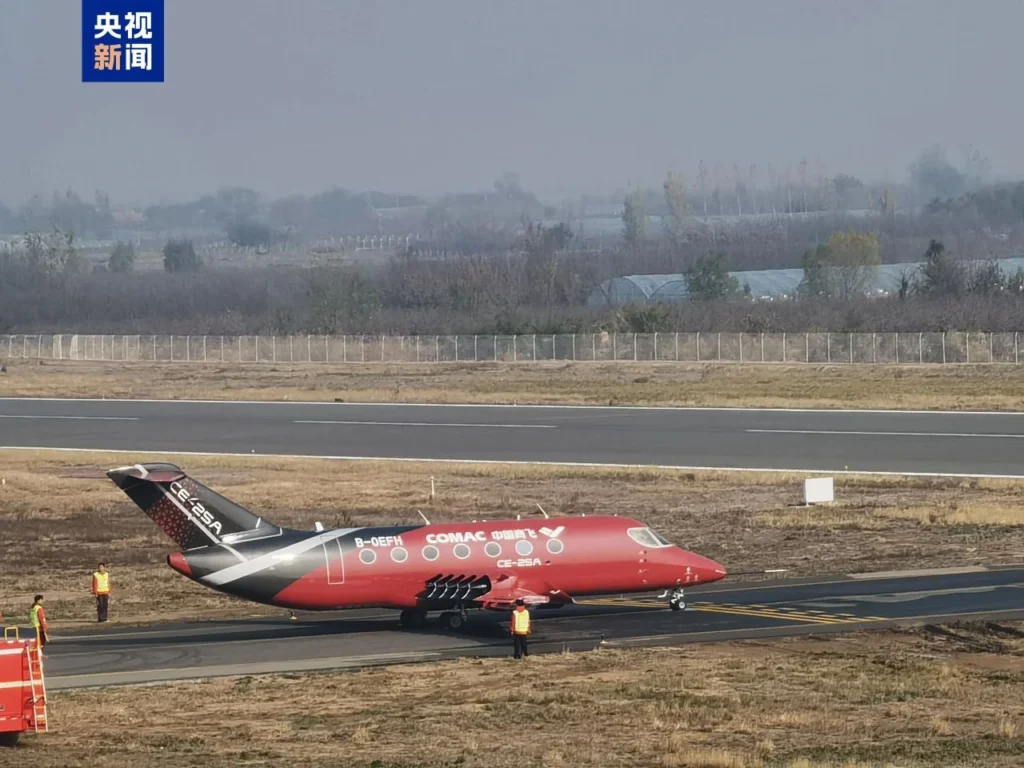
The crewed flight follows an extensive autonomous testing programme. The CE-25A had completed 19 unmanned autonomous flight verification tests before carrying its first onboard flight crew.
The latest milestone demonstrates progress from autonomous flight testing towards operations with pilots and flight-test personnel onboard. However, the aircraft must complete further development and certification requirements before it can enter commercial passenger service.
COMAC developed the aircraft in collaboration with Contemporary Amperex Technology Co. Limited (CATL), the Chinese battery manufacturer, and Shanghai Jiao Tong University. The partnership brings together aircraft development, battery technology and academic research.
China’s Civil Aviation Administration (CAAC) has accepted the CE-25A’s application for a type certificate. This marks the beginning of the formal certification process, rather than confirmation that the aircraft has received approval to carry paying passengers, Global Times reported.
Bottom Line
The programme represents another development in China’s efforts to expand its domestic commercial aviation industry beyond conventional passenger jets.
If the aircraft completes certification and enters service, its 19-seat capacity and 400-kilometre range could make it suitable for selected short-distance routes between cities.
For now, the successful first crewed flight marks a significant development milestone, while further flight testing and regulatory approval remain necessary before the CE-25A can begin commercial operations.
Stay tuned with us. Further, follow us on social media for the latest updates.
Join us on Telegram Group for the Latest Aviation Updates. Subsequently, follow us on Google News
