


DUBAI- Emirates Airline (EK) President Sir Tim Clark has revealed that the Iran war has further delayed his retirement plans, extending his leadership of one of the world’s largest international airlines. Clark made the announcement while speaking at an economic summit in Berlin (BER).
The 76-year-old aviation executive originally planned to leave Emirates in June 2020 after 35 years with the airline. However, the COVID-19 pandemic forced him to postpone his departure, and the latest geopolitical crisis has now disrupted his retirement plans again.

Iran War Further Delays Tim Clark’s Emirates Retirement
Clark addressed his retirement plans during an economic summit organised by German newspaper Süddeutsche Zeitung in Berlin. He explained that he had recently considered stepping down after Emirates achieved its highest-ever financial performance.
However, the outbreak of the Iran war changed his plans once again.
“I thought now is the time and, bingo, the war started,” Clark told the audience. “So here we are again.”
His remarks indicate that the ongoing geopolitical situation has influenced his decision to remain at Emirates for longer. Although he had previously considered leaving the airline, Clark has not announced a new retirement date.
The latest development comes after several decades in which Clark helped establish Emirates as a major force in international aviation. His continued presence also means the airline has yet to complete the leadership transition originally planned for 2020, PYOK flagged.

Sir Tim Clark’s Journey From British Caledonian to Emirates
Born in Aruba to British parents, Clark developed his aviation career long before Emirates began operations.
He joined British Caledonian in 1972 before moving to Bahrain-based Gulf Air in 1975. In 1985, he moved to Dubai and joined the founding team of Emirates as Head of Airline Planning.
Clark played an important role in developing the airline’s initial business strategy, network and long-term expansion plans.
Emirates appointed him President in 2003, giving him significant responsibility for the airline’s commercial direction, fleet strategy and international growth.
He has remained in the position since then, becoming one of the most influential executives in the global aviation industry.
Clark received a knighthood in the 2014 New Year Honours for his contributions to aviation and British prosperity.

How Tim Clark Helped Transform Emirates
Clark’s leadership coincided with Emirates’ transformation from a relatively new Dubai-based airline into a major international carrier.
A key part of his strategy involved investing in large aircraft capable of carrying more passengers over long distances. Emirates developed its global network around Dubai International Airport (DXB), using the airport as a major connecting hub between Europe, Asia, Africa, Australia and the Americas.
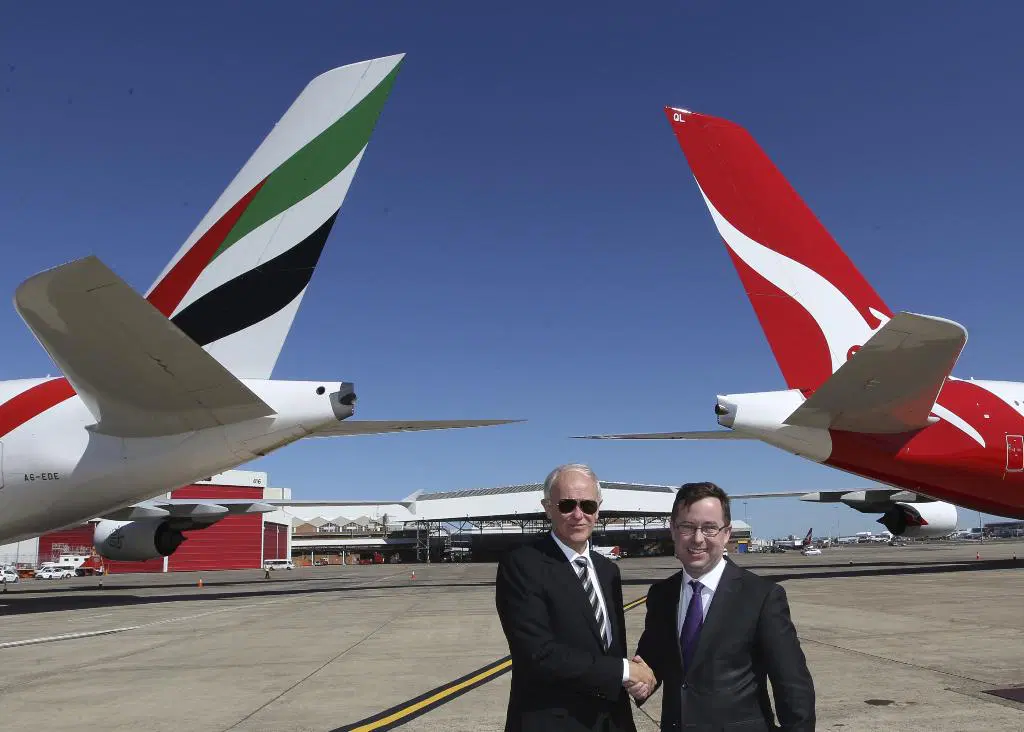
His support for the Airbus A380 became one of the defining elements of Emirates’ development.
Clark strongly supported the superjumbo and pushed for premium onboard features that would differentiate Emirates from competing airlines.
These included private showers for First Class passengers and a full-sized bar and lounge on the aircraft’s upper deck.
Emirates subsequently became the world’s largest Airbus A380 operator. The aircraft helped the airline increase capacity on major international routes while strengthening its premium travel offering.
Clark has also expressed disappointment over Airbus’ decision to end A380 production in 2021. He believed the aircraft had significant potential for airlines operating high-capacity international routes.
COVID-19 Pandemic First Postponed His 2020 Retirement
Clark’s original retirement plan dates back to December 2019, when he announced that he intended to leave Emirates in June 2020.
After approximately 35 years with the airline, he planned to remain involved as a special advisor to support the leadership team and ensure a smooth transition.
At the time, Clark expressed confidence in the executives who would continue managing the airline after his departure.
However, the COVID-19 pandemic created an unprecedented challenge for the global aviation industry.
International travel restrictions, border closures and reduced passenger demand forced airlines to change their operations. Emirates also faced significant pressure as international aviation experienced one of its most difficult periods.
The airline needed experienced leadership to manage the crisis, and Clark agreed to remain in his position.
When international travel gradually recovered and passenger demand returned, Clark continued leading the airline rather than completing his planned departure.
The 2020 retirement plan therefore never materialised, allowing him to remain at the helm through the industry’s recovery and Emirates’ subsequent financial growth.
Emirates Reports Record Financial Performance
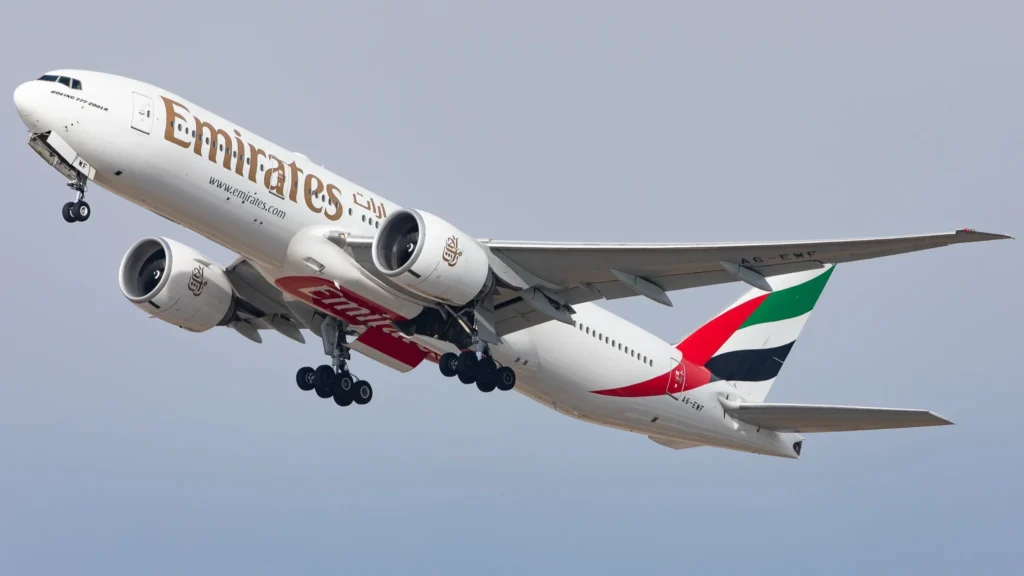
The latest retirement discussion follows a record financial year for Emirates.
For the financial year ended March 31, 2026, Emirates Airline reported revenue of AED 130.9 billion (US$35.7 billion) and a record profit before tax of AED 22.8 billion (US$6.2 billion).
Its profit after tax reached AED 19.7 billion (US$5.4 billion), marking the strongest financial performance in the airline’s history.
The results reflected strong passenger demand, higher yields and the airline’s ability to generate substantial revenue across its international network.
Clark’s consideration of retirement after this record performance suggested that he viewed the airline’s financial position as a possible opportunity to step aside.
However, the Iran conflict has created another period of uncertainty for the aviation industry, delaying that possibility once again.

Who Could Replace Tim Clark at Emirates?
Clark’s eventual departure will create an important leadership transition for Emirates, particularly because he has held the President position for more than two decades.
Two senior executives already hold prominent positions within the airline’s leadership structure.
Adel Ahmad Al Redha serves as Deputy President and Chief Operations Officer. He oversees several important areas, including flight operations, engineering, fleet procurement, airport services, training and worldwide network operations.
Adnan Kazim serves as Deputy President and Chief Commercial Officer. His responsibilities include passenger and cargo operations, worldwide sales, airline partnerships, revenue optimisation, the Emirates Skywards programme and commercial strategy.
Both executives have extensive experience within Emirates and occupy senior positions in its management structure.
However, Emirates has not publicly confirmed either executive as Clark’s designated successor.
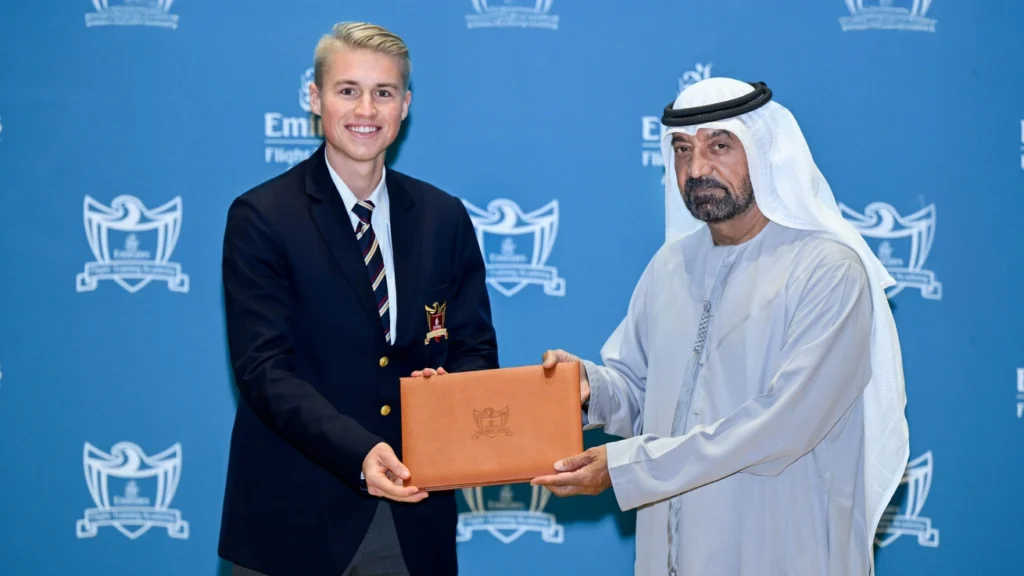
The airline’s leadership structure also includes HH Sheikh Ahmed bin Saeed Al Maktoum as Chairman and Chief Executive of Emirates Airline and the Emirates Group, while Clark holds the position of President.
Emirates Faces Another Important Leadership Transition
Clark’s latest comments highlight how major global events have repeatedly influenced his retirement plans.
The COVID-19 pandemic prevented his departure in 2020, while the Iran war has now disrupted another opportunity to step down.
His long association with Emirates makes succession planning particularly important. A future transition will need to maintain the airline’s operational performance, international expansion strategy and commercial position.
For now, Clark remains President, and there is no confirmed date for his departure.
His eventual successor will inherit an airline with an extensive global network, a major widebody fleet and an established position in international aviation.
Stay tuned with us. Further, follow us on social media for the latest updates.
Join us on Telegram Group for the Latest Aviation Updates. Subsequently, follow us on Google News
