


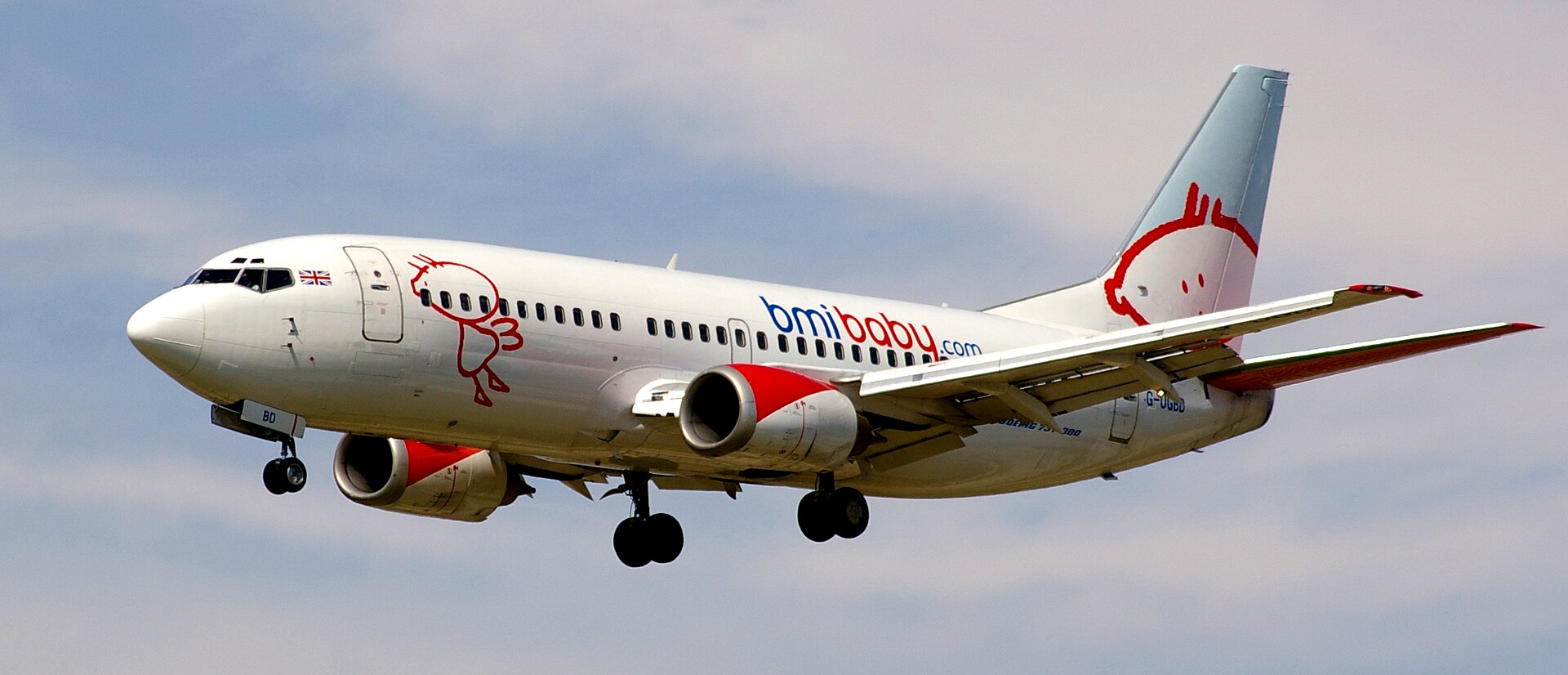
DERBYSHIRE- An unusual aircraft retirement has taken place in the United Kingdom, where engineer Dave Billings has buried the fuselage of a former Bmibaby Boeing 737-500 in his garden. After purchasing the three-tonne aircraft section on Facebook Marketplace for £4,000, Billings lowered it into a large underground excavation to expand an existing bunker beneath his property.
The 45-year-old plans to connect the former passenger aircraft to an underground network of tunnels, rooms and concealed entrances that he has been developing for several years. Although the project could eventually provide shelter during a major conflict, Billings primarily sees the unusual installation as a family recreation space and underground party room.

https://commons.wikimedia.org/wiki/File:Bmibaby_Boeing_737-36M_(G-TOYJ)_by_Martin_Woudstra.jpg
Boeing 737 Bunker Built in the UK
The aircraft originally operated with Bmibaby, a British low-cost airline that ceased operations in 2012. The Boeing 737-500 was built in 1993 and reportedly completed its final flight in 2013 before entering the aircraft dismantling and scrap market.
Billings purchased the fuselage section in December 2025 after discovering it on Facebook Marketplace. With assistance from friends, he arranged its transportation to his property for £4,000 before preparing the excavation needed to accommodate the aircraft.
The installation forms part of a much larger underground construction project inspired by the Second World War film The Great Escape. Billings has already invested approximately £50,000 in developing the bunker, which includes tunnels, concealed rooms and alternative entrances.
The aircraft’s placement marks a major development in the project. A crane and a team of helpers lowered the fuselage into a deep excavation, allowing it to become an extension of the existing underground complex.

https://commons.wikimedia.org/wiki/File:G-BVZE_B737-59D_bmi_baby_PMI_23MAY10_(4632520548).jpg
Underground Facilities in Bmibaby’s 737
The next stage involves securing the aircraft beneath approximately two-and-a-half feet of concrete and soil. Billings estimates that this part of the construction will require another £8,000 for concrete, £3,000 for reinforcing mesh and £2,000 for insulation.
The completed structure is expected to have electricity, a dedicated ventilation system and a water supply from a borehole.
Solar panels will provide an additional source of power, while the aircraft’s existing toilet will be converted into a functional facility connected to the property’s septic tank.
One of the more unusual features will be a concealed entrance inside a traditional red British telephone box. Billings plans to install a lift shaft within the structure, allowing visitors to descend directly into the buried aircraft rather than entering through a conventional bunker hatch.
He also intends to retain parts of the aircraft’s original interior, including its galley and toilet area, while adapting the space for recreational use.
The underground complex is expected to accommodate food, drinks, and other essential supplies for extended periods.
https://commons.wikimedia.org/wiki/File:Bmibaby_in_Barcelona_(Catalonia).jpg
Project Completion Plans
Billings estimates that the underground complex could support his family for between three and six months, depending on the supplies stored inside. The aircraft section will therefore serve two purposes: a recreational space for family gatherings and a potential shelter during a major emergency.
However, he has stressed that the project is not primarily driven by survival preparations. He considers it an engineering and construction project that combines his interest in unusual builds with his son’s enthusiasm for aviation.
His eight-year-old son Oliver supported the aircraft purchase, while his wife Beth initially questioned the decision to spend money on an old aircraft fuselage. She has since become more accepting of the project and wants the construction completed before the couple’s tenth wedding anniversary.
Billings documents the development through his YouTube channel, Tornado Dave, where he has shared excavation work, aircraft preparation and the process of lowering the fuselage into the ground.
He is targeting completion by February 2027, although he also intends to address the planning permission requirements associated with the underground construction, the Daily Mail flagged.
The project demonstrates an unusual second use for a retired commercial aircraft, turning part of a former passenger jet into a private underground facility rather than sending the entire structure through conventional dismantling and recycling channels.
Stay tuned with us. Further, follow us on social media for the latest updates.
Join us on Telegram Group for the Latest Aviation Updates. Subsequently, follow us on Google News
