

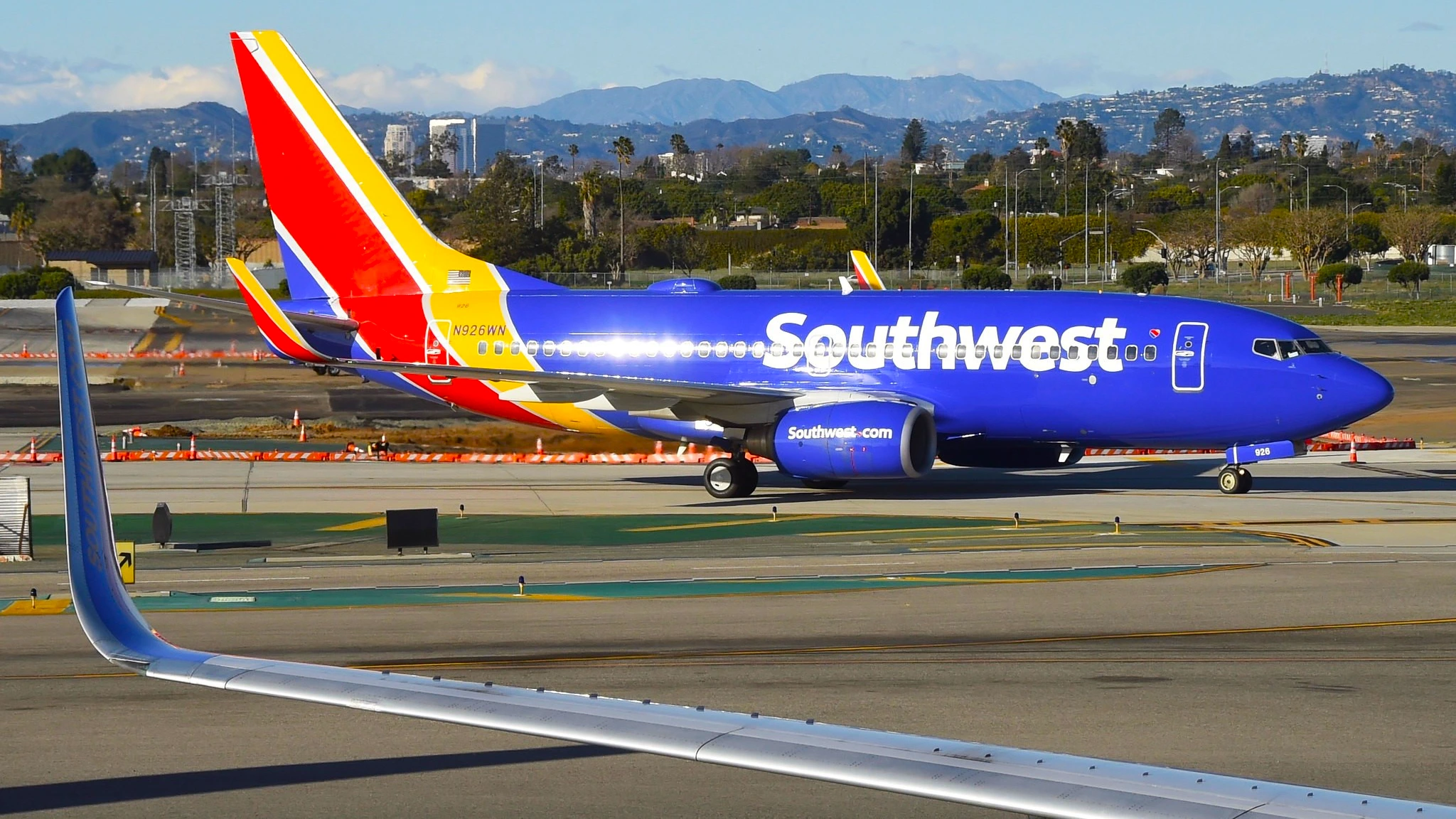
NEW ORLEANS- A Southwest Airlines (WN) Boeing 737 MAX 8 completed 44 flights with undetected structural damage after encountering extreme winds while parked at New Orleans (MSY) in May 2024. The aircraft subsequently experienced an unusual Dutch roll event during a domestic flight, exposing maintenance failures that allowed damage to its standby rudder control system to remain undetected for nine days.
In its final investigation report released on November 5, 2026, the National Transportation Safety Board (NTSB) identified multiple failures involving aircraft inspections, maintenance procedures and extreme-weather monitoring. The incident occurred on May 25, 2024, when Southwest Flight 746 was flying from Phoenix (PHX) to Oakland (OAK) at 34,000 feet, carrying 175 passengers and six crew members.
Storm Damage Went Undetected
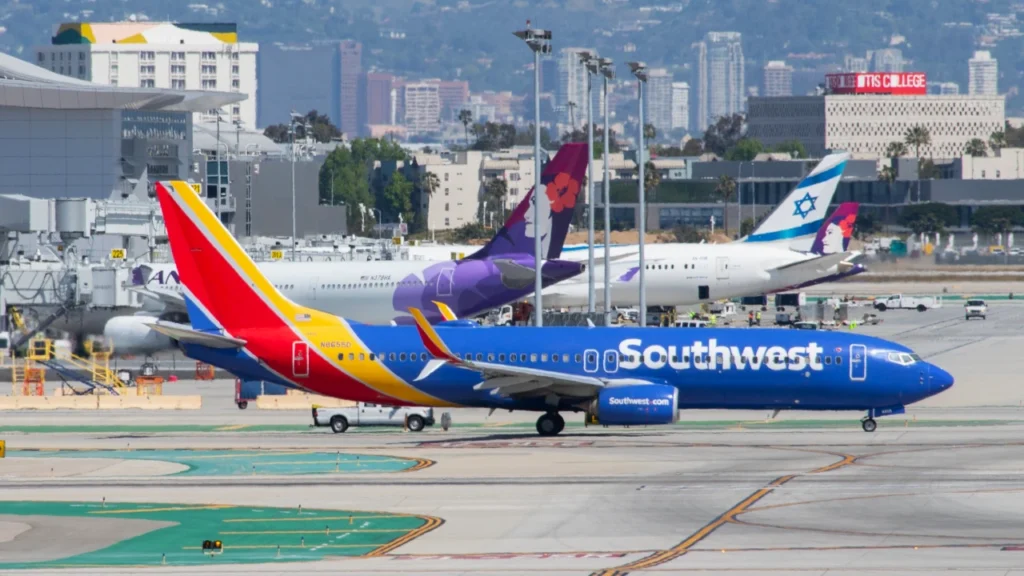
The aircraft involved was a Boeing 737 MAX 8 registered as N8825Q, which was parked overnight at Louis Armstrong New Orleans International Airport on May 16, 2024.
Thunderstorms produced wind gusts reaching 73 knots (84 mph), damaging structural components around the standby rudder power control unit (PCU) in the aircraft’s vertical stabilizer.
The standby PCU is a backup hydraulic unit responsible for operating the rudder if the primary system becomes unavailable. Investigators determined that extreme winds likely moved the rudder with sufficient force to damage the supporting structure, affecting the backup system’s operation.
However, neither Boeing’s maintenance instructions nor Southwest’s procedures ensured that the aircraft received an immediate inspection. The maintenance manual required a conditional inspection following extreme wind events but did not establish a specific wind-speed threshold, while Southwest lacked a system to alert maintenance control when parked aircraft experienced severe weather.
Consequently, N8825Q returned to service the following morning and completed 38 flights between May 17 and May 23 without reported rudder problems.
Maintenance Test Failed
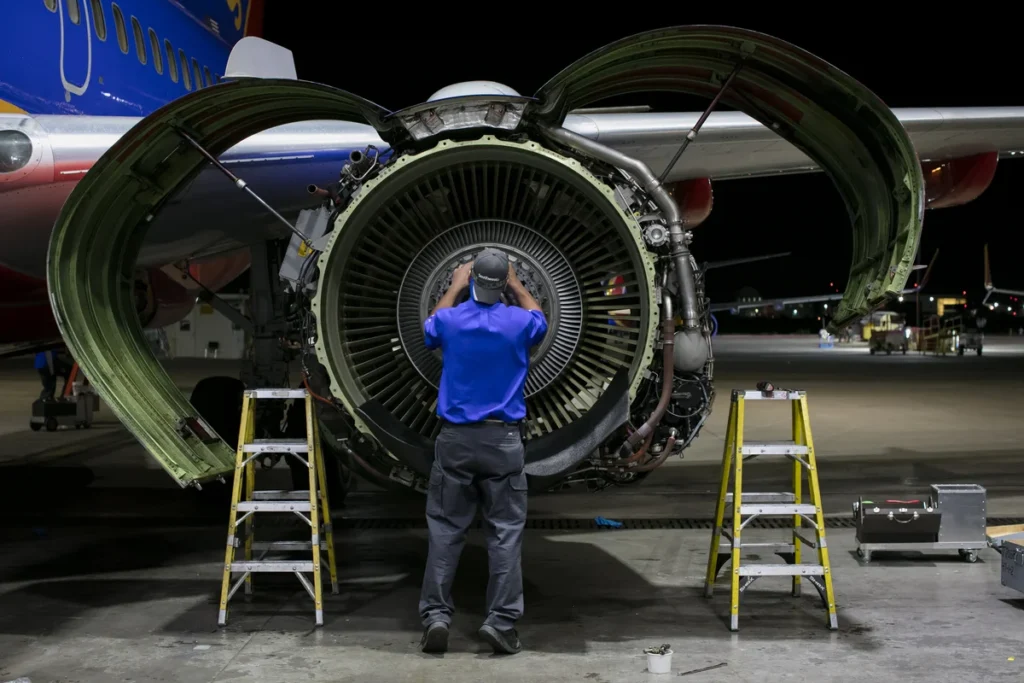
The aircraft underwent scheduled overnight maintenance in Houston on May 23, two days before the Dutch roll event. The work included an operational test of the standby hydraulic system, during which a mechanic was required to visually confirm that the rudder moved correctly in both directions.
However, hangar surveillance footage reviewed by investigators showed that the rudder moved to the right but failed to move to the left. No mechanic was positioned at the rear of the aircraft to verify its movement, yet Southwest’s maintenance records showed that the test had passed.
The aircraft subsequently returned to service despite the unresolved problem. On May 24, during its fourth flight after the Houston maintenance check, the crew disconnected the yaw damper after noticing that it appeared to overcorrect during turbulence.
The airline deferred the system under the minimum equipment list before the aircraft completed another sector to Phoenix. A subsequent functional test was recorded as successful, allowing the yaw damper to return to service before Flight 746.
The May 25 flight was the aircraft’s 44th since the New Orleans storm and its sixth since the Houston maintenance check.

Dutch Roll Prompts Investigation
During Flight 746, the aircraft experienced Dutch roll oscillations shortly after reaching 34,000 feet. The phenomenon involves coupled movements along an aircraft’s yaw and roll axes, causing its nose and wings to oscillate in opposing directions.
The crew also noticed unusual rudder pedal movements. The oscillations returned after the aircraft descended to 32,000 feet, but the pilots maintained control and continued to Oakland, where the aircraft landed safely without injuries.
Post-flight inspections revealed structural damage around the standby rudder PCU mounting bracket and the vertical stabilizer. The NTSB concluded that wind damage sustained while the aircraft was parked caused the subsequent abnormal operation of the standby rudder system.
Following the incident, Southwest inspected all 231 Boeing 737 MAX aircraft in its fleet at the time and found no similar damage. The airline also strengthened its maintenance procedures and introduced additional monitoring for extreme winds.
Boeing subsequently revised its 737 maintenance manual in May 2025, establishing a mandatory inspection threshold of 65 knots (75 mph), Simple Flying flagged. The change provides a specific trigger for inspections following extreme wind exposure, addressing a gap identified during the investigation.
The NTSB’s findings highlight how an aircraft can return to service despite underlying structural damage when weather monitoring and maintenance verification procedures fail to identify a problem.
Stay tuned with us. Further, follow us on social media for the latest updates.
Join us on Telegram Group for the Latest Aviation Updates. Subsequently, follow us on Google News
