


DUBAI, UAE– Emirates (EK) President Tim Clark has identified Denver International Airport (DEN), Detroit Metropolitan Wayne County Airport (DTW), and Philadelphia International Airport (PHL) as potential destinations for future nonstop flights from Dubai International Airport (DXB).
The three cities could become the airline’s next US destinations, although Emirates has not announced a launch date, aircraft type, or confirmed route.
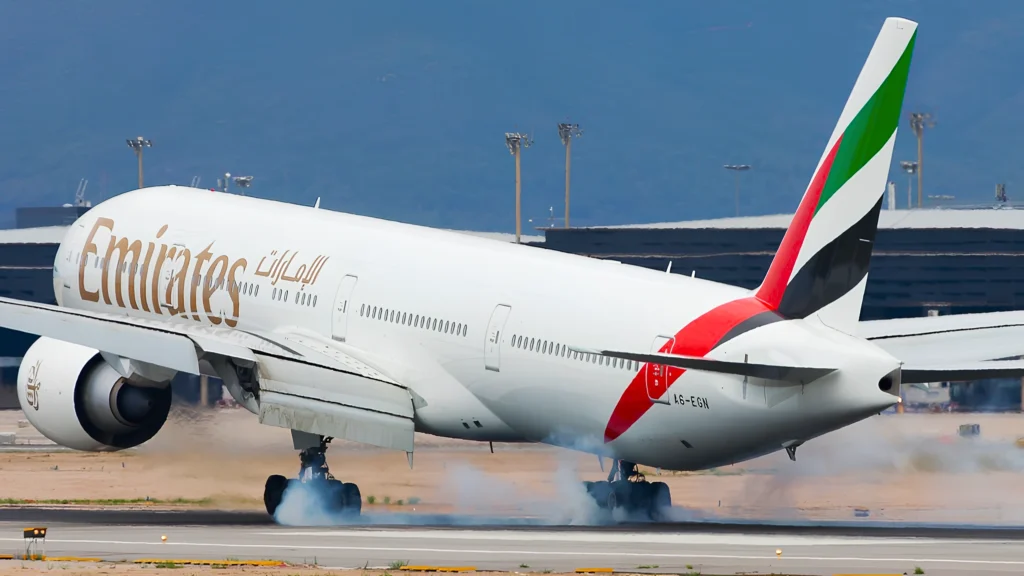
Three US Cities Emerge as Potential Emirates Destinations
Speaking at the Routes World conference in Frankfurt, Emirates President Tim Clark identified Denver, Detroit and Philadelphia as potential candidates for future nonstop flights from Dubai. The comments indicate that the airline is evaluating further opportunities in the US market.
The three airports offer different market opportunities and operational challenges. Their approximate distances from Dubai are:
| Potential destination | Airport code | Distance from Dubai |
|---|---|---|
| Denver International Airport | DEN | 7,758 miles |
| Detroit Metropolitan Airport | DTW | 7,083 miles |
| Philadelphia International Airport | PHL | 6,928 miles |
Denver represents the longest potential route among the three cities. The distance creates additional considerations for aircraft selection, fuel planning, and payload capacity, particularly when operating from an airport at high elevation.
A new destination would also represent an important expansion of Emirates’ US network. The airline last added a new US destination in June 2021, when it launched flights to Miami. It currently serves 12 airports in the United States.
Denver has already attracted attention as a potential Emirates destination. In spring 2025, former Denver International Airport CEO Phil Washington suggested that Dubai would likely become the airport’s next new international destination, with Emirates operating the service. However, the airline had not announced any official plans at that time.
Emirates and United Airlines (UA) have also maintained a commercial codeshare partnership since 2023. The agreement allows passengers to connect between the airlines’ networks, providing Emirates with additional access to destinations across the United States.
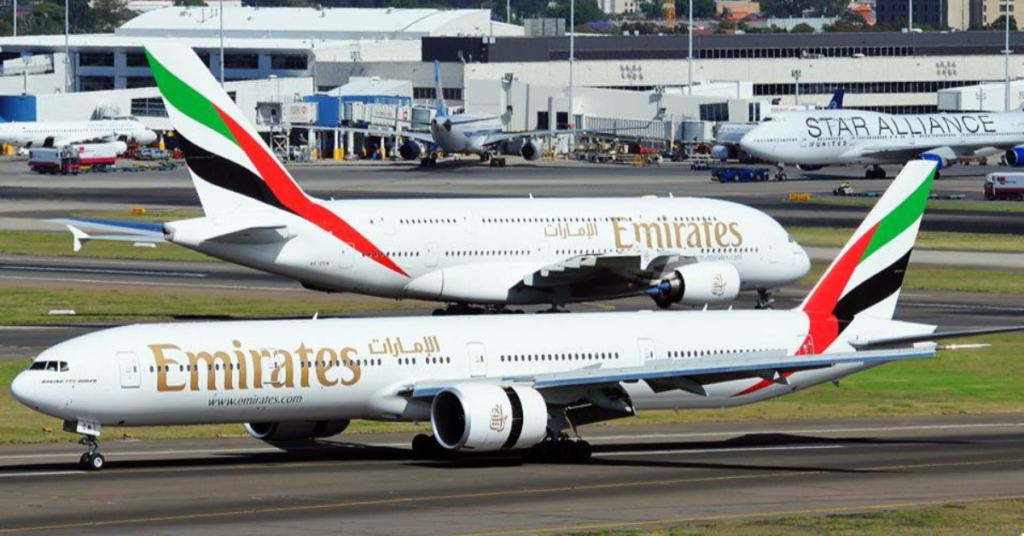
Emirates’ Fleet Creates an Aircraft Deployment Challenge
Aircraft availability could become one of the most important factors in Emirates’ decision to launch flights to Denver.
The Dubai-based airline operates a fleet dominated by large widebody aircraft, particularly the Airbus A380 and Boeing 777-300ER. These aircraft provide substantial passenger capacity and work well on established international routes with strong demand.
According to Emirates’ November 19, 2025 fleet figures, the airline operated 116 Airbus A380s and 119 Boeing 777-300ERs. Together, these aircraft accounted for 235 of its 269 aircraft, representing approximately 87% of the fleet.
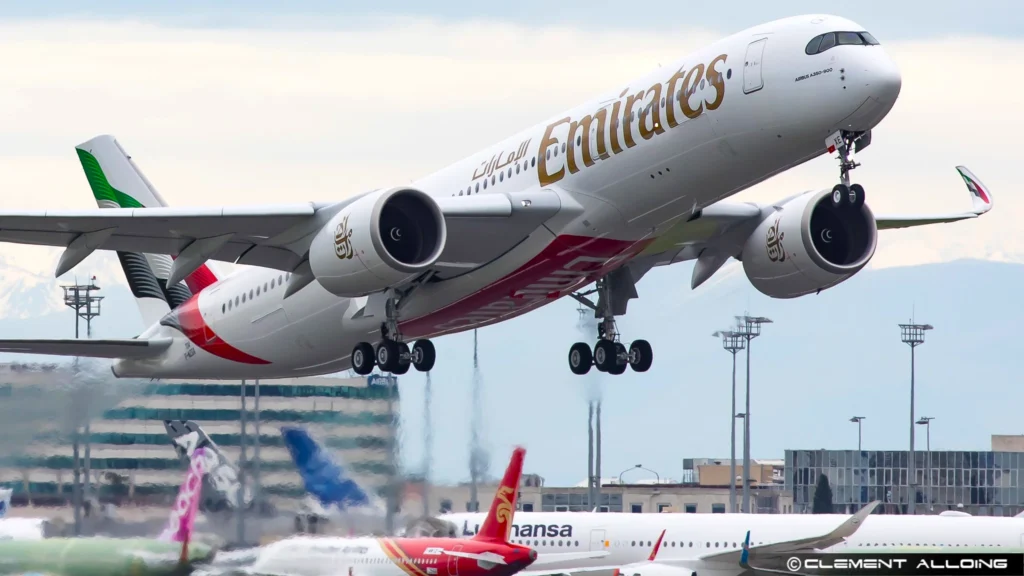
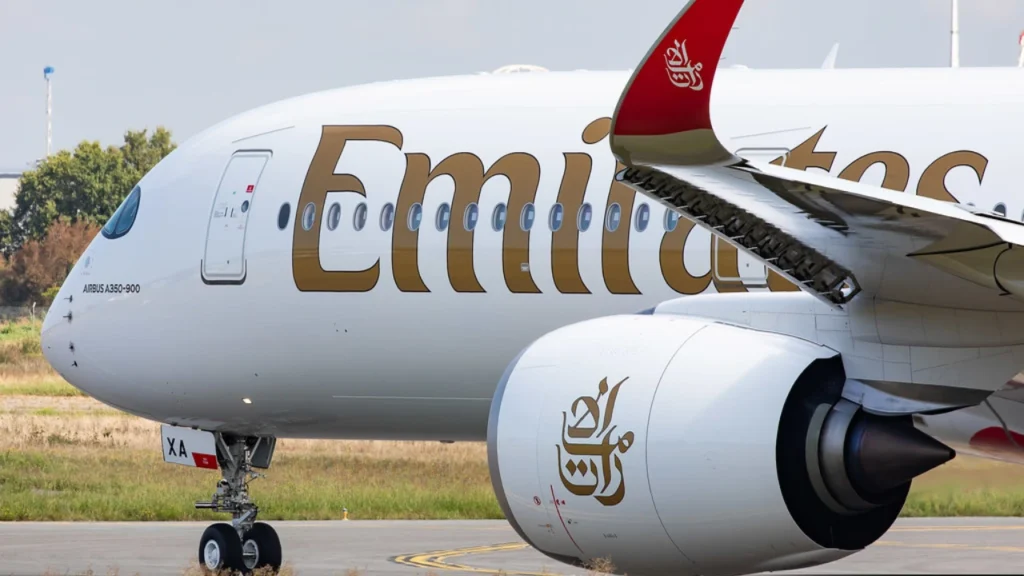
The airline had only 13 Airbus A350-900 aircraft at that time. However, its smaller widebody fleet has expanded since then. By March 31, 2026, Emirates had increased its A350 fleet to 19 aircraft, which operated across 21 destinations.
The A350-900 offers Emirates a lower-capacity alternative to its larger A380 and 777-300ER aircraft. This makes it a potentially useful option for opening new long-haul markets where demand has not yet been established.
Nevertheless, the A350 fleet remains relatively small compared with Emirates’ overall operations. The airline must also allocate these aircraft across its growing international network.
Emirates has 35 Boeing 787 aircraft on order, comprising aircraft that could provide another option for operating routes with lower passenger demand. However, the 787s were not part of its operating fleet as of March 2026.
The availability of these aircraft could eventually give Emirates greater flexibility when evaluating new destinations, although their delivery and deployment plans remain important considerations.
Why Denver Presents a Significant Operational Challenge
Denver International Airport sits approximately 5,434 feet above sea level, making it one of the highest major commercial airports in the United States.
The airport’s elevation creates additional challenges for long-haul aircraft operations, particularly during periods of high summer temperatures.
Lower air density at high-elevation airports can reduce aircraft takeoff performance. High temperatures can further affect engine performance and the amount of weight an aircraft can carry.
Although Denver has a runway measuring 16,000 feet, the combination of airport elevation, temperature, and a long international flight requires careful operational planning.
The proposed Dubai-Denver route covers approximately 7,758 miles. Emirates would need to evaluate the aircraft’s available range, passenger load, cargo capacity, fuel requirements, and operational reserves before selecting an aircraft.
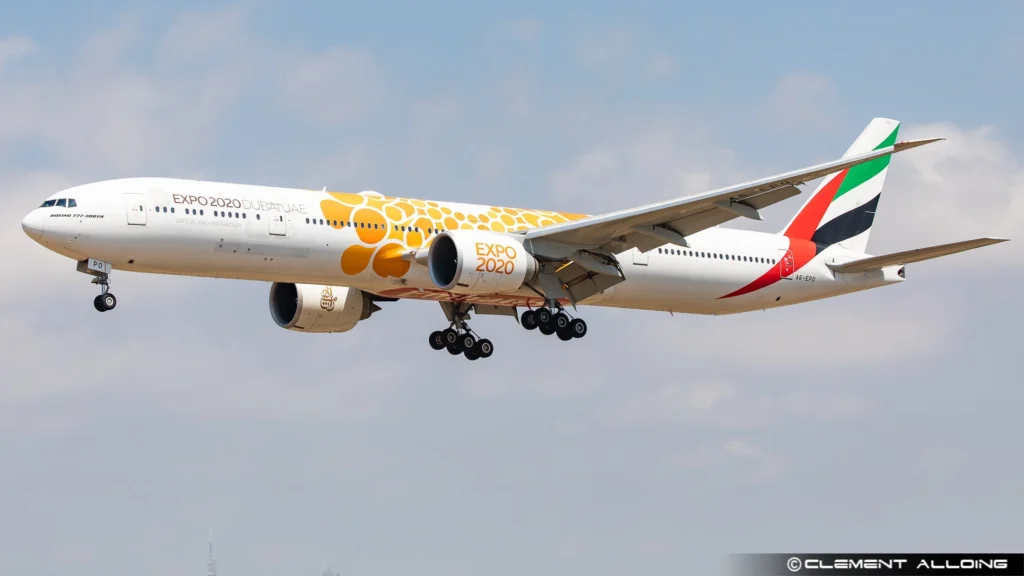
A Boeing 777-300ER could provide the required passenger capacity, but operating such a large aircraft on a new route would expose the airline to greater commercial risk if demand falls below expectations.
The Airbus A350-900 could provide a more flexible alternative. Its lower seating capacity would allow Emirates to introduce the destination without immediately committing to the same passenger volume as a larger Boeing 777-300ER.
However, the availability of A350 aircraft and their deployment across other destinations would influence whether this option is commercially practical.
Does Denver Have Enough Demand for Dubai Flights?
Denver has a growing international network, but the availability of connecting alternatives could make it difficult for Emirates to capture sufficient passenger demand.
According to Denver International Airport, the airport served 34 international destinations across 19 countries in 2025. Its international network includes major European gateways and destinations in Asia and the Americas.
The airport currently has nonstop connections to Tokyo-Narita (NRT), Frankfurt (FRA), Munich (MUC), London-Heathrow (LHR), Paris (CDG), and Istanbul (IST), among other destinations.
Denver does not currently have nonstop service to Dubai or an African airport. However, Turkish Airlines (TK) operates flights between Denver and Istanbul, offering passengers another connecting option for travel across parts of the Middle East, Asia and Africa.
Lufthansa (LH) also provides connections through Frankfurt and Munich, while Air Canada (AC) offers access through Toronto (YYZ).
These existing services create competition for Emirates, particularly among passengers who prefer Star Alliance airlines or already hold frequent-flyer status with United, Lufthansa or Air Canada.
United Airlines also has a substantial presence at Denver, making it difficult for Emirates to attract passengers who rely on United for corporate travel, loyalty benefits and onward domestic connections.
Emirates would therefore need to attract passengers who are not strongly tied to another airline and prefer travelling through Dubai.
The airline could use its extensive international network to connect Denver passengers to destinations across India, South Asia, Africa, the Gulf region and the Indian Ocean.
This connecting traffic would be essential to the commercial performance of the route. Emirates would need to combine local passenger demand with travellers connecting through Dubai to other international destinations.
The airline could also target premium leisure passengers looking for its Business Class and First Class products. However, the size of this market and its willingness to travel through Dubai would need to support the required capacity, Live and Let’s Fly flagged.
Philadelphia and Detroit Have Their Own Advantages and Challenges
Denver is not the only potential destination that Emirates must evaluate. Philadelphia and Detroit offer different opportunities for the airline.
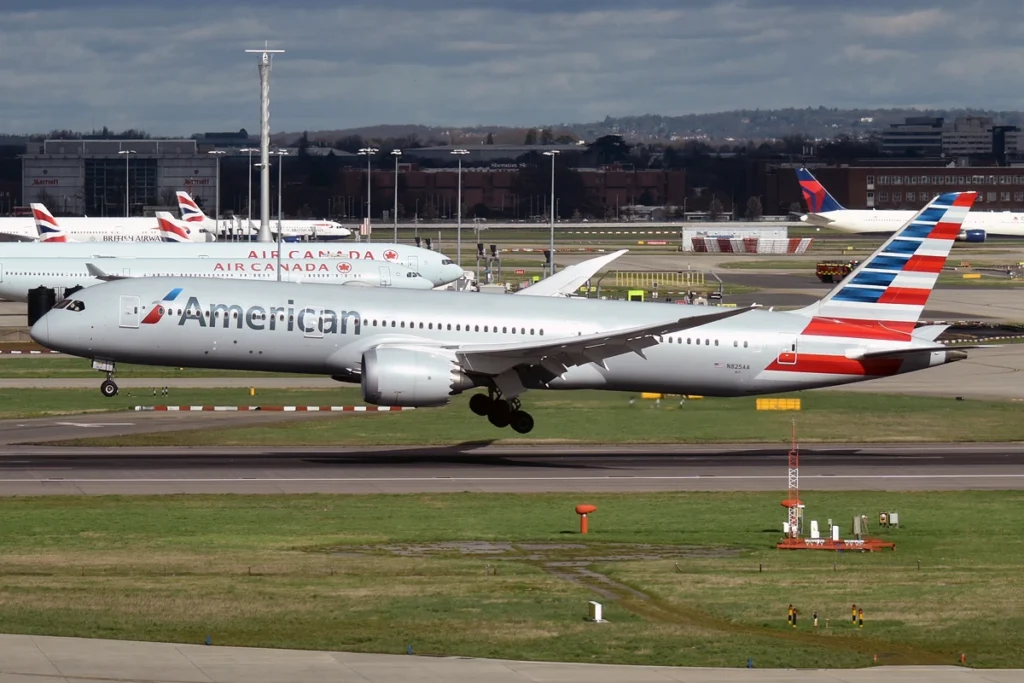
Philadelphia has a larger international aviation market and an established network of long-haul flights. Qatar Airways (QR) provides connections through Doha, while American Airlines (AA), British Airways (BA), Lufthansa (LH) and Aer Lingus (EI) offer extensive international connectivity.
This established competition could make it difficult for Emirates to secure a strong share of connecting passengers. However, Philadelphia’s market size and shorter distance from Dubai could make it an attractive alternative.
Detroit presents a different challenge. The airport is a major hub for Delta Air Lines (DL), which has an established domestic and international network.
Passengers also have access to international services operated by Air France (AF), Royal Jordanian (RJ) and Turkish Airlines (TK).
Although Detroit is closer to Dubai than Denver, Emirates would need to compete with established airline networks and existing passenger relationships.
The three destinations therefore present different commercial propositions. Denver offers a potential opportunity to enter an important US market without an existing nonstop Dubai connection, while Philadelphia and Detroit offer established international passenger markets with stronger competition.
Emirates Could Consider Seasonal Denver Flights
If Emirates eventually selects Denver, a seasonal operation could provide a way to evaluate the market before committing substantial aircraft capacity throughout the year.
Denver attracts international visitors interested in Colorado’s winter tourism and ski destinations. A seasonal schedule could allow Emirates to target higher travel demand during the winter period while limiting exposure during weaker months.
The airline could also begin with fewer weekly frequencies before evaluating whether passenger demand justifies additional flights.
However, Emirates has not announced any such operating strategy. A seasonal service remains one possible approach rather than a confirmed plan.
The airline’s history also shows that its commercial strategy does not always depend on operating smaller aircraft in every market. Emirates has successfully deployed high-capacity aircraft on routes where demand supports substantial international connectivity.
The challenge is determining whether Denver can generate enough local and connecting traffic to support a large aircraft operating almost 7,800 miles from Dubai.
Emirates’ Denver Expansion Remains Uncertain
Denver remains an interesting candidate for Emirates’ next US expansion, but the airline must evaluate several factors before making a final decision.
The Airbus A350-900 gives Emirates a smaller-capacity option than its traditional large widebody fleet. However, aircraft availability, operating performance at Denver’s elevation, and the size of the connecting passenger market will all influence the route’s viability.
Philadelphia and Detroit also remain potential alternatives, offering shorter distances but established competition from other international airlines.
For now, Emirates has identified the three cities as potential destinations without confirming a new route. Denver could eventually become part of the airline’s US network, but its long distance and operating requirements make it a particularly important commercial decision.
The availability of additional A350 aircraft and future fleet flexibility could help Emirates evaluate Denver and other underserved US markets.
Stay tuned with us. Further, follow us on social media for the latest updates.
Join us on Telegram Group for the Latest Aviation Updates. Subsequently, follow us on Google News
