


NEW YORK- Scandinavian Airlines (SK) Flight SK916 from New York John F. Kennedy International Airport (JFK) to Copenhagen Airport (CPH) diverted to Newark Liberty International Airport (EWR) on Friday, October 23, 2026, after a possible technical fault prompted the crew to turn back over the Atlantic. The aircraft landed at Newark after more than three and a half hours in the air.
Passengers reported being stranded at the airport past midnight with limited information about replacement flights and no access to their checked luggage. According to passenger accounts, SAS later asked travelers to arrange their own hotel accommodation and offered reimbursement of up to €250 per room.

SAS Passengers Face Overnight Disruption After Newark Diversion
Flight SK916 was scheduled to operate an overnight service from New York to Copenhagen aboard an Airbus A330-300. The diversion disrupted passengers’ travel plans and created additional difficulties after the aircraft landed, including delays in receiving updates, arranging accommodation and locating checked bags.
Michael Flarup, who was travelling home to Copenhagen with his son, described the experience on X. He said he noticed the aircraft changing direction on the in-flight map around two hours after departure.
SAS Flight SK916: Key Details
| Detail | Information |
|---|---|
| Airline | Scandinavian Airlines (SAS) |
| IATA airline code | SK |
| Flight number | SK916 |
| Date | October 23, 2026 |
| Aircraft | Airbus A330-300 |
| Aircraft registration | LN-RKR |
| Departure airport | New York John F. Kennedy International Airport (JFK) |
| Scheduled destination | Copenhagen Airport (CPH) |
| Diversion airport | Newark Liberty International Airport (EWR) |
| Reported reason | Possible technical fault |
| Landing time at Newark | 10:58 PM local time |
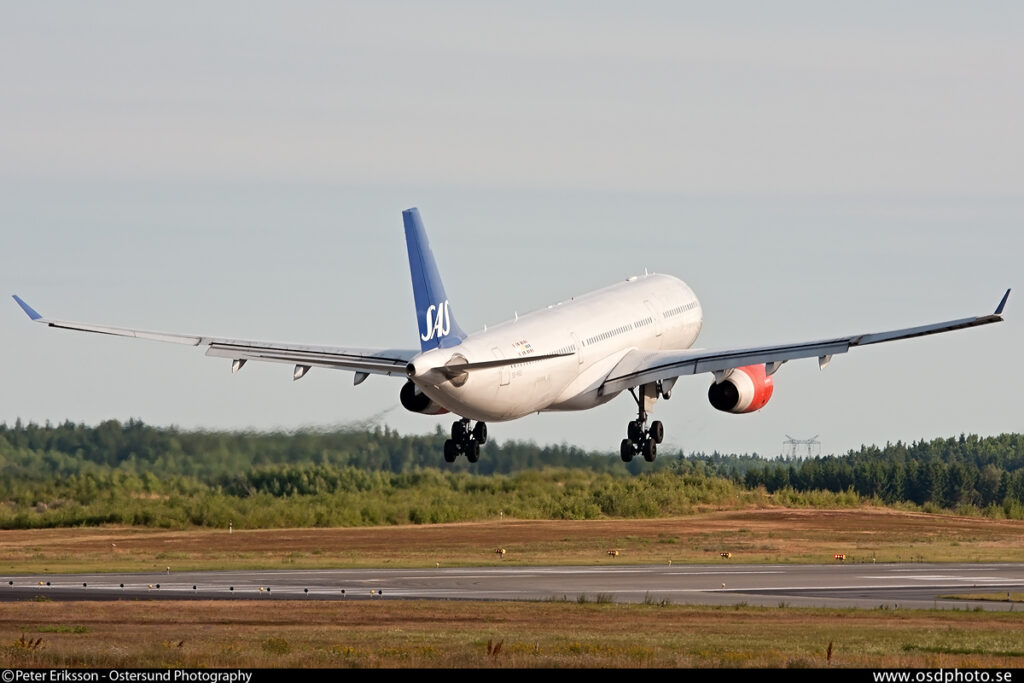
Aircraft Turns Back Over the Atlantic
SK916 was scheduled to depart JFK at 6:55 PM local time on Friday and arrive at Copenhagen at 8:40 AM on Saturday, October 24.
Flight-tracking data showed that the aircraft departed at 7:24 PM, 29 minutes behind schedule. Around two hours into the flight, Flarup noticed that the aircraft appeared to be heading in the wrong direction on the in-flight map.
According to his account, cabin crew subsequently told passengers that the captain would make an announcement. Passengers were then informed that the aircraft had developed a possible technical problem and that the pilots did not consider it appropriate to continue the transatlantic crossing.
The Airbus A330-300 landed at Newark at 10:58 PM after spending three hours and 34 minutes in the air. Fire trucks and ambulances were reportedly waiting on the runway.
The diversion allowed the aircraft to land at an alternative airport while the airline arranged inspections. However, the landing was followed by further uncertainty for passengers who had expected to reach Denmark the next morning.
Flarup criticised the handling of the disruption, saying:
“Safety comes first. But the handling of hundreds of stranded passengers afterwards really needs to be better. People need clear information and a way to get home, especially in the middle of the night.”
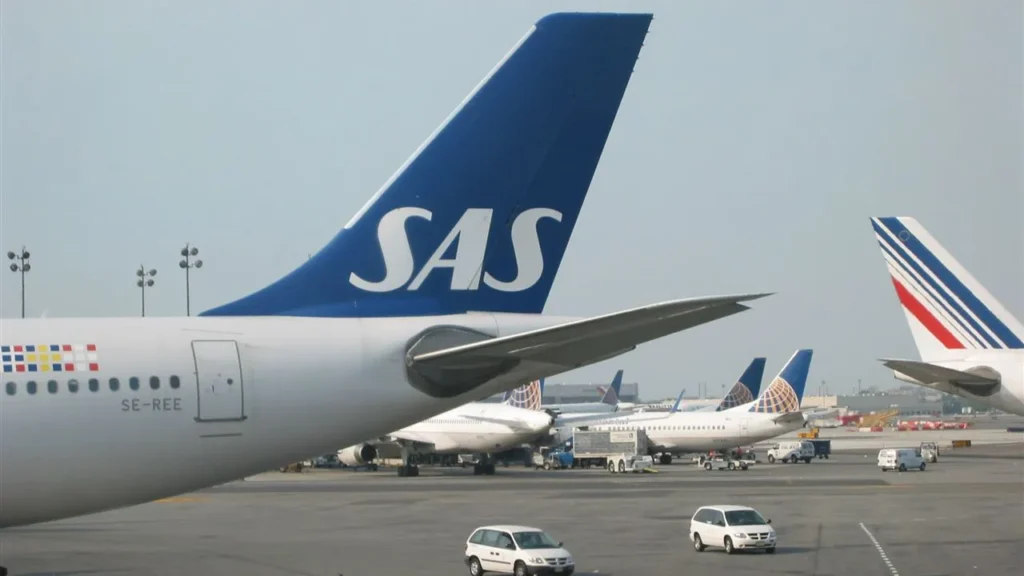
https://commons.wikimedia.org/wiki/File:SAS_A330-300_tail.jpg
Passengers Wait for Luggage and Replacement Flights
After arriving at Newark, passengers reportedly waited around an hour at baggage claim before being told that their checked luggage could not be removed from the aircraft.
SAS then provided passengers with a QR code to report missing bags. However, Flarup said the reporting system would not accept their submissions because they had not reached their original destination.
Passengers were also told to expect new flight information within a couple of hours. According to Flarup, several hours passed without a meaningful update, and his booking eventually disappeared from the SAS mobile app.
By that time, it was past midnight. Passengers still needed somewhere to sleep, but the lack of clear information made arranging accommodation more difficult.
SAS Asks Passengers to Arrange Their Own Hotels
SAS eventually emailed affected passengers asking them to arrange their own hotel accommodation. The email reportedly offered reimbursement of up to €250 per room, equivalent to approximately $280.
Flarup said he managed to secure one of the last available hotel rooms in the area. However, he claimed that many passengers remained at Newark when he and his son left.
He also said that several calls to SAS support failed to establish where the family’s two suitcases were or how they could formally register them as missing.
The incident therefore created two separate problems for affected passengers: reaching Copenhagen after the missed overnight arrival and recovering luggage that remained inaccessible after the diversion.
SAS Confirms Possible Technical Fault
SAS confirmed to Danish broadcaster TV 2 that Flight SK916 diverted because of a possible technical fault. The airline said the aircraft would undergo an inspection at Newark but did not disclose the precise nature of the suspected problem.
The available information also did not establish why the crew selected Newark instead of returning to JFK.
According to flight-tracking data cited in the reporting, the aircraft registered as LN-RKR subsequently flew to Copenhagen the following day as Flight SK910. This indicated that the aircraft operated another flight after the incident, although it did not establish the outcome of the technical inspection.
A separate Danish report published on October 24 said SAS planned to rebook affected passengers on the next available flights to Copenhagen. However, the report did not establish when every passenger would reach the Danish capital.

What EU261 Rules Mean for Stranded SAS Passengers
The incident also raises questions about passenger assistance and possible compensation under European Union air passenger rights rules.
EU Regulation 261/2004, commonly known as EU261, can apply to flights arriving in the European Union from a non-EU country when an EU airline operates the service. The regulation provides for assistance during qualifying disruptions, including meals, refreshments, hotel accommodation when an overnight stay becomes necessary, and transport between the airport and hotel.
Hotel Accommodation and Meal Assistance
Under the regulation’s right-to-care provisions, eligible passengers should receive necessary assistance while waiting to continue their journey.
This includes free hotel accommodation when an overnight stay becomes necessary and transport between the airport and accommodation. Airlines must also provide meals and refreshments in reasonable proportion to the waiting time.
The obligation to provide care is separate from fixed financial compensation. If an airline does not provide the required assistance and passengers have to pay for necessary, reasonable expenses themselves, they may seek reimbursement and should retain their receipts.
For passengers on SK916, the reported request to book hotels independently makes it important to keep copies of SAS’s email, hotel invoices, transportation receipts and other relevant expenses.
Could Passengers Receive €600 in Compensation?
Passengers may also qualify for fixed compensation if the disruption meets EU261’s conditions. The amount depends on the route distance, the delay at the final destination and the circumstances behind the disruption.
For flights travelling more than 3,500 kilometres from a non-EU country to the EU on an EU airline, official EU guidance provides for compensation of €300 when the arrival delay is at least three hours but less than four hours, and €600 when the delay reaches four hours or more. Exceptional circumstances can affect eligibility.
However, the diversion alone does not establish that every affected passenger is entitled to compensation. Passengers would need to assess their actual arrival delays and the circumstances of the suspected technical fault.
The key distinction is that compensation and the right to care are separate. Even when fixed compensation is not payable, eligible passengers may still be entitled to meals, accommodation and transport during an overnight disruption.
Stay tuned with us. Further, follow us on social media for the latest updates.
Join us on Telegram Group for the Latest Aviation Updates. Subsequently, follow us on Google News
