


DUBAI- Emirates (EK) reportedly denied boarding to a Russian passenger at Mexico City International Airport (MEX) after she said her European visa had expired, disrupting her journey to Dubai International Airport (DXB).
The passenger, identified as Maria, shared a tearful video online explaining that her itinerary included a stop in Barcelona–El Prat Airport (BCN). Spain’s airport transit visa rules for Russian ordinary passport holders, effective July 12, 2025, may explain the reported incident.

Why Spain’s Transit Visa Rules Affected the Emirates Passenger
Maria, a Russian woman who reportedly lives in Dubai, posted a video from Mexico City International Airport after she was unable to board her Emirates flight to Dubai. In the video, she expressed shock over the decision and referred to her expired European visa.
The text accompanying the video stated that Emirates had not allowed her to board the flight from Mexico to Dubai. Her explanation pointed to the Barcelona stop as the reason for the problem.
Emirates operates its Mexico City service through Barcelona because the airline’s route connects Mexico with Dubai via Spain. The airline introduced the linked service in December 2019, allowing passengers to travel between Mexico City, Barcelona and Dubai on the same flight number.
According to Spain’s Ministry of Foreign Affairs, Russian nationals holding ordinary passports must obtain a valid airport transit visa to pass through the international transit areas of Spanish airports. The requirement took effect on July 12, 2025.
This rule can apply even when a passenger does not intend to enter Spain and plans to continue to another country. An airport transit visa allows eligible travellers to pass through the airport’s international transit area without entering Spanish territory, Live and Let’s Fly reported.

An Expired Visa May Not Meet Transit Requirements
Spain’s transit requirements include exemptions for certain travellers who hold qualifying valid visas or residence permits. However, an expired visa does not automatically satisfy these conditions.
Living in Dubai also does not, by itself, exempt a Russian ordinary passport holder from Spain’s airport transit visa requirement. The applicable rules depend on the passenger’s nationality, travel documents and eligibility for an exemption.
The available video does not establish every document Maria held, and Emirates has not provided an account of the incident in the source material. Therefore, the precise reason for the boarding denial cannot be independently confirmed.
Nevertheless, her explanation is consistent with a possible documentation issue involving the Barcelona stop. Airlines must check whether passengers meet the entry and transit requirements of the countries included in their itineraries.

A Direct Flight Does Not Always Mean a Nonstop Journey
The Emirates incident highlights an important distinction in airline travel terminology. A direct flight can include an intermediate stop, while a nonstop flight operates between its origin and destination without stopping.
Emirates’ Mexico City service illustrates this difference. Passengers travelling between Mexico City and Dubai may remain on the same flight number, but the aircraft stops in Barcelona along the way.
That intermediate stop matters because passengers must meet the applicable documentation requirements, even when they have no plans to leave the airport.
A single ticket, the same aircraft or an unchanged flight number does not automatically remove immigration or transit obligations. Passengers should therefore review every stop on their itinerary before departure.
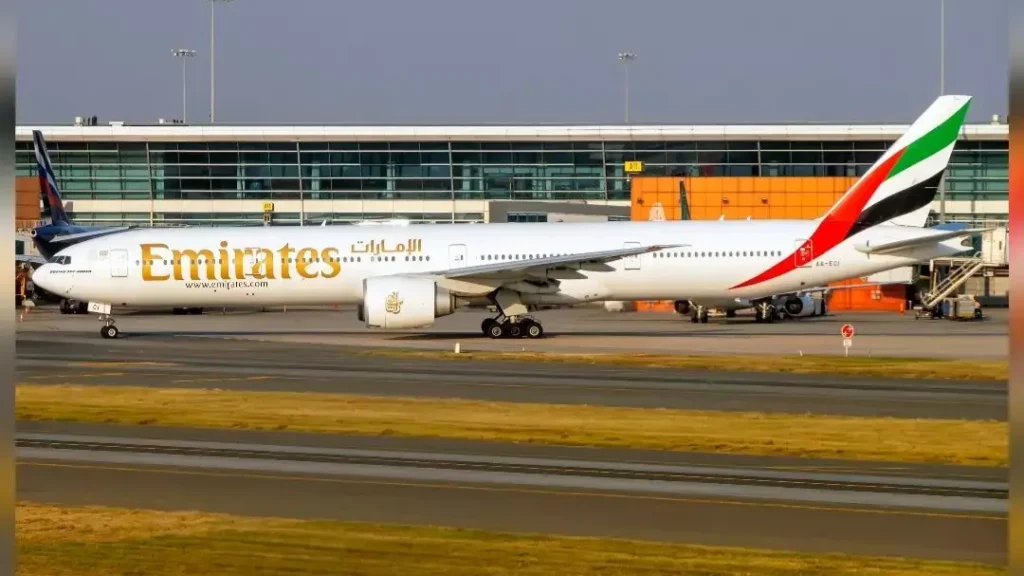
Other Emirates Routes Can Also Require Transit Documents
The same principle applies to other international services involving intermediate stops.
Emirates has operated services connecting New York’s John F. Kennedy International Airport (JFK) with Dubai via Milan, and Newark Liberty International Airport (EWR) with Dubai via Athens. Its Dubai-to-Bogotá service has also included a stop in Miami.
These itineraries can provide convenient connections between distant cities. However, passengers must check the rules that apply to the country where the aircraft stops.
For example, passengers travelling between Dubai and Bogotá via Miami must consider United States entry requirements. Emirates has highlighted the importance of meeting those requirements for the journey.
The rules differ between countries and depend on factors such as nationality, passport type, visa status and the nature of the connection. Some travellers may qualify for exemptions, while others may need an airport transit visa or additional documentation.
Passengers should not assume that remaining inside an airport automatically removes all visa requirements.
How Passengers Can Avoid Transit Visa Problems
Travellers can reduce the risk of denied boarding by checking their complete itinerary before booking an international flight.
First, they should identify every airport where the aircraft will stop, including intermediate points on direct flights. They should then confirm whether their nationality requires an airport transit visa at any of those locations.
Second, passengers should verify the validity of their visas and residence permits. A previously issued visa may no longer provide the exemption they need if it has expired.
Third, travellers should consult the relevant government’s official immigration guidance and use the airline’s travel-document checker. Emirates provides a visa and passport information tool that helps passengers review requirements for their destinations and transit countries.
Passengers should also contact the airline before departure if their documents or transit arrangements are unclear. Resolving a documentation issue before reaching the airport can help avoid missed flights, additional expenses and travel disruption.

What the Emirates Incident Reveals About International Travel
The reported boarding denial demonstrates why passengers must consider the entire route rather than focusing only on their final destination.
Maria said she was travelling from Mexico City to Dubai, but the Barcelona stop introduced Spanish transit requirements into her journey. If her documents did not meet those requirements, she could have been prevented from boarding even though Dubai was her intended destination.
The available information does not establish the full circumstances of her case. However, the incident serves as a reminder that airlines must consider transit-country rules when verifying travel documents.
Regardless of whether a passenger is returning home, travelling for business or taking a leisure trip, the responsibility to prepare valid documentation remains essential.

Bottom Line
Emirates’ reported decision to deny boarding to a passenger travelling from Mexico City to Dubai highlights the importance of checking transit visa requirements. Spain has required Russian ordinary passport holders to obtain airport transit visas since July 12, 2025, subject to applicable exemptions.
A direct flight is not necessarily a nonstop flight, and an intermediate stop can introduce additional documentation requirements. Checking every country on an itinerary before departure can help passengers avoid unexpected problems at the airport.
Stay tuned with us. Further, follow us on social media for the latest updates.
Join us on Telegram Group for the Latest Aviation Updates. Subsequently, follow us on Google News
