

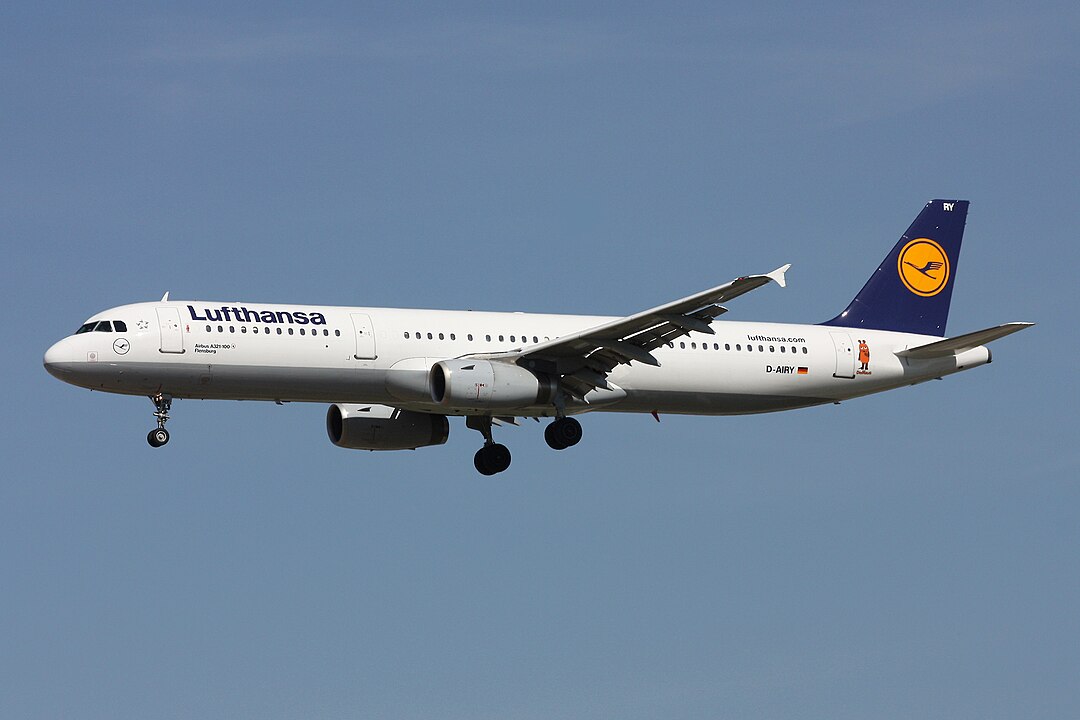
LYON— A Lufthansa Airbus A321-200 diverted to Lyon Saint-Exupéry Airport (LYS) on September 26 after a passenger’s power bank overheated and caught fire during a flight from Frankfurt Airport (FRA) to Lisbon.
Lufthansa (LH) flight LH1170 landed safely in France, but the incident disrupted the journey of 198 passengers and six crew members. The aircraft, registered D-AISB, was operating the scheduled Frankfurt-Lisbon service when the battery fire occurred near a passenger seat.
The cabin crew secured the device in a lithium-safe bag, but the flight crew decided to divert to Lyon as a precaution and declared an emergency to receive priority landing.
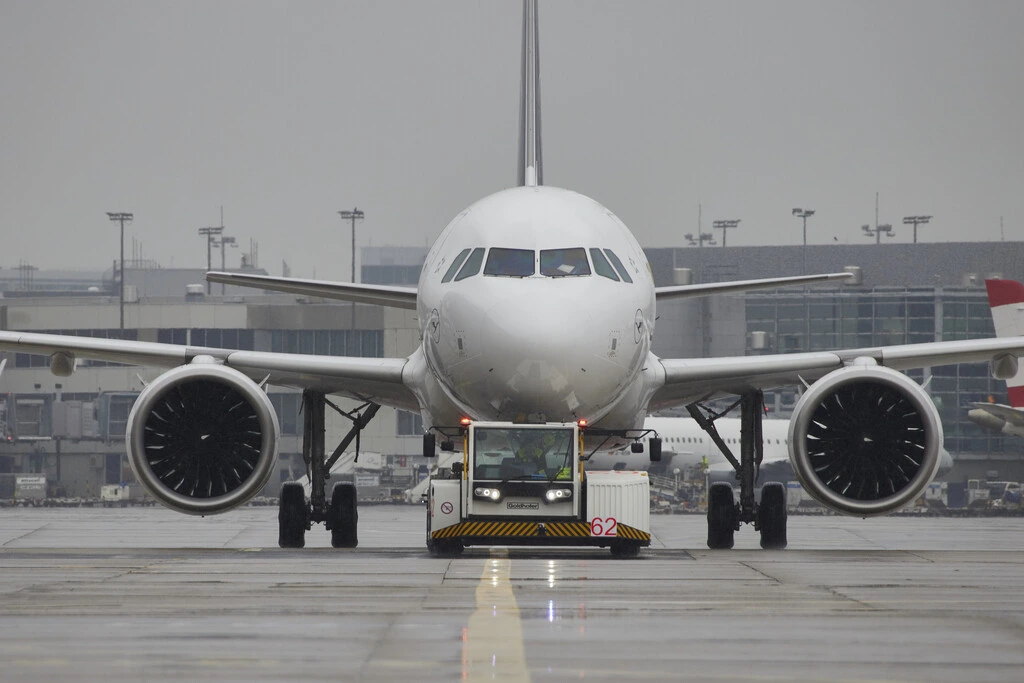
Lufthansa A321 Diverts to Lyon
Flight LH1170 departed Frankfurt on Saturday evening and continued toward Portugal before the crew changed its plans after the onboard battery incident.
Tracking data shows that the A321 reached cruising altitude before diverting toward Lyon, where it landed safely on runway 17L.
The aircraft had been flying at about 35,000 feet and was approximately 70 nautical miles northeast of Lyon when the crew decided to divert.
The aircraft remained on the ground for around 16 hours before returning to Frankfurt the following afternoon as a positioning flight.
There were no reported injuries among the passengers or crew. However, the late arrival in Lyon meant that Lufthansa could not continue the flight to Lisbon that night.
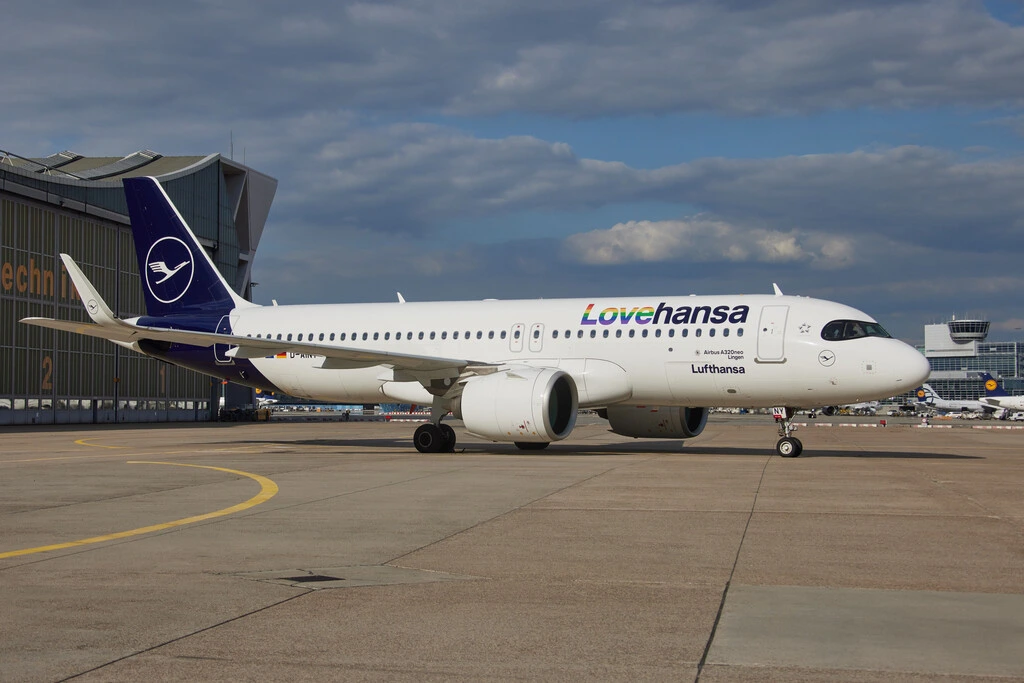
Passengers on the Flight Were Rebooked
Lufthansa arranged hotel accommodation for the 198 passengers and six crew members following the diversion. The passengers were subsequently rebooked onto alternative flights to complete their journeys to Lisbon the next day.
Meanwhile, D-AISB departed Lyon on September 27 and returned to Frankfurt, allowing Lufthansa to resume using the aircraft for scheduled operations.
The incident therefore caused a significant interruption to the original service without resulting in a prolonged grounding of the A321.
The event also highlights the operational challenge posed by lithium-ion battery fires in passenger cabins.
Such incidents can require immediate crew intervention because a damaged or overheating battery can become a serious fire hazard even after the initial flames appear to have been contained.
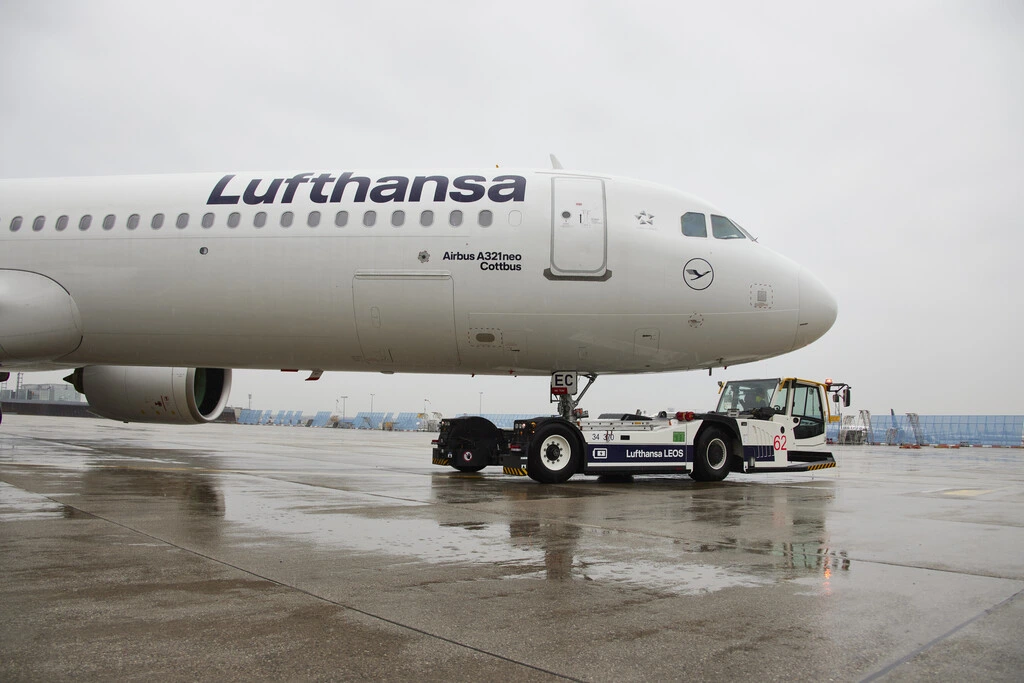
Lufthansa Power Bank Rules
Lufthansa introduced stricter power-bank requirements across its group airlines on January 15, 2026. Passengers can carry a maximum of two power banks, while devices with a capacity above 100 watt-hours and up to 160 watt-hours require prior airline approval.
The airline also prohibits passengers from using or charging power banks during flights, except when they are needed for approved essential medical devices.
Power banks cannot be placed in checked baggage or overhead compartments and must instead remain under the seat, in the seat pocket, in carry-on baggage stored under the seat, or on the passenger’s person.
The rules are intended to keep potentially overheating batteries accessible to passengers and crew rather than concealed in areas where a developing fire could be harder to detect.
The Lyon diversion demonstrates why airlines continue to place particular emphasis on the handling and storage of lithium-battery devices in aircraft cabins.
Stay tuned with us. Further, follow us on social media for the latest updates.
Join us on Telegram Group for the Latest Aviation Updates. Subsequently, follow us on Google News
