

GURUGRAM— IndiGo Airlines (6E) is withdrawing scheduled services to 10 international destinations in 2026, including London Heathrow (LHR), Manchester (MAN), Copenhagen (CPH), Tbilisi (TBS), Baku (GYD), Almaty (ALA), Tashkent (TAS), Ho Chi Minh City (SGN), Réunion (RUN), and Guangzhou (CAN).
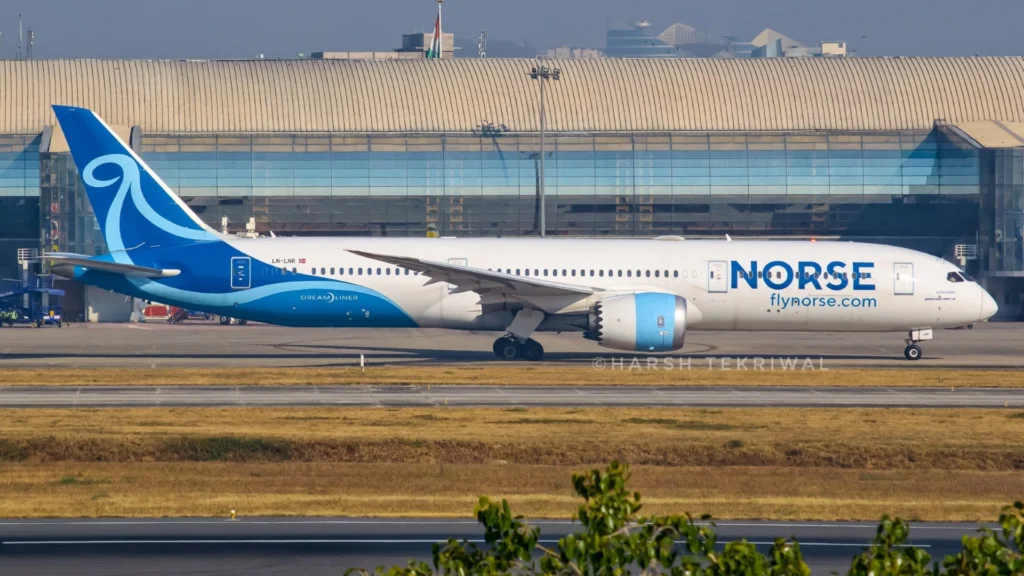
The changes affect flights from Delhi (DEL), Mumbai (BOM), Kolkata (CCU), and Chennai (MAA). Meanwhile, the airline continues operating Mumbai (BOM)-Amsterdam (AMS) flights with Airbus A321XLR aircraft after ending its Boeing 787-9 damp lease arrangement with Norse Atlantic Airways (Z0).
IndiGo’s International Network Faces Major Reductions
IndiGo remains India’s largest airline, but its international network has undergone significant changes throughout 2026. According to OAG data, the carrier accounts for approximately 55% of all flights to, from, and within India. Its domestic market share is even higher, at around 61%.
Air India (AI) accounts for approximately 13% of the wider market, although the two airlines’ figures are not necessarily a like-for-like comparison.
Despite its domestic dominance, IndiGo has a much smaller presence internationally. The airline accounts for less than 20% of international departures involving India. Its share approaches 25% in shorter-haul international markets, where it faces fewer long-haul operational challenges.
The latest reductions affect three major European destinations and seven other international markets across Asia, Central Asia, and the Indian Ocean.
Airspace restrictions, increasing operating costs, aircraft leasing arrangements, and potentially weaker route economics have contributed to the changes.
Three Major European Destinations Lose IndiGo Services
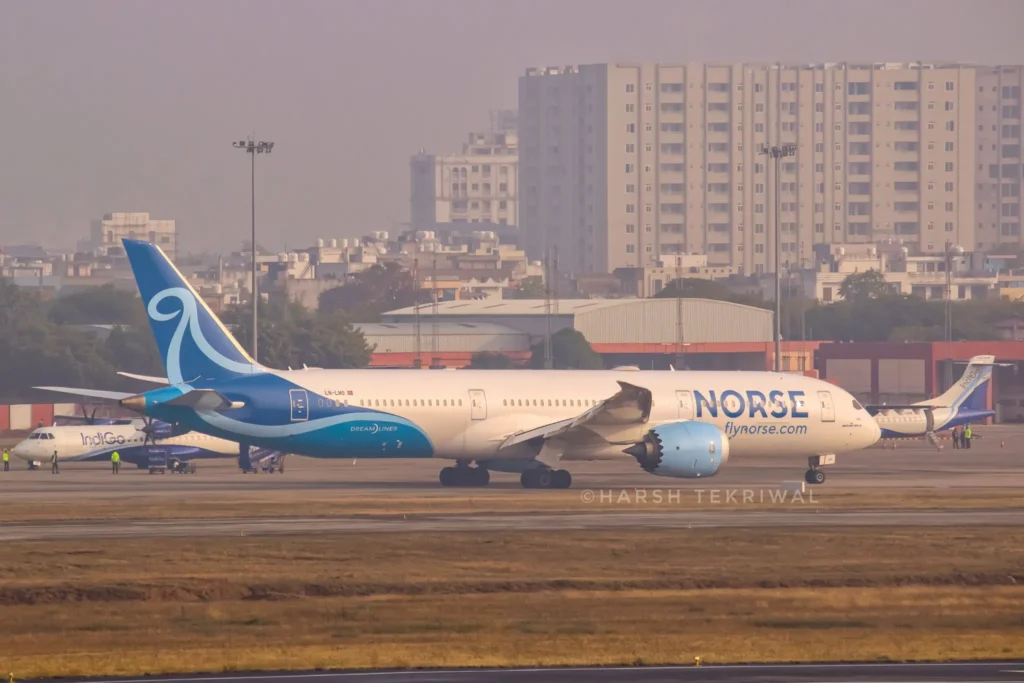
IndiGo’s European expansion relied heavily on six Boeing 787-9 Dreamliners obtained from Norse Atlantic Airways under a damp lease agreement in early 2025.
Under this arrangement, Norse Atlantic supplied the aircraft and pilots, while IndiGo provided its own cabin crew. The programme allowed IndiGo to introduce long-haul international services before receiving its own Airbus A350-900 aircraft.
However, the arrangement faced considerable operational difficulties as geopolitical developments increased flight times and operating costs.
IndiGo initially adjusted its European network in February 2026, suspending Copenhagen services and reducing frequencies to Manchester and London Heathrow. It subsequently announced the discontinuation of its wide-body operations from October 25, 2026, Simple Flying reported.
The three affected destinations are:
| Destination | Airport code | Last operating month | Origin airports |
|---|---|---|---|
| Copenhagen | CPH | February 2026 | Mumbai (BOM) |
| Manchester | MAN | August 2026 | Delhi (DEL), Mumbai (BOM) |
| London Heathrow | LHR | October 2026 | Delhi (DEL), Mumbai (BOM) |
1. Copenhagen Services Ended in February
IndiGo suspended its Mumbai-Copenhagen service from February 17, 2026, after operating the route for approximately four months.
The airline introduced the service in October 2025 with three weekly Boeing 787-9 flights. The route also provided connections through codeshare arrangements with KLM (KL) and Turkish Airlines (TK).
Changing airspace restrictions significantly affected the airline’s long-haul operations. IndiGo said these restrictions, together with airport congestion, increased flight and block times and placed additional pressure on its Boeing 787-9 schedules.
The airline therefore suspended Copenhagen operations as part of its February network adjustments.
2. Manchester Flights Ended in August
Manchester became the second European destination to lose IndiGo’s Boeing 787-9 services.
The airline had introduced Mumbai-Manchester flights in July 2025, followed by Delhi-Manchester services in November 2025.
IndiGo initially operated five weekly flights between Delhi and Manchester. However, it reduced the frequency to four weekly services from February 7, 2026, and subsequently to three weekly flights from February 19.
The airline also adjusted its operating pattern to improve schedule reliability and provide more recovery time for its aircraft.
On June 2, 2026, IndiGo officially announced that it would temporarily discontinue flights to and from Manchester from August 31.
The airline attributed the decision to continuing international airspace restrictions, significantly longer flight durations, higher aviation turbine fuel costs, and challenging operating conditions.
IndiGo also confirmed that one of its six leased Boeing 787-9 aircraft would return to Norse Atlantic following the route’s suspension.
3. London Heathrow Services Suspended in October
London Heathrow (LHR) was the final major European destination affected by IndiGo’s wide-body withdrawal.
The airline introduced Mumbai-Heathrow services in October 2025 and subsequently launched Delhi-Heathrow flights in February 2026.
Both routes operated daily using Boeing 787-9 aircraft before the airline discontinued its wide-body operations.
IndiGo announced on July 31, 2026, that it would end its damp lease agreement with Norse Atlantic and discontinue Boeing 787-9 operations from October 25.
The airline confirmed that Heathrow services would remain suspended until its Airbus A350-900 aircraft entered the fleet. Its agreement with Norse Atlantic was scheduled to conclude on October 31. Reuters
The withdrawal also affected IndiGo’s airport access at Heathrow.
According to Airport Coordination Limited (ACL), which coordinates airport slots in the United Kingdom, IndiGo transferred 28 weekly Heathrow slots to British Airways (BA) on November 12, 2026, for the Summer 2027 season.
However, ACL classifies the transaction as a slot transfer and does not describe it as a permanent surrender. The published record also does not disclose the commercial terms of the arrangement.
Seven Other International Destinations No Longer Have IndiGo Flights Scheduled
IndiGo has also withdrawn from seven other international destinations during 2026.
Unlike the European reductions, these changes primarily affect routes connecting Indian metropolitan airports with Central Asia, Southeast Asia, East Asia, and the Indian Ocean region.
The destinations are Almaty, Baku, Guangzhou, Ho Chi Minh City, Réunion, Tashkent, and Tbilisi.
As of November 28, 2026, published schedules do not show IndiGo services to these seven destinations during 2027. The individual route withdrawals occurred at different times throughout the year.
| Destination | Airport code | Last operating month | Origin airport |
|---|---|---|---|
| Tbilisi | TBS | January 2026 | Delhi (DEL), Mumbai (BOM) |
| Baku | GYD | February 2026 | Delhi (DEL) |
| Almaty | ALA | February 2026 | Mumbai (BOM) |
| Tashkent | TAS | February 2026 | Delhi (DEL), Mumbai (BOM) |
| Ho Chi Minh City | SGN | July 2026 | Kolkata (CCU) |
| Réunion | RUN | October 2026 | Chennai (MAA) |
| Guangzhou | CAN | November 2026 | Kolkata (CCU) |
1. IndiGo Withdraws From Tbilisi, Baku, Almaty and Tashkent
IndiGo discontinued services to four destinations across Central Asia and the Caucasus during the first two months of 2026.
Tbilisi was the first affected destination. The airline ended its Delhi and Mumbai services in January after operating the routes since August 2023 and August 2025, respectively.
The carrier subsequently discontinued its Baku operations from Delhi in February. The route had been operating since August 2023, primarily with daily Airbus A320neo services.
Almaty also lost its remaining IndiGo connection in February. The airline had previously served the destination from Delhi between September 2023 and August 2025 before introducing Mumbai-Almaty flights in September 2025.
Tashkent was the fourth destination affected. IndiGo had introduced Delhi-Tashkent flights in September 2023 and Mumbai-Tashkent services in September 2025. Both connections were subsequently withdrawn in February 2026.
Geopolitical developments have played an important role in these decisions.
Indian airlines continue to face restrictions on using Pakistani airspace. The closure and restrictions affecting Iranian airspace also created additional challenges for flights connecting India with destinations in the Caucasus and Central Asia.
IndiGo had previously cancelled flights to Baku, Almaty, Tashkent, and Tbilisi during periods of regional airspace disruption.
The additional flight distances, operational complexity, and schedule uncertainty made these markets more difficult to serve.
However, airspace restrictions should not be considered the only confirmed reason for every individual route withdrawal. IndiGo has not publicly disclosed the route-specific financial performance of all four services.
2. Kolkata Loses Ho Chi Minh City and Guangzhou Connections
Kolkata (CCU) has also lost two important international connections operated by IndiGo.
The airline discontinued its Kolkata-Ho Chi Minh City service in July 2026. The route had operated since October 2019 and primarily used Airbus A320ceo, A320neo, and A321neo aircraft.
IndiGo initially described the Ho Chi Minh City suspension as temporary.
In its June 4 announcement, the airline said it would suspend flights to Ho Chi Minh City and several other international destinations from July 1 until September 30, 2026. It planned to reopen bookings from October 1, subject to operating conditions.
However, the latest published schedules do not show a return of the Kolkata-Ho Chi Minh City connection during 2027.
Guangzhou became the second Kolkata destination to lose IndiGo services in 2026.
The airline ended its Kolkata-Guangzhou connection in November. The route had also operated since October 2019, with services primarily using Airbus A320neo aircraft.
The withdrawal leaves Kolkata without these two IndiGo-operated direct connections to Southeast and East Asia in the published 2027 schedule.
3. Chennai-Réunion Flights Lasted Only One Season
IndiGo’s Chennai-Réunion route was one of its more unusual international expansion attempts.
The airline launched direct flights between Chennai (MAA) and Saint-Denis, Réunion (RUN), on April 29, 2026. Réunion is a French overseas department in the Indian Ocean with a significant population of Indian descent.
The market offered an opportunity to connect India with a destination that had previously lost its direct connection with the Indian mainland.
Air Austral had operated services between Chennai and Saint-Denis from 2012 until March 2024. It initially deployed Boeing 737-800 aircraft before introducing the Airbus A220-300.
IndiGo subsequently entered the market with Airbus A320-family aircraft.
The airline originally planned three weekly flights using the Airbus A320. However, the frequency was reduced to two weekly services before the route ended in October 2026.
IndiGo operated approximately 54 departures during the route’s lifetime. Booking data suggested a load factor of around 90%, although this was not an officially published airline figure.
A high load factor does not necessarily indicate a profitable route. Passenger yields, operating costs, fuel consumption, and the impact of long flight distances also influence route economics.
The withdrawal ended IndiGo’s short-lived attempt to establish a direct connection between Chennai and Réunion.
Amsterdam Remains IndiGo’s Important European Connection
Despite withdrawing from three major European destinations, IndiGo continues operating flights to Amsterdam (AMS).
The airline has shifted its Mumbai-Amsterdam operation from the Boeing 787-9 to the Airbus A321XLR.
However, the route faces significant operational challenges because of airspace restrictions.
IndiGo has to avoid Russian, Ukrainian, and Iranian airspace, resulting in longer flight paths between India and Europe. The aircraft’s operating distance can increase considerably, with scheduled block times reaching approximately 11 hours and five minutes.
These conditions also require payload restrictions, limiting the number of passengers or cargo the aircraft can carry on certain flights.
Maintaining the Amsterdam connection is particularly important because the airline wants to retain its airport slots while preparing for its own wide-body aircraft.
IndiGo has 60 Airbus A350-900 aircraft on firm order. However, its expected delivery timeline has changed.
The airline previously expected its first A350 deliveries in 2027. Chief Executive Willie Walsh confirmed in November 2026 that the first aircraft are now expected from the second quarter of 2028.
The aircraft will support IndiGo’s future long-haul expansion and reduce its dependence on leased wide-body capacity.
Norse Atlantic’s Financial Collapse Adds Another Development
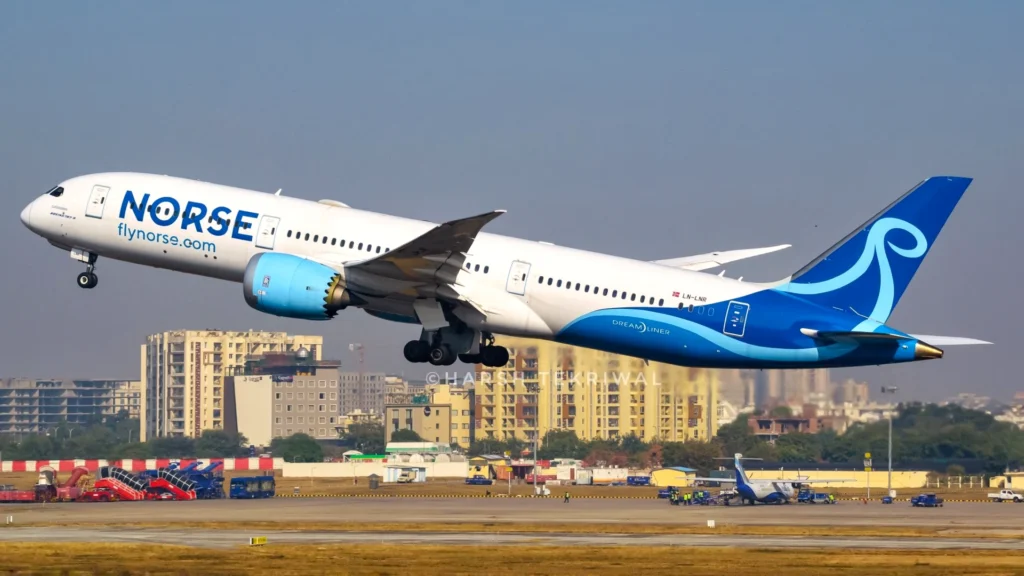
The end of IndiGo’s Boeing 787-9 programme also coincided with a major development at Norse Atlantic Airways.
IndiGo had already announced the termination of its damp lease arrangement in July 2026, with the agreement scheduled to end on October 31.
Norse Atlantic subsequently faced increasing financial pressure and struggled to secure the funding required to continue operations.
The airline halted flights and ticket sales before filing for bankruptcy on November 27, 2026.
The development brought an end to Norse Atlantic’s wider operating business and affected passengers holding tickets on its services.
For IndiGo, the earlier decision to discontinue the leased Boeing 787-9 operation was driven by its own assessment of operating conditions, airspace restrictions, and long-haul economics. Its withdrawal therefore preceded Norse Atlantic’s bankruptcy.
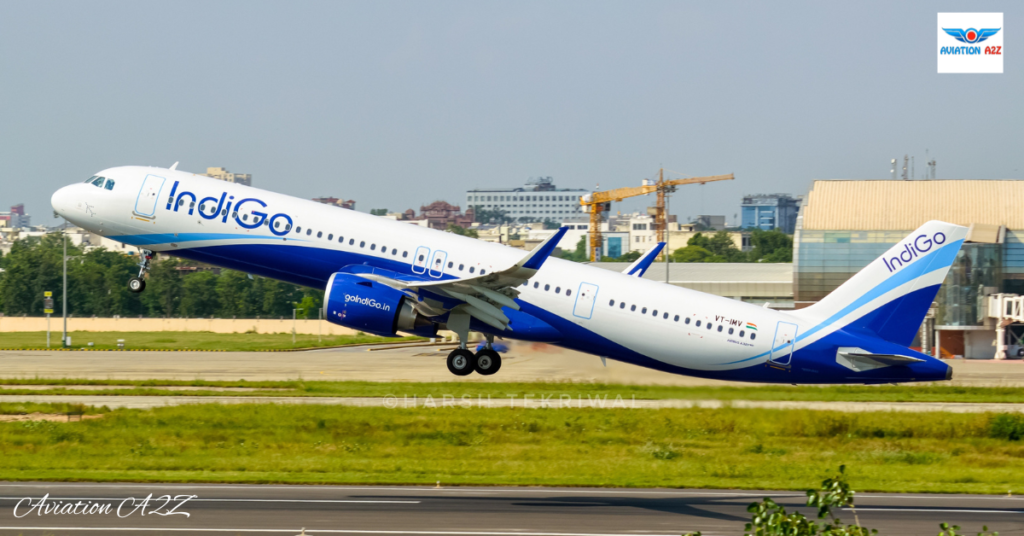
IndiGo’s International Expansion Strategy Faces a Transition
IndiGo’s withdrawal from 10 international destinations represents a significant adjustment to its international network.
The airline continues to dominate India’s domestic aviation market, but its European expansion has faced considerable challenges from longer flight paths, airspace restrictions, and increasing operating expenses.
The end of the Boeing 787-9 programme has also created a gap in its immediate wide-body operations.
However, IndiGo’s long-term international ambitions remain supported by its Airbus A321XLR fleet and 60-aircraft A350-900 order.
Amsterdam continues to provide an important connection with Europe, while the arrival of the A350s in 2028 is expected to provide the airline with greater long-haul capabilities.
For now, IndiGo’s 2026 network changes reflect a shift towards managing operational costs and schedule reliability while preparing for its next phase of international expansion.
Stay tuned with us. Further, follow us on social media for the latest updates.
Join us on Telegram Group for the Latest Aviation Updates. Subsequently, follow us on Google News
