

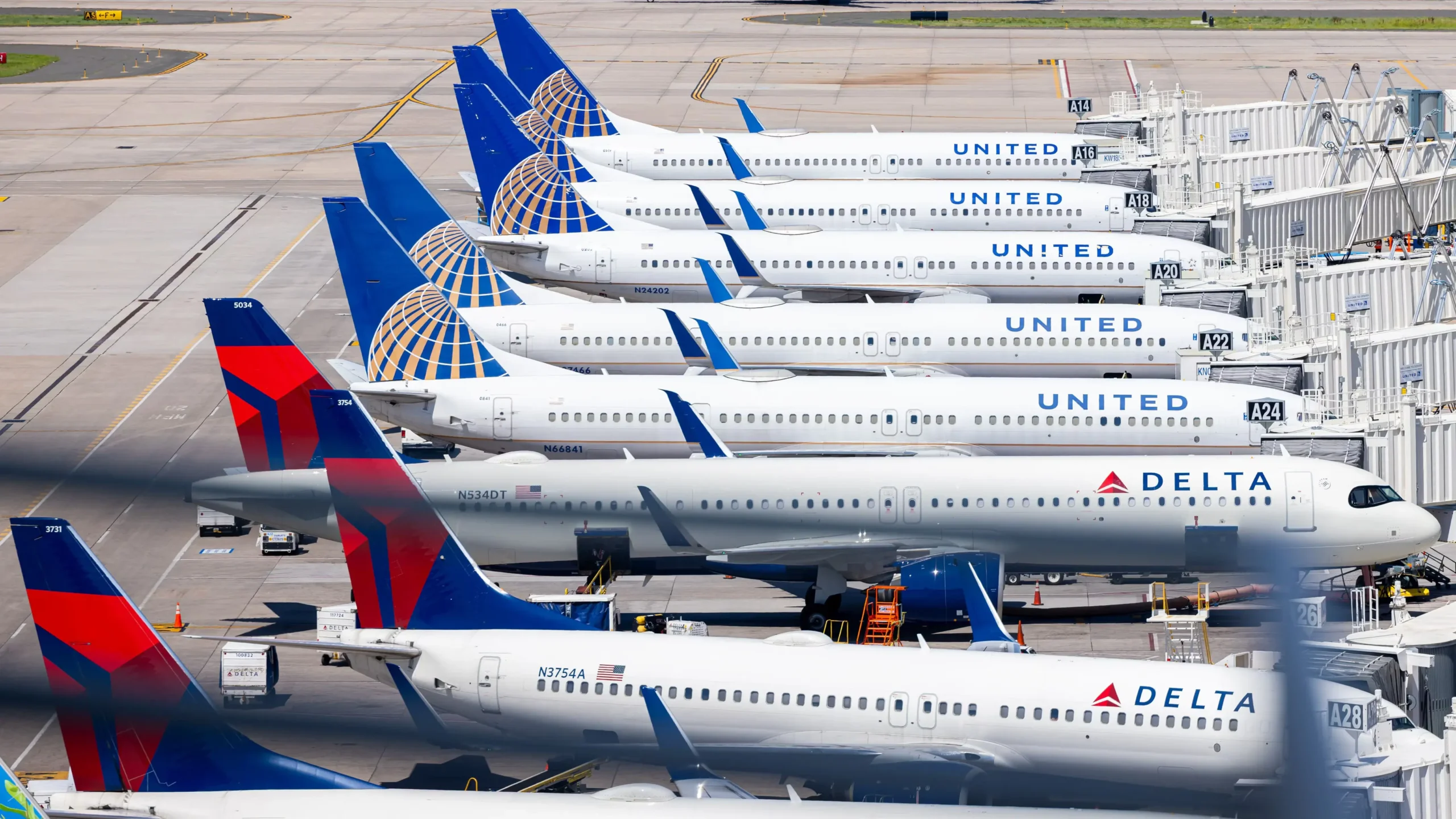
CHICAGO– United Airlines (UA) requested a temporary ground stop for its inbound flights to Chicago O’Hare International Airport (ORD) on November 14, after the airport struggled to manage a major backlog of aircraft following a nationwide air traffic control disruption.
The Federal Aviation Administration (FAA) approved the airline’s request to limit arriving flights operated by United and its subsidiaries. The temporary restriction allowed United to prioritize departing aircraft and ease severe gate congestion.
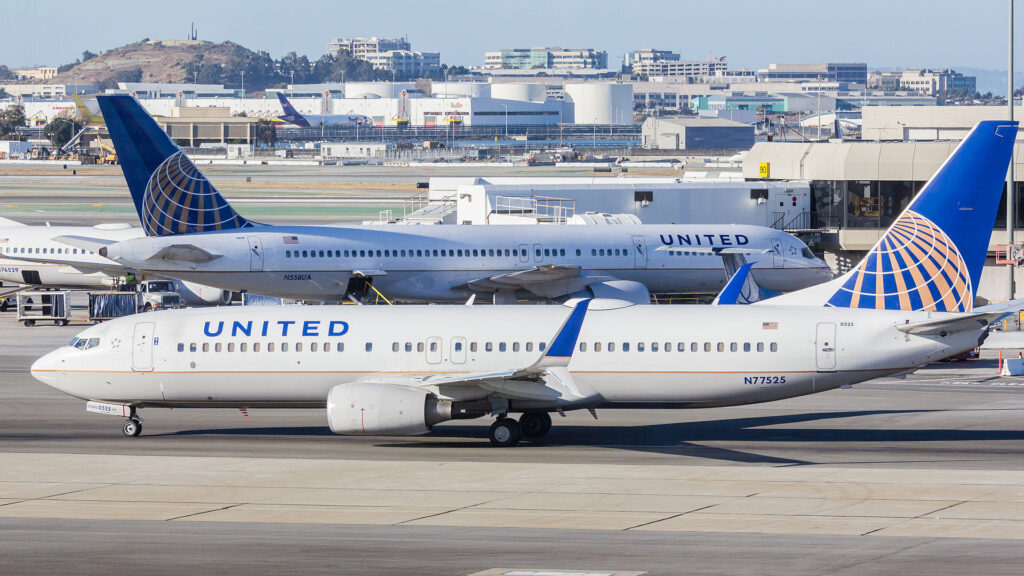
United Limits O’Hare Arrivals to Prioritize Departures
United Airlines requested the targeted ground stop after Friday’s nationwide FAA disruption left aircraft and passengers stranded across the United States. The resulting backlog created significant operational challenges at Chicago O’Hare, one of the airline’s most important connecting hubs.
The FAA’s Air Traffic Control System Command Center issued the restriction on Saturday, November 14. Its official advisories identified United Airlines as the affected carrier and described the action as an airline-requested ground stop.
The restriction applied specifically to United and its subsidiaries operating flights into O’Hare. It required affected flights to remain at their departure airports rather than continue toward Chicago while the airline worked to restore its schedule.
The FAA subsequently extended the restriction before issuing a cancellation notice later that morning. The measure did not represent a complete shutdown of O’Hare or a nationwide ground stop for every airline.
United explained that the decision was necessary to manage the large number of aircraft already waiting at the airport.
The airline provided the following statement:
This ground stop has expired. We requested this action by the FAA to limit some inbound flights to Chicago O’Hare to help us prioritize departures as we work to resume normal operations today.”
United Spokesperson
The temporary restriction gave United additional time to move aircraft waiting at gates and improve the availability of parking positions for incoming services.
Reports from the disruption also indicated that Runway 22R was temporarily used to accommodate excess aircraft. The situation highlighted the scale of congestion at O’Hare as the airline struggled to manage its arriving and departing traffic.

Nationwide FAA Ground Stop Triggered Operational Chaos
The disruption at O’Hare followed a much larger aviation crisis on Friday, November 13, when the FAA ordered a nationwide ground stop across the United States.
The agency took the unprecedented precautionary measure after communications problems affected multiple Air Route Traffic Control Centers. The technical issues disrupted the stability of communication and radar systems used by air traffic controllers to manage aircraft movements.
Transportation Secretary Sean Duffy confirmed that instability affected radar information and communications between aircraft and air traffic control facilities.
According to the US Department of Transportation, overloaded switches and routers within the country’s aging air traffic control infrastructure produced inconsistent data. The problem prompted the FAA to stop departing flights while technicians investigated the issue.
The nationwide ground stop affected departures across the country. International arrivals were managed on a case-by-case basis, while aircraft already airborne continued toward their destinations under established safety procedures.
More than 3,500 aircraft were in the air when the nationwide restriction began. Authorities subsequently reported that aircraft returned safely as the situation stabilized.
The FAA lifted the nationwide ground stop at 8:15 p.m. Eastern Time on Friday. However, restoring normal airline operations required considerably more time because aircraft, pilots, flight attendants, and passengers were spread across different airports.
According to FlightAware figures cited by ABC News, airlines recorded 9,132 cancellations on Friday. A further 3,374 flights had been canceled by early Saturday morning, bringing the combined total to 12,506 at that reporting point.
The disruptions also affected airline crew availability. Pilots and flight attendants displaced from their scheduled operations faced duty-time restrictions, preventing some from operating additional flights after reaching their permitted working hours.
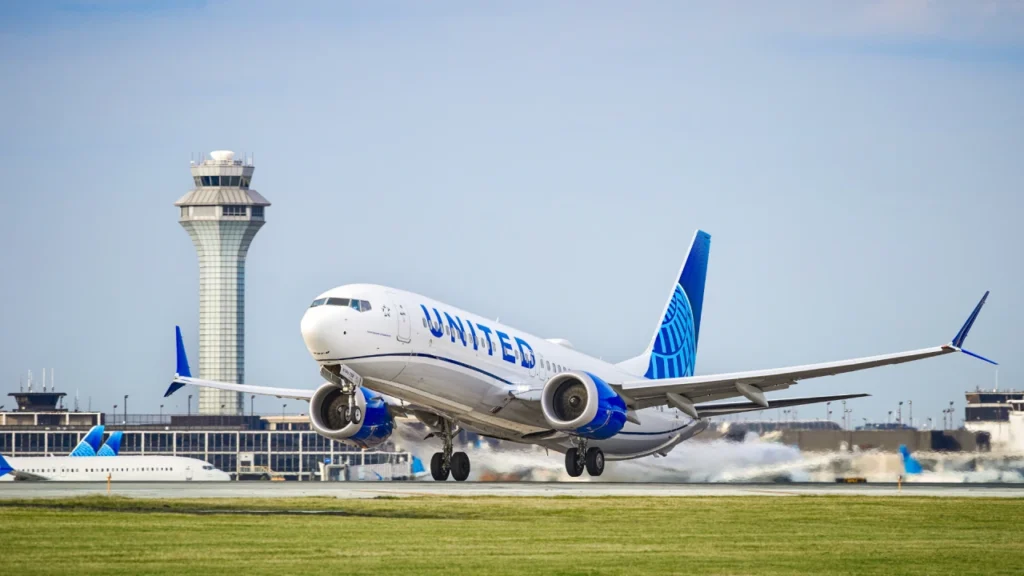
O’Hare’s High Traffic Volume Complicates United’s Recovery
Chicago O’Hare International Airport is one of the most important aviation hubs in the United States. Its large number of daily aircraft movements and extensive domestic and international network make operational recovery particularly challenging during major disruptions.
The airport handled 84,856,018 passengers and recorded 857,392 aircraft movements in 2025, according to the Chicago Department of Aviation. Airports Council International ranked O’Hare as the world’s busiest airport by aircraft movements that year.
United Airlines is the airport’s largest operator, accounting for approximately 48% of its passenger traffic. The airline handles around 40 million passengers annually at O’Hare, making the airport central to its domestic and international network.
American Airlines (AA) is the second-largest operator, accounting for approximately 33% of passenger traffic. Delta Air Lines (DL) follows with approximately 3.4%.
The following table highlights O’Hare’s busiest domestic destinations and their reported annual passenger totals.
| Destination | IATA Code | Annual Passengers | Airlines Listed on the Route |
|---|---|---|---|
| New York–LaGuardia, New York | LGA | 1,372,151 | American (AA), Delta (DL), United (UA) |
| Los Angeles, California | LAX | 1,171,810 | American (AA), Frontier (F9), United (UA) |
| San Francisco, California | SFO | 987,440 | American (AA), United (UA) |
| Denver, Colorado | DEN | 972,507 | American (AA), Frontier (F9), Southwest (WN), United (UA) |
| Dallas/Fort Worth, Texas | DFW | 972,071 | American (AA), Frontier (F9), United (UA) |
| Boston, Massachusetts | BOS | 957,009 | American (AA), Delta (DL), JetBlue (B6), United (UA) |
| Orlando, Florida | MCO | 953,193 | American (AA), Frontier (F9), Southwest (WN), United (UA) |
| Newark, New Jersey | EWR | 883,386 | American (AA), United (UA) |
| Houston-Intercontinental, Texas | IAH | 871,307 | American (AA), Frontier (F9), United (UA) |
| Phoenix–Sky Harbor, Arizona | PHX | 856,959 | American (AA), Frontier (F9), Southwest (WN), United (UA) |
These routes represent some of United’s most important domestic connections from Chicago. The high passenger volumes also demonstrate the number of travelers potentially affected when the airline cannot maintain its normal operating schedule.
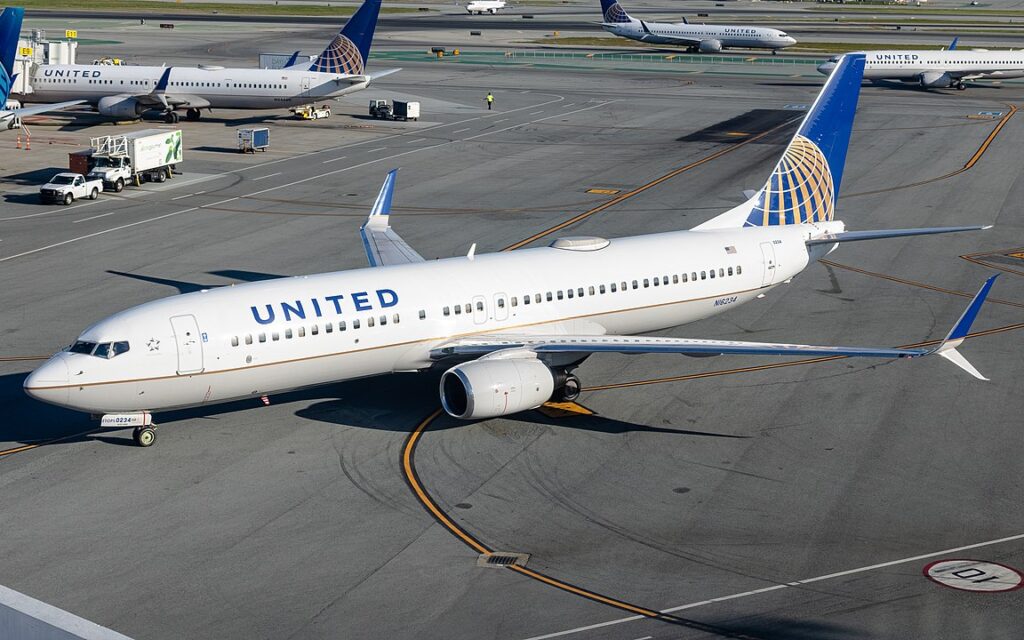
Targeted Ground Stop Helped United Prioritize Departures
United’s request for a temporary ground stop demonstrated how airlines can use targeted traffic restrictions to manage congestion following major operational disruptions.
Rather than stopping every airline operating at O’Hare, the FAA’s restriction focused on United and its subsidiaries. This allowed the airline to move aircraft already at the airport and create additional capacity for its incoming services.
The nationwide FAA disruption had already caused thousands of cancellations and delays. The resulting aircraft and crew displacement made it difficult for airlines to restore their schedules immediately after the original restriction ended.
Although the temporary O’Hare ground stop expired, United still faced the task of restoring its normal flight schedule and managing the remaining backlog.
The incident also highlighted O’Hare’s importance to the US aviation network. With United accounting for nearly half of the airport’s passenger traffic, any significant disruption to the airline’s operations can affect thousands of travelers and connecting flights.
Stay tuned with us. Further, follow us on social media for the latest updates.
Join us on Telegram Group for the Latest Aviation Updates. Subsequently, follow us on Google News
