


AMSTELVEEN, NETHERLANDS– KLM Royal Dutch Airlines (KL) has filed a police complaint following a power bank fire aboard flight KL735 from Amsterdam Airport Schiphol (AMS) to Curaçao International Airport (CUR) on September 17, 2026. The Boeing 777 returned to Amsterdam after cabin crew extinguished the fire.
Dutch reports have linked the device to former KLM chief executive Camiel Eurlings. However, KLM has not identified the passenger or confirmed whether Eurlings is the subject of the complaint. Dutch authorities have opened a criminal investigation into the incident.

KLM Files Complaint Following September Flight Incident
KLM confirmed on November 13 that it had filed a complaint with Dutch prosecutors following an internal investigation into the September incident.
The airline did not disclose the passenger’s identity or specify the exact alleged offence. However, it explained that filing police complaints is standard practice when passengers seriously violate safety regulations.
A KLM spokesperson said:
It is standard practice for KLM to file a police report in cases where passengers seriously violate safety regulations, putting the safety of a flight, passengers, and crew at risk.”
The statement followed growing media attention surrounding the incident and the identity of the passenger involved.
According to PYOK, the passenger was reportedly Camiel Eurlings, who allegedly fell asleep while charging his power bank through an in-seat power outlet.
KLM has declined to confirm the reports, citing passenger privacy. The airline has also not publicly confirmed whether its complaint specifically names Eurlings.
The Dutch Public Prosecution Service has confirmed that it received the complaint. The criminal investigation is being conducted by the aviation police.

Camiel Eurlings Previously Led KLM
Camiel Eurlings previously served as president and chief executive of KLM. He led the Dutch airline from July 2013 until October 2014.
His reported involvement has attracted additional attention because of his previous senior position within the airline.
Reports surrounding the incident alleged that Eurlings was charging his power bank using the seat’s electrical outlet while sleeping.
The device reportedly overheated before catching fire and exploding inside the Business Class cabin.
Passengers and crew members were placed at risk as the battery fire developed. However, cabin crew members managed to bring the situation under control.
Eurlings has not publicly responded to the latest reports, according to Reuters.
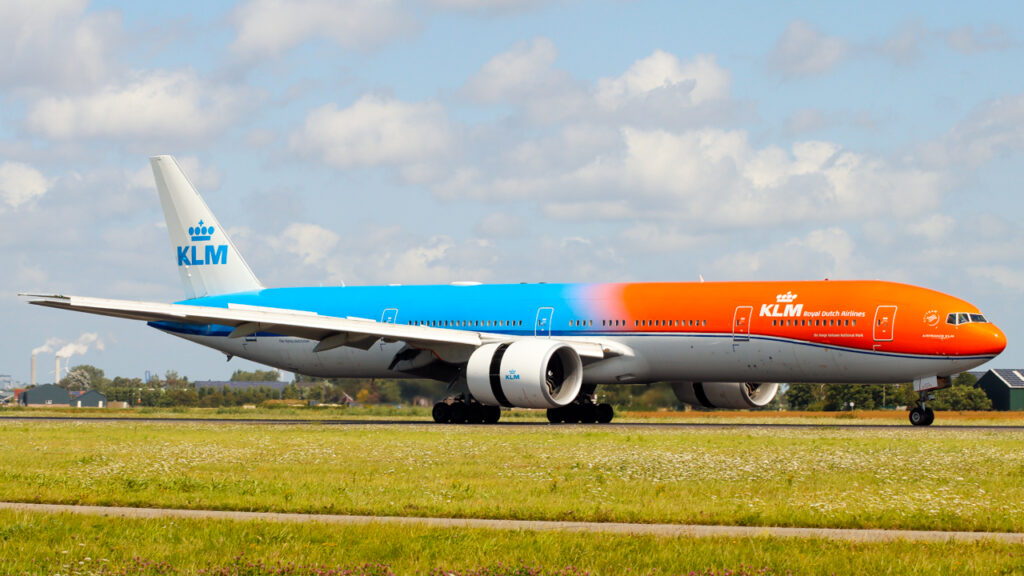
Boeing 777 Returns to Amsterdam After Power Bank Fire
The incident occurred on September 17, 2026, aboard KLM flight KL735 from Amsterdam to Curaçao.
The airline operated the service using a Boeing 777-300ER registered PH-BVP. The aircraft was carrying 322 passengers when the power bank caught fire over the Atlantic Ocean.
The fire broke out around a Business Class seat. The overheating device caused visible damage to the surrounding cabin area.
Photographs of the aftermath showed black scorch marks across the seat console, window shade, and adjacent sidewall.
Cabin crew members responded by extinguishing the fire with water. They subsequently submerged the power bank in liquid to prevent further overheating.
Although the crew brought the fire under control, the pilots decided to return to Amsterdam as a precaution.
The aircraft landed safely at Amsterdam Airport Schiphol after approximately five and a half hours in the air.
The incident forced KLM to cancel the flight. The disruption affected all 322 passengers, who required alternative travel arrangements.
KLM arranged accommodation and transferred affected passengers to another flight to Curaçao the following morning.
One passenger reportedly sustained minor burns during the incident.
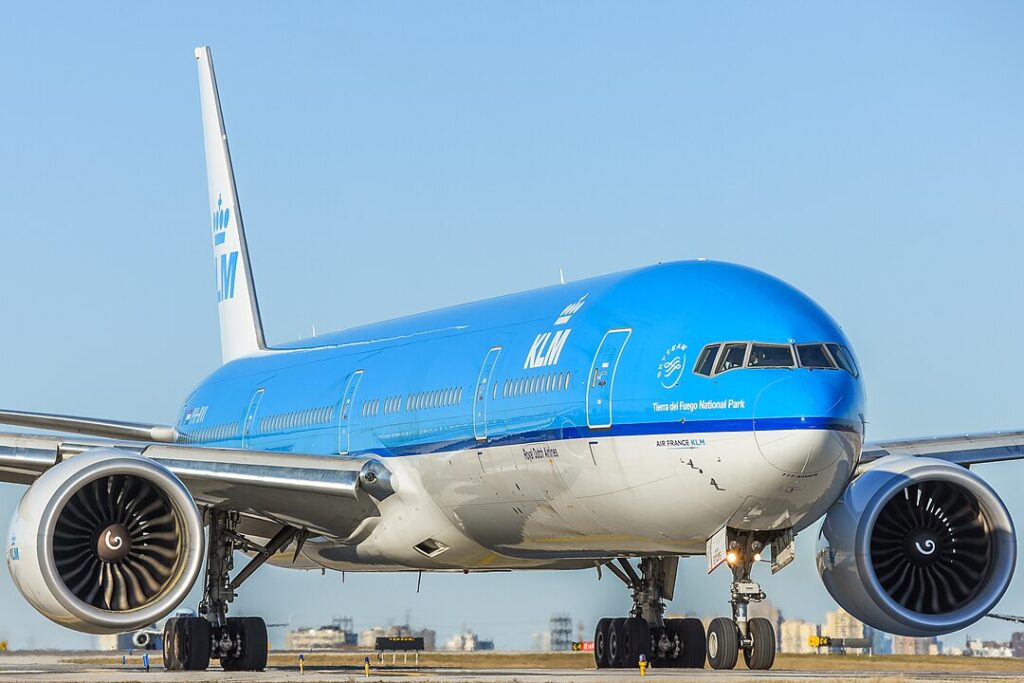
Power Bank Thermal Runaway Raises Aviation Safety Concerns
The incident highlights the fire risks associated with lithium-ion batteries and portable power banks aboard commercial aircraft.
Most power banks use lithium-ion battery cells to store and deliver electrical energy. These batteries can become dangerous when damaged, defective, overheated, or improperly charged.
One of the most serious risks is a condition known as thermal runaway.
Thermal runaway occurs when an overheating battery cell transfers excessive heat to neighbouring cells. This creates a chain reaction that can rapidly increase the battery’s temperature.
The process can result in smoke, fire, and an explosion.
Passengers may notice several warning signs before a battery fire develops. These include unusually high temperatures, battery swelling, and visible white smoke.
Airlines require passengers to remain alert when using permitted electronic devices. Early detection allows cabin crew to respond before a battery fire spreads.
Power bank incidents have become a growing concern for airlines because lithium-ion battery fires can develop rapidly inside aircraft cabins.
The limited space available on commercial aircraft also makes it particularly important for crew members to respond quickly.

KLM Introduces Strict Power Bank Restrictions
KLM has introduced restrictions on carrying, storing, using, and charging power banks aboard its aircraft.
Passengers may carry up to two power banks, subject to applicable capacity limits. However, they must keep the devices with them rather than placing them in overhead compartments.
KLM also prohibits passengers from using or charging power banks during flights.
The airline’s restrictions are intended to reduce the possibility of battery overheating and allow cabin crew to identify potential problems quickly.
The September incident has renewed attention on the importance of following these requirements.

IATA Introduces Additional Power Bank Safety Guidance
The International Air Transport Association (IATA) has also strengthened its guidance concerning portable power banks.
Its 2026 passenger guidance outlines additional restrictions intended to reduce lithium-ion battery fire risks.
The measures include limiting passengers to a maximum of two power banks, with individual capacities not exceeding 100 watt-hours (Wh).
The guidance also states that passengers should not:
- Store power banks in overhead compartments.
- Recharge power banks using aircraft electrical outlets.
- Use power banks to charge other devices during taxi, take-off, or landing.
- Place power banks in checked baggage.
Airlines can introduce stricter requirements depending on their operational safety policies.
Some carriers have adopted more restrictive measures concerning power bank usage throughout flights.
These requirements reflect growing concerns about onboard battery fires and the challenges involved in managing lithium-ion battery incidents.
The KLM incident involving its former chief executive demonstrates why airlines are placing greater emphasis on passenger compliance with battery safety regulations.
The investigation will determine whether further action is necessary following the September 17 incident.
Stay tuned with us. Further, follow us on social media for the latest updates.
Join us on Telegram Group for the Latest Aviation Updates. Subsequently, follow us on Google News
